If You're Curious About These Questions...
You should listen to this audiobook
- Did you know that your body might be struggling with a 'toxic load' from everyday items, and what's the secret to clearing it without having to be perfect?
- Have you ever wondered why traditional diets often fail to address the hidden environmental factors that could be stalling your weight loss and energy levels?
- What if you could navigate our chemical-filled world and achieve a 'cleaner' lifestyle by making just a few simple, manageable shifts in your daily routine?
Listen to Clean(ish) — Free Audiobook
Loading player...
Key Takeaways from Clean(ish)
- Understand why striving to be 'clean-ish' rather than perfectly 'clean' is a realistic, sustainable approach to reducing your daily toxic load without feeling overwhelmed.
- Uncover the profound connection between diet and behavioral issues by learning how eliminating artificial dyes and toxins can immediately transform your family's well-being.
- Discover how hidden environmental toxins, such as 'obesogens' found in everyday household products, disrupt your endocrine system and actively promote fat creation.
- Learn why marketing labels like 'all natural' or 'hypoallergenic' are misleading forms of corporate greenwashing that lack real FDA approval.
- Recognize the hidden dangers of the commercial food supply, where over-processed, pesticide-heavy ingredients directly contribute to modern weight problems and toxic build-up.
Learning Tools
Reinforce what you learned from Clean(ish)
Mind Map
Clean(ish)
The 'Clean-ish' Philosophy+
Environmental Toxins+
Real vs. Processed Foods+
The Body's Detox Superheroes+
Lifestyle Practices for Cleansing+
Quiz — Test Your Understanding
Question 1 of 8
According to the author, what is the ultimate goal of adopting a 'clean-ish' lifestyle?
Question 2 of 8
How do toxins known as 'obesogens' primarily contribute to weight gain?
Question 3 of 8
Why does the author warn against blindly trusting product labels like 'hypoallergenic' or 'all-natural'?
Question 4 of 8
What biological impact is associated with consuming a diet high in ultra-processed foods?
Question 5 of 8
What is the primary function of the body's glymphatic system?
Question 6 of 8
Why does the author emphasize eating a wide variety of plant-based foods?
Question 7 of 8
How does intermittent fasting benefit the body at a cellular level?
Question 8 of 8
According to the book, what is the proposed health benefit of 'earthing' (walking barefoot outdoors)?
Clean(ish) — Full Chapter Overview
- 1Recommendation
- 2The world is full of harmful toxins, but our bodies can cleanse themselves.
- 3We breathe in and absorb toxins from our everyday environments.
- 4Whole foods beat processed foods every time.
- 5What it means to “eat well” depends on the individual.
- 6The right foods can help our bodies cleanse themselves naturally.
- 7Small lifestyle changes can lead to big results, but compassion and patience are essential.
- 8Final summary
Clean(ish) Summary & Overview
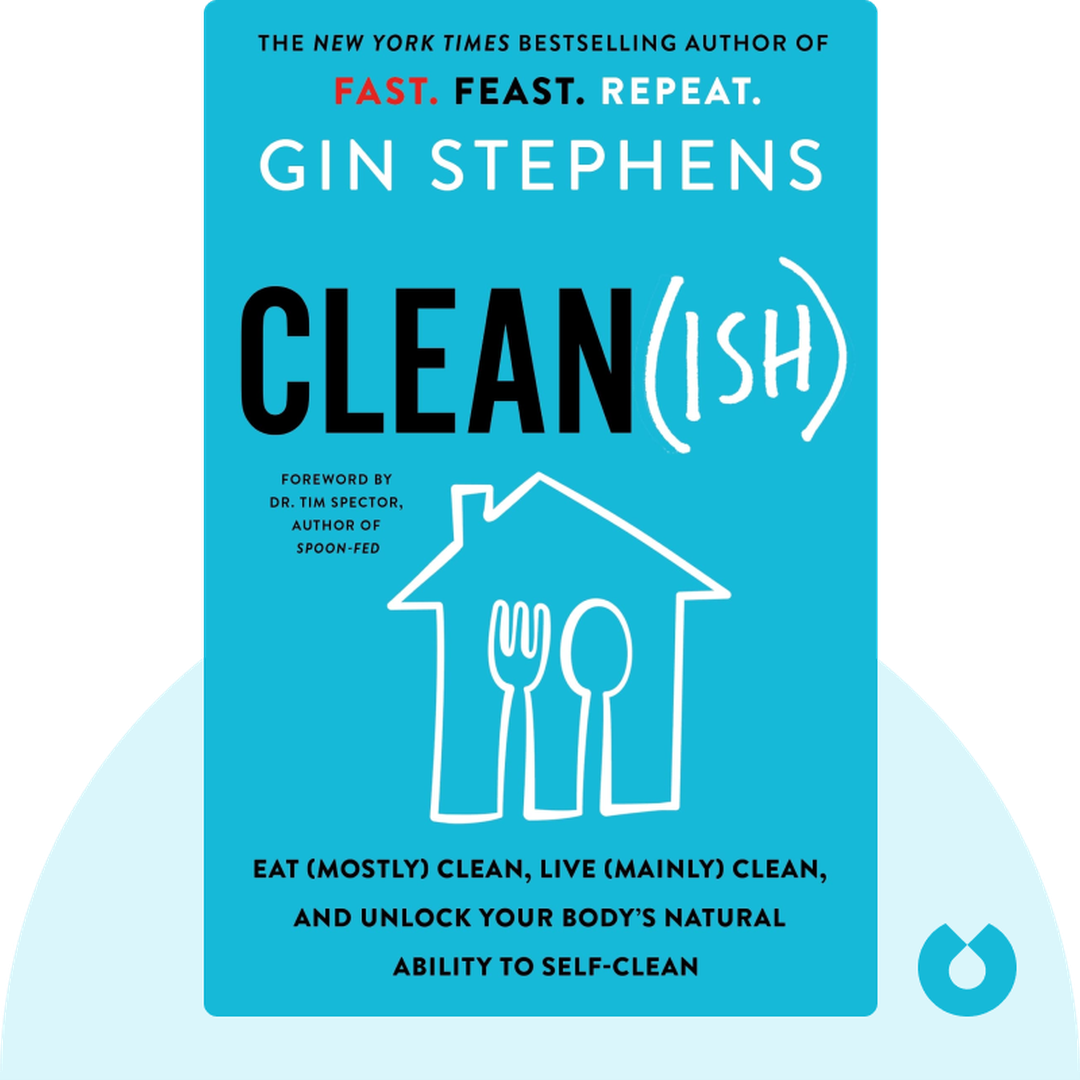
Clean(ish) (2022) is a guide to living a life that’s free from the pesticides and other toxins in our food and environment. Through anecdotes, tips, and exercises, it gently and compassionately lays out a road map to a cleaner lifestyle.
Who Should Listen to Clean(ish)?
- Health-conscious individuals interested in living a cleaner lifestyle
- People looking to get stronger or lose weight
- Anyone who wants to reduce toxicity in their life
Books Similar to Clean(ish)
Readers who enjoyed this also liked these titles.