If You're Curious About These Questions...
You should listen to this audiobook
- Have you ever wondered how a former world leader redefines their mission and continues to drive global change after leaving the highest office in the land?
- Are you curious about the personal lessons and behind-the-scenes reflections from the pivotal historical moments that have shaped our modern society?
- What if you could apply the same principles of service and community-building used by a former president to create a more compassionate world in your own backyard?
Listen to Citizen — Free Audiobook
Loading player...
Key Takeaways from Citizen
- Discover how targeted community mobilization can drive rapid and effective disaster relief, as demonstrated by the creation of the American India Foundation.
- Understand the importance of pairing immediate crisis aid with transparent, long-term sustainable investments to rebuild regions facing systemic barriers.
- Find out how strategic market negotiations and streamlined supply chains can drastically reduce the cost of life-saving medical treatments for low-income nations.
- Learn how to transform high-level discussions into measurable global impact by requiring concrete, accountable commitments to action from cross-sector leaders.
- Explore how bridging the gap between governments, private businesses, and local NGOs creates resilient frameworks capable of solving complex humanitarian crises.
Learning Tools
Reinforce what you learned from Citizen
Mind Map
Citizen
Disaster Relief & Rebuilding+
Global Health (CHAI)+
Clinton Global Initiative (CGI)+
Polarization in the Obama Era+
The 2016 Election+
Pandemic, Inequality & Continued Service+
Quiz — Test Your Understanding
Question 1 of 8
What unique strategy did Bill Clinton use to help launch the American India Foundation (AIF) following the Gujarat earthquake?
Question 2 of 8
Why was transparent operation and accountability a primary focus for the Interim Haiti Recovery Commission (IHRC)?
Question 3 of 8
How did the Clinton Health Access Initiative (CHAI) successfully reduce the cost of life-saving ARV drugs for low-income nations?
Question 4 of 8
What distinct requirement set the Clinton Global Initiative (CGI) apart from other global conferences like the World Economic Forum?
Question 5 of 8
What does the anecdote about Senator Mark Pryor and his constituent's new health-insurance policy illustrate about the Obama presidency?
Question 6 of 8
According to the book, what internal dynamic challenged Hillary Clinton's 2016 presidential campaign within her own party?
Question 7 of 8
During the Trump administration, how did Bill Clinton channel his efforts to maintain a commitment to service despite the divisive political climate?
Question 8 of 8
According to the text, what did Bill Clinton observe as one of the primary societal challenges exposed by the Covid-19 pandemic?
Citizen — Full Chapter Overview
- 1Recommendation
- 2Creating a legacy in global disaster relief
- 3Bill Clinton’s dedication to rebuilding Haiti
- 4How the Clinton Health Access Initiative reshaped global health
- 5Addressing global challenges through the Clinton Global Initiative
- 6How polarization shaped Obama’s presidency
- 7Inside the 2016 presidential election
- 8Renewing a commitment to leadership and service
- 9Reflections on the pandemic and ongoing inequality
- 10Final summary
Citizen Summary & Overview
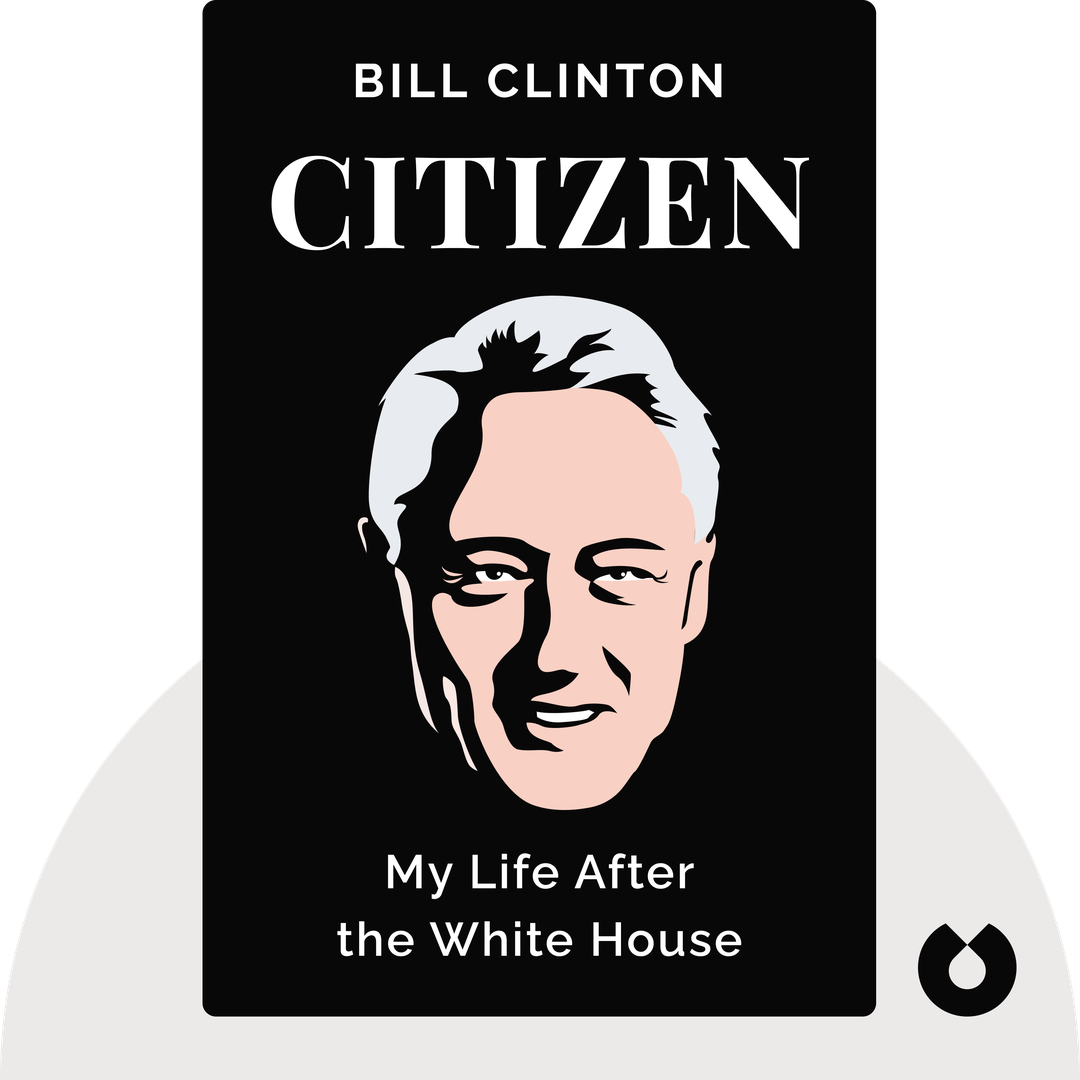
Citizen (2024) is a reflective memoir that explores former US president Bill Clinton’s life after leaving the White House. It covers pivotal moments in recent history, alongside personal insights about public service and the importance of building a better future. Through these reflections, Clinton emphasizes the power of community and individual action in shaping a more just and compassionate world.
Who Should Listen to Citizen?
- Civic-minded professionals seeking inspiration for community engagement
- Socially conscious leaders aiming to drive meaningful change
- History enthusiasts interested in post-presidential perspectives
Books Similar to Citizen
Readers who enjoyed this also liked these titles.