If You're Curious About These Questions...
You should listen to this audiobook
- Have you ever wondered what it’s really like to be in the room where the most high-stakes global decisions are made alongside the President?
- Did you know how a young, idealistic staffer transforms into a hardened national security operator while navigating the inner workings of the White House?
- Are you curious about the private reflections and untold stories from the final days of the Obama administration as they prepared for a radical shift in power?
Listen to The World as It Is — Free Audiobook
Loading player...
Key Takeaways from The World as It Is
- Discover how Obama's unconventional approach to foreign policy, like proposing diplomacy with Iran without preconditions, challenged Washington's traditional expectations.
- Learn how the high-stakes pressure of presidential speechwriting almost led to disaster when Obama nearly quoted Adolf Hitler during a historic address in Berlin.
- Understand how a leader's diverse upbringing can shape a nuanced worldview, and why Obama viewed acknowledging America's historical flaws as a profound expression of patriotism.
- Explore why progressive policy goals frequently clash with entrenched political establishments, as seen in the internal administrative resistance Obama faced over Guantanamo Bay.
- Find out how Obama used his historic Cairo speech to bypass mutual suspicion and directly advocate for women's rights and religious tolerance in the Muslim world.
Learning Tools
Reinforce what you learned from The World as It Is
Mind Map
The World as It Is
A New Approach to Power+
Engaging the Muslim World+
Hard Choices in Foreign Policy+
Domestic Struggles & Race+
Disinformation & The 2016 Election+
Quiz — Test Your Understanding
Question 1 of 11
Why did Barack Obama take an unusually long campaign tour of European and Middle Eastern nations during his 2008 presidential run?
Question 2 of 11
How did Obama choose to address the controversial issue of Turkey's treatment of minority groups during his speech to the Turkish parliament?
Question 3 of 11
Why did President Obama decide NOT to visit Israel immediately following his 2009 speech at Cairo University?
Question 4 of 11
How did the Obama administration internally react to the outbreak of the Arab Spring protests in Egypt?
Question 5 of 11
What was President Obama's primary reason for deciding NOT to release the photographs of Osama bin Laden's corpse?
Question 6 of 11
What event served as an early indicator to the Obama administration that Cuba was serious about improving diplomatic relations?
Question 7 of 11
According to the text, how did President Obama generally handle the topic of race and racism in public prior to the Charleston church shooting?
Question 8 of 11
Why did President Obama ultimately avoid taking military action against the Syrian regime after his 'red line' on chemical weapons was crossed?
Question 9 of 11
What was the primary argument used by the 'Antiwar Room' unit to secure congressional support for the Iran nuclear deal?
Question 10 of 11
What structural challenge did the Obama administration face when trying to counter Russian disinformation campaigns?
Question 11 of 11
Following Donald Trump's election victory, what introspective question did President Obama ask regarding the liberal platform?
The World as It Is — Full Chapter Overview
- 1Recommendation
- 2Obama broke with other presidential candidates, promising real change and a fresh, forward-looking approach.
- 3Obama’s worldview sparked tensions at home, even within his own administration.
- 4Early in his presidency, Obama made a deliberate push to speak directly to the Muslim world.
- 5For Obama and his young advisers, the Arab Spring offered a chance to be a force for good in the world.
- 6Obama delivered upon one of his earliest foreign-policy promises.
- 7Normalizing ties with Cuba was, for once, a chance for the author and Obama to be proactive, not reactive.
- 8Race was ever-present in the Obama White House, yet not an easy topic for Obama to publicly confront at all.
- 9Obama did not launch military action in Syria, despite 'red lines' over the use of chemical weapons.
- 10Obama pushed through the Iran agreement despite fierce opposition.
- 11Obama’s administration landed on the losing side of the information wars.
- 12Obama and the author were stunned by Donald Trump’s victory.
The World as It Is Summary & Overview
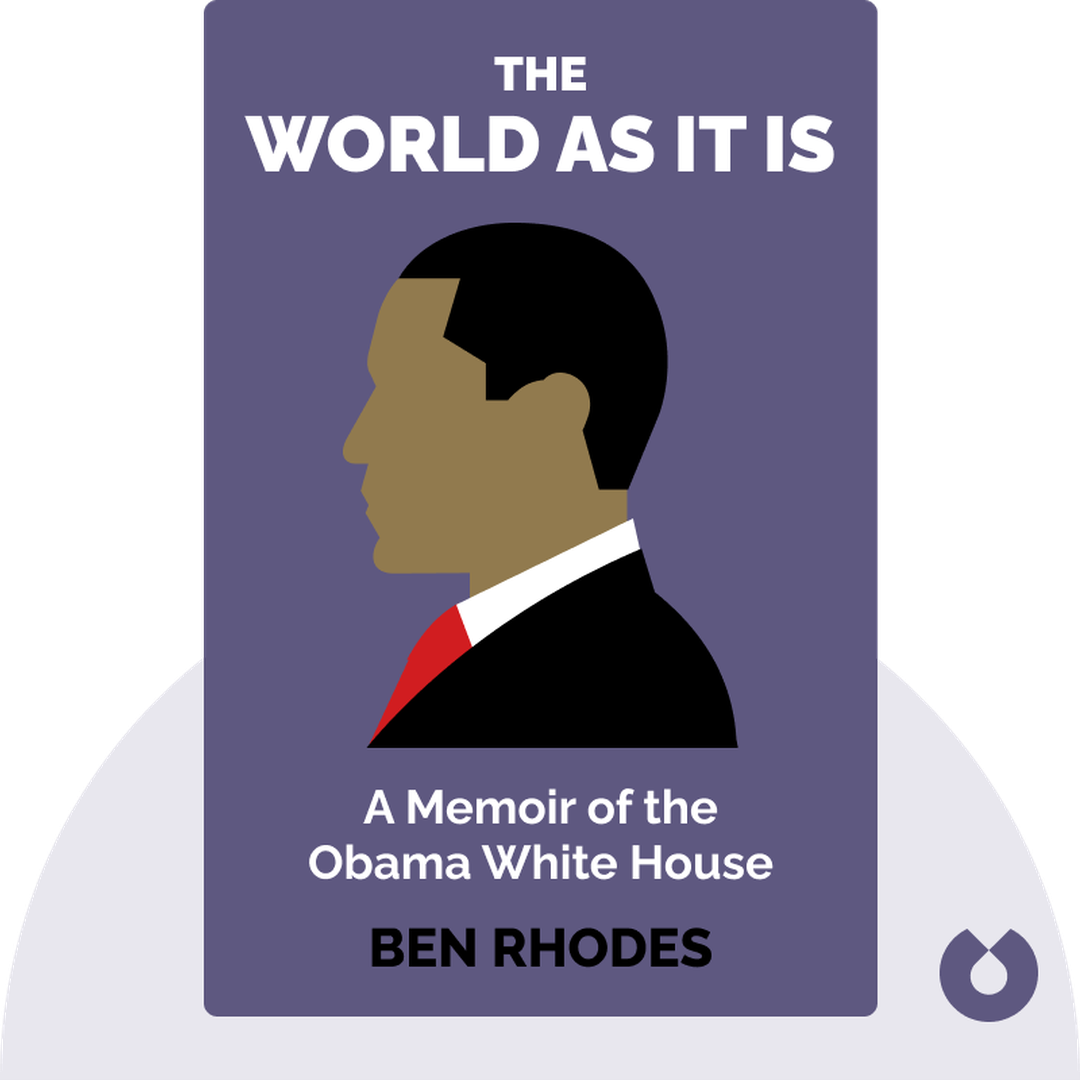
The World as It Is (2018) is a deeply personal look at the Obama presidency, written by a man who not only worked closely with the forty-fourth president, but also became his friend. Taking us on a behind-the-scenes tour of Obama’s presidency, from his first campaign to Trump’s inauguration, these blinks also chronicle the author’s personal journey from fresh-faced staffer to hardened national security operator.
Who Should Listen to The World as It Is?
- History and politics buffs
- Anyone interested in an inside look at the highest levels of government
- People who want a better understanding of the state of US politics today
Books Similar to The World as It Is
Readers who enjoyed this also liked these titles.