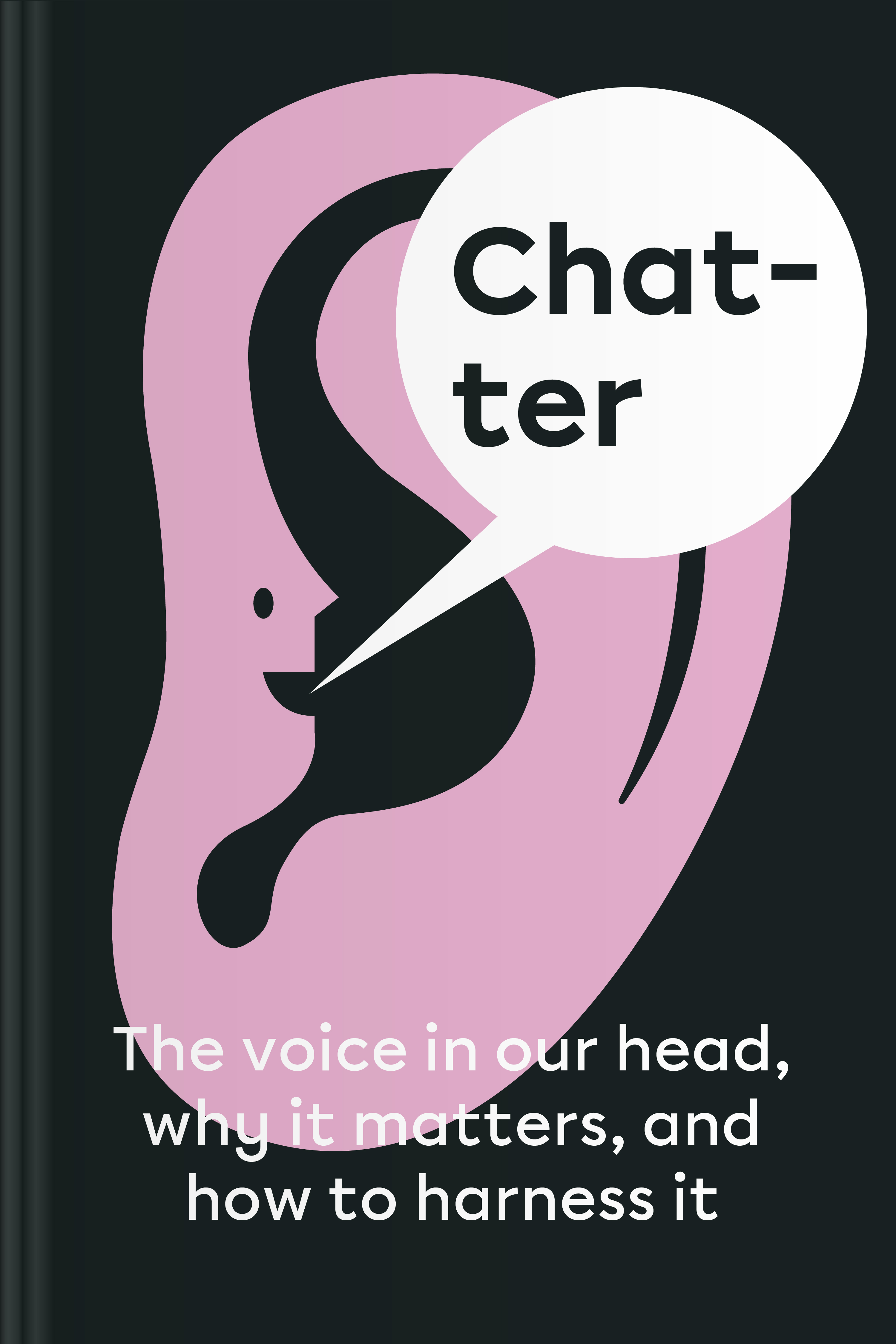
Chatter (Audio Summary)
If You're Curious About These Questions...
You should listen to this audiobook
- Have you ever wondered why it’s often easier to give wise advice to a friend than it is to quiet your own racing thoughts?
- What if the secret to breaking a cycle of overthinking isn’t trying to silence your inner voice, but learning how to talk to yourself like a stranger?
- Did you know that small changes in your physical environment and the way you use language can actually shift your brain out of 'rumination mode' and into a state of calm?
Listen to Chatter (Audio Summary) — Cinematic Audio Edition
Key Takeaways from Chatter (Audio Summary)
- Understand that the goal of managing your inner voice is not to force it into silence, but to achieve mental steadiness through curiosity and care.
- Discover how healthy introspection can easily twist into harmful rumination, transforming your supportive inner coach into a harsh inner critic.
- Learn how to actively redirect your thoughts by pinpointing the exact moment your inner dialogue stops offering helpful information and starts delivering punishment.
- Master the crucial principle of engaging with your inner voice without becoming enslaved by it, treating your thoughts as a helpful tool rather than an unquestionable authority on reality.
- Find out how to utilize practical grounding anchors—like psychological distancing and the calming presence of nature—to quiet mental noise and break free from relentless negativity loops.
Learning Tools
Reinforce what you learned from Chatter (Audio Summary)
Mind Map
Quiz — Test Your Understanding
Chatter (Audio Summary) — Full Chapter Overview
- 1Recommendation
- 2Humans developed an inner voice to evaluate the past and prepare for the future.
- 3Chatter often gets in the way of how we function in the world.
- 4The fastest way to quiet chatter is to create some distance.
- 5Talking to yourself as if you were someone else can help you distance yourself from chatter.
- 6Reducing chatter means meeting both emotional and cognitive needs.
- 7Connecting with the outside world helps reduce chatter.
- 8If we believe something can help us feel better, it often will.
- 9Final summary
Chatter (Audio Summary) Summary & Overview
This audio summary is a calm, supportive guide to understanding the voice inside the mind—the one that narrates, evaluates, worries, and sometimes keeps people awake with looping “what ifs.” It explores why this inner conversation can be both helpful and painful, and how the same capacity for introspection that offers insight can also slip into rumination and self-attack.
Across the chapters, the listener is introduced to practical ways to create emotional space: stepping back into a wider perspective, using relationships in ways that bring both comfort and clarity, shaping surroundings to support calm, and recognizing how belief and expectation can influence real experience. The invitation throughout is gentle and realistic—not to force silence, but to learn how to guide inner talk so it becomes steadier, kinder, and more useful.
Who Should Listen to Chatter (Audio Summary)?
- Anyone who feels stuck in rumination, overthinking, or nighttime mental loops, and wants grounded ways to steady the inner voice.
- Listeners who want practical tools for emotional regulation—especially perspective shifting, healthier self-talk, and supportive coping strategies.
- People who care about relationships and want to support others without getting pulled into shared spirals of stress or grief.
Books Similar to Chatter (Audio Summary)
Readers who enjoyed this also liked these titles.