If You're Curious About These Questions...
You should listen to this audiobook
- Did you know that our modern indoor lifestyle might be putting your biological clock in a permanent state of jet lag?
- What if the secret to lowering your blood pressure and boosting your immune system was as simple as changing when you step outside?
- Have you ever wondered why ancient civilizations worshipped the sun—and what modern science says about how it can cure your winter blues?
Listen to Chasing the Sun — Free Audiobook
Loading player...
Key Takeaways from Chasing the Sun
- Understand how your body's master internal clock, the suprachiasmatic nucleus, relies directly on the sun to regulate daily hormones, digestion, and sleep cycles.
- Discover the historical healing powers of heliotherapy and why adequate sun exposure remains crucial for generating Vitamin D to maintain bone health and prevent diseases.
- Realize how modern indoor lifestyles deprive us of thousands of lux of vital daytime light, making daily outdoor exposure essential for a healthy circadian rhythm.
- Learn why prolonged exposure to artificial indoor lighting and blue light from screens tricks your brain into twilight mode, delaying sleep-inducing melatonin.
- Find out why severe circadian disruption is classified as a probable carcinogen, and how syncing your habits with natural light can lead to deeper, more energizing sleep.
Learning Tools
Reinforce what you learned from Chasing the Sun
Mind Map
Chasing the Sun
Circadian Rhythms & The Inner Clock+
Heliotherapy & Vitamin D+
Artificial Light & Disruption+
Health Consequences of Disruption+
Chronotherapy for Mental Health+
Aligning Society with Biology+
Quiz — Test Your Understanding
Question 1 of 7
What is the primary function of the suprachiasmatic nucleus (SCN) in the human body?
Question 2 of 7
Why did rickets become a widespread health concern in England during the late 1800s?
Question 3 of 7
What negative effect does the blue-white light emitted from computer and smartphone screens have on the human body?
Question 4 of 7
Based on the experience of US Navy submarine captain Seth Burton, what is a potential severe consequence of chronic circadian disruption?
Question 5 of 7
Which of the following is described as a scientifically supported Swedish remedy for combating seasonal affective disorder (SAD)?
Question 6 of 7
How does Dr. Francesco Benedetti's 'triple chronotherapy' attempt to treat severe depression and bipolar disorder?
Question 7 of 7
What was the result of high schools in Edina, Minnesota, shifting their start times from 7:20 a.m. to 8:30 a.m.?
Chasing the Sun — Full Chapter Overview
- 1Recommendation
- 2Everyone has an inner clock that coordinates body functions and is influenced by the sun.
- 3Heliotherapy has been used for healing and rejuvenation for millennia.
- 4Too much time under artificial light can disrupt your circadian rhythms.
- 5Circadian disruption may be carcinogenic, and people at high latitudes respond differently to darkness.
- 6Chronotherapy is being used to treat depression.
- 7A lifestyle more closely aligned with our inner clocks may be healthier than following society’s schedule.
- 8Final summary
Chasing the Sun Summary & Overview
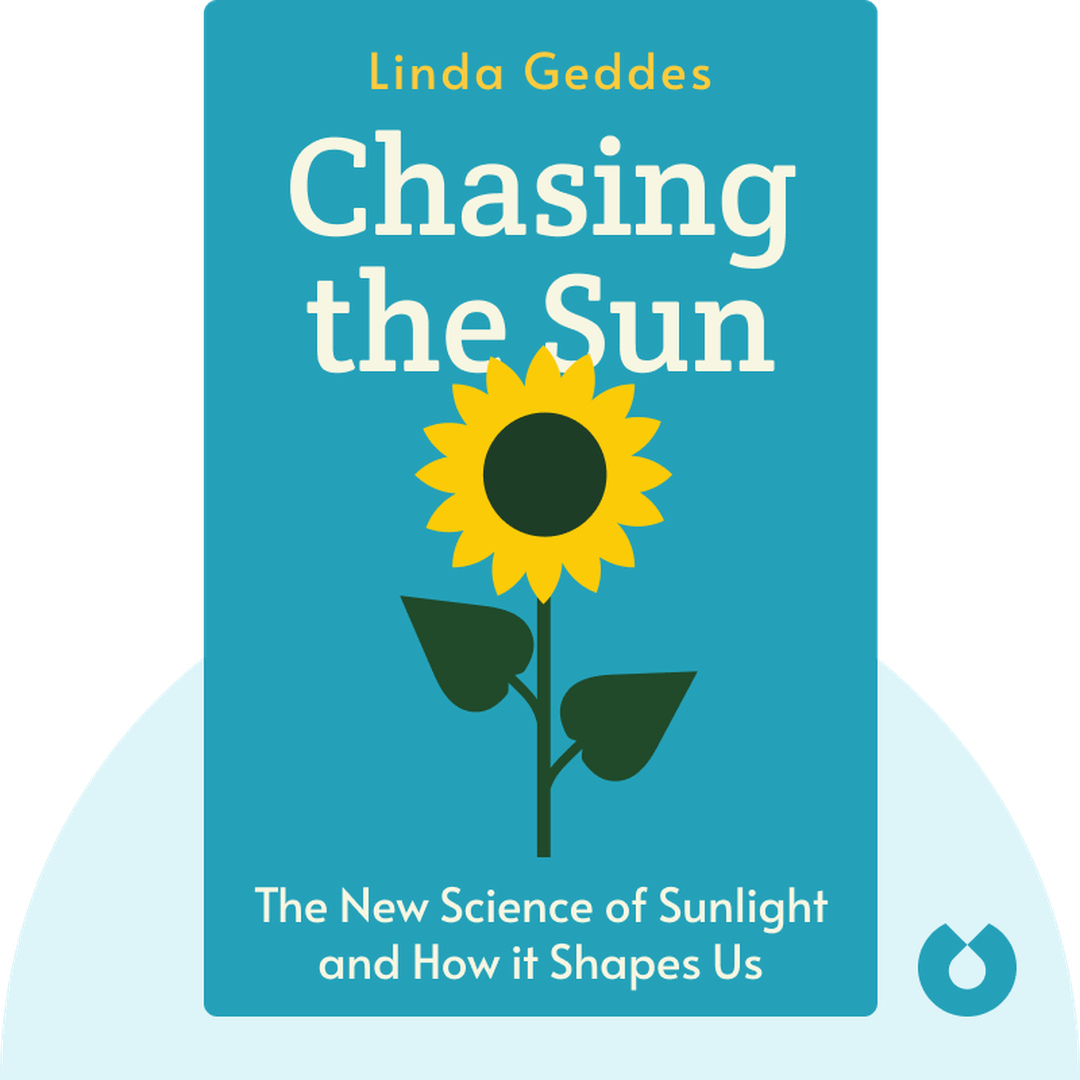
Chasing the Sun (2019) delivers a fascinating account of the sun’s influence on our day-to-day lives. Throughout history, humans have worshipped the sun and touted its restorative, healing properties. As author Linda Geddes explains, science clearly shows that the sun is one of the most important elements of our health and well-being.
Who Should Listen to Chasing the Sun?
- Science geeks
- Winter blues sufferers
- Healthy lifestyle seekers
Books Similar to Chasing the Sun
Readers who enjoyed this also liked these titles.