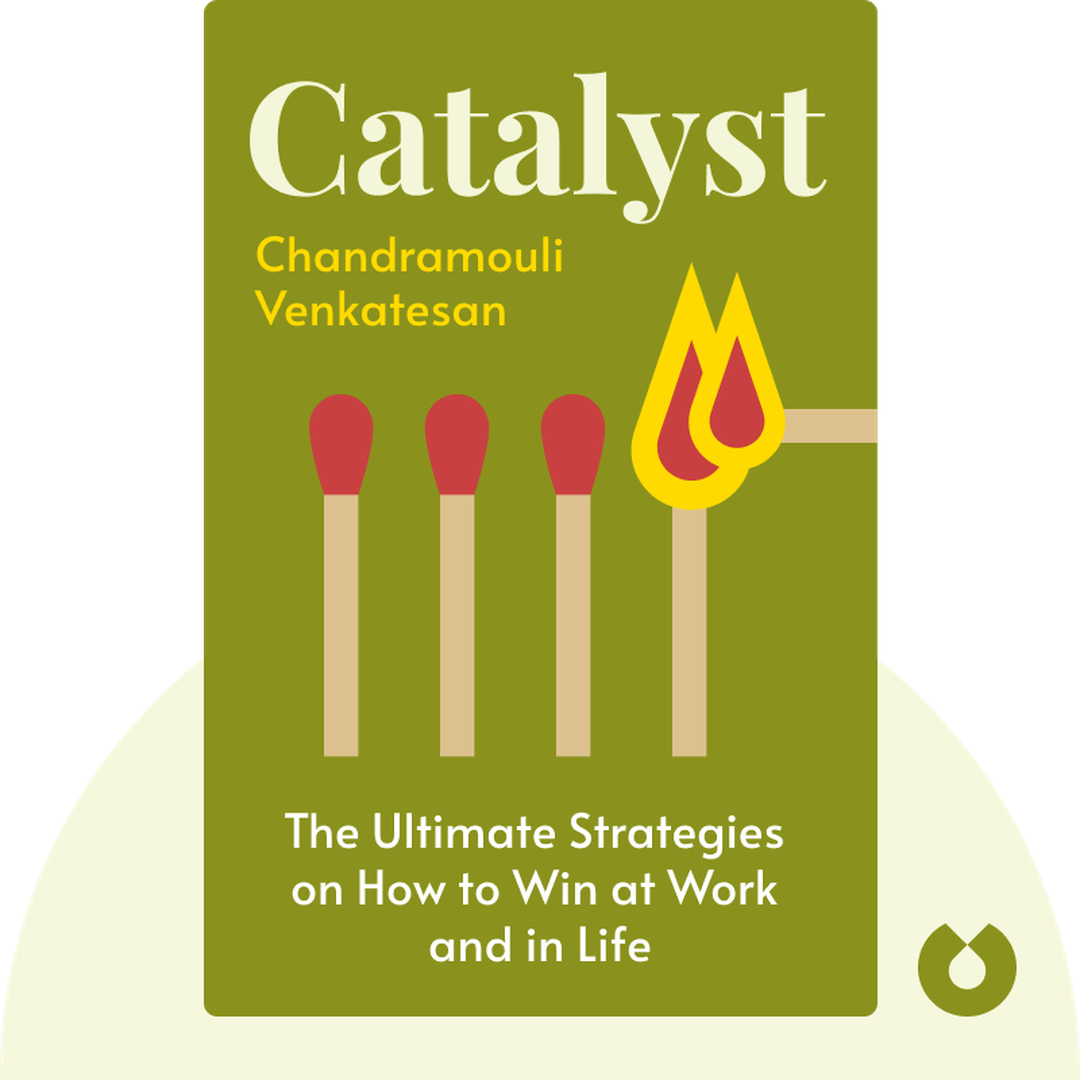
If You're Curious About These Questions...
You should listen to this audiobook
- Have you ever wondered why choosing the right boss is actually more critical to your long-term success than the brand name of the company you work for?
- What if the secret to accelerating your career isn't moving as fast as possible, but understanding the surprising value of taking it slow?
- Are you curious about the specific traits and habits that act as 'catalysts,' transforming average professionals into exceptional corporate leaders?
Listen to Catalyst — Free Audiobook
Loading player...
Key Takeaways from Catalyst
- Discover why obsessing over promotions is a waste of time and how focusing entirely on personal growth will ultimately drive your career forward.
- Understand the critical difference between doing a job on autopilot and truly gaining experience through an active learning cycle of practice, review, and improvement.
- Learn how to proactively engage in full 'learning cycles' by seeking out and taking full responsibility for major projects from inception to completion.
- Master the art of navigating unpredictable career headwinds and tailwinds by letting go of the illusion of control and tackling challenges one swing at a time.
- Find out why long-term success requires delaying gratification and pacing yourself so you hit your professional stride in the second half of your career.
Learning Tools
Reinforce what you learned from Catalyst
Mind Map
Catalyst
Career Strategy & Mindset+
Redefining Experience+
Mastering Learning Cycles+
Maximizing the First Half+
Choosing the Right Boss+
Executive Leadership & Balance+
Quiz — Test Your Understanding
Question 1 of 8
According to the book, why is obsessing over promotions considered a waste of time?
Question 2 of 8
How does the author define true professional 'experience'?
Question 3 of 8
What is a 'learning cycle' in the context of career development?
Question 4 of 8
What lesson does the author draw from the fable of the tortoise and the hare regarding career timing?
Question 5 of 8
Why does the author suggest that staying at one firm early in a career can be more valuable than frequent job-hopping?
Question 6 of 8
How can you identify if a prospective company has great bosses who will act as mentors?
Question 7 of 8
Why do senior executives often benefit from engaging in 'striving sports' like marathons or golf?
Question 8 of 8
While position and message are important for leadership, what is identified as the most crucial criterion for inspiring intense loyalty?
Catalyst — Full Chapter Overview
- 1Recommendation
- 2Focusing on personal growth is more fulfilling than worrying about promotions.
- 3Experience comes from active learning, not just doing the job.
- 4Seeking out and contributing to major projects is a powerful way to gain experience.
- 5Success depends on timing, so learn to delay gratification.
- 6The first half of your career is the ideal time to strengthen your problem-solving skills.
- 7Great bosses can push you to excel, so seek out the best in the field.
- 8Challenging hobbies can keep you competitive as you move into more team-focused roles.
- 9In effective leadership, values matter as much as position and message.
- 10Final summary
Catalyst Summary & Overview
Catalyst (2018) is the ultimate A to Z guide to navigating one of life’s trickiest journeys: your career. Jam-packed with actionable insights rooted in author Chandramouli Venkatesan’s years of first-hand experience with today’s most successful corporate go-getters, these blinks shed light on key topics from picking the right boss to the value of taking it slow and becoming an effective leader.
Who Should Listen to Catalyst?
- Ambitious professionals
- Executives and managers
- Coaches and work psychologists
Books Similar to Catalyst
Readers who enjoyed this also liked these titles.