If You're Curious About These Questions...
You should listen to this audiobook
- Have you ever wondered why positioning your business as the hero of the story is actually the biggest mistake you can make in your marketing?
- What if you could use a simple seven-part framework to ensure your customers understand exactly how you solve their problems within seconds of seeing your message?
- Did you know there’s a specific psychological reason why most marketing fails to get a response, and how the structure of a great story can fix it?
Listen to Building a StoryBrand — Free Audiobook
Loading player...
Key Takeaways from Building a StoryBrand
- Discover why your business should not be the hero of the story, and learn how to position your brand as the trusted guide who helps customers win.
- Understand the crucial importance of clarity in your marketing so customers can instantly grasp who you are, what you do, and why you are a good fit.
- Learn how to connect your product to fundamental human needs like safety and belonging, making your message deeply compelling without being pushy.
- Master the StoryBrand 7-Part Framework to structure your marketing like a classic narrative, transforming background noise into a highly memorable message.
- Find out how to invite customers to take action without pressure while painting a clear, hopeful picture of success that they genuinely want to experience.
Learning Tools
Reinforce what you learned from Building a StoryBrand
Mind Map
Building a StoryBrand
Core Marketing Principles+
The SB7 Framework+
Quiz — Test Your Understanding
Question 1 of 8
Who should be the main character or 'hero' of your brand's story?
Question 2 of 8
In the StoryBrand framework, what role does your company play, and what two qualities must it exude?
Question 3 of 8
Why is it highly effective to address a customer's internal problems in your marketing message?
Question 4 of 8
What is the main difference between a 'process plan' and an 'agreement plan'?
Question 5 of 8
What is the primary purpose of a 'transitional' call to action?
Question 6 of 8
How does behavioral economist Daniel Kahneman's concept of loss aversion apply to the StoryBrand framework?
Question 7 of 8
According to the text, which of the following is one of the three strategies to create a vision of success for your customers?
Question 8 of 8
When refining your marketing message, why is it recommended to connect your product to a customer's survival-related needs, such as the need for a 'tribe'?
Building a StoryBrand — Full Chapter Overview
- 1Recommendation
- 2Your marketing message must be clear and address your customer's needs.
- 3Make your marketing message memorable with the StoryBrand 7-Part Framework.
- 4Your customers are the heroes of your story, so focus on one key desire.
- 5Engage customers more deeply by focusing on their "villain," or internal problems.
- 6Guide your customers with both empathy and authority.
- 7Encourage customer purchases by presenting either a process plan or an agreement plan.
- 8Prompt customers to buy with either direct or transitional calls to action.
- 9Motivate customers further by reminding them what they stand to lose if they do not buy.
- 10Share a vision that shows customers how your product will transform their lives.
- 11Final summary
Building a StoryBrand Summary & Overview
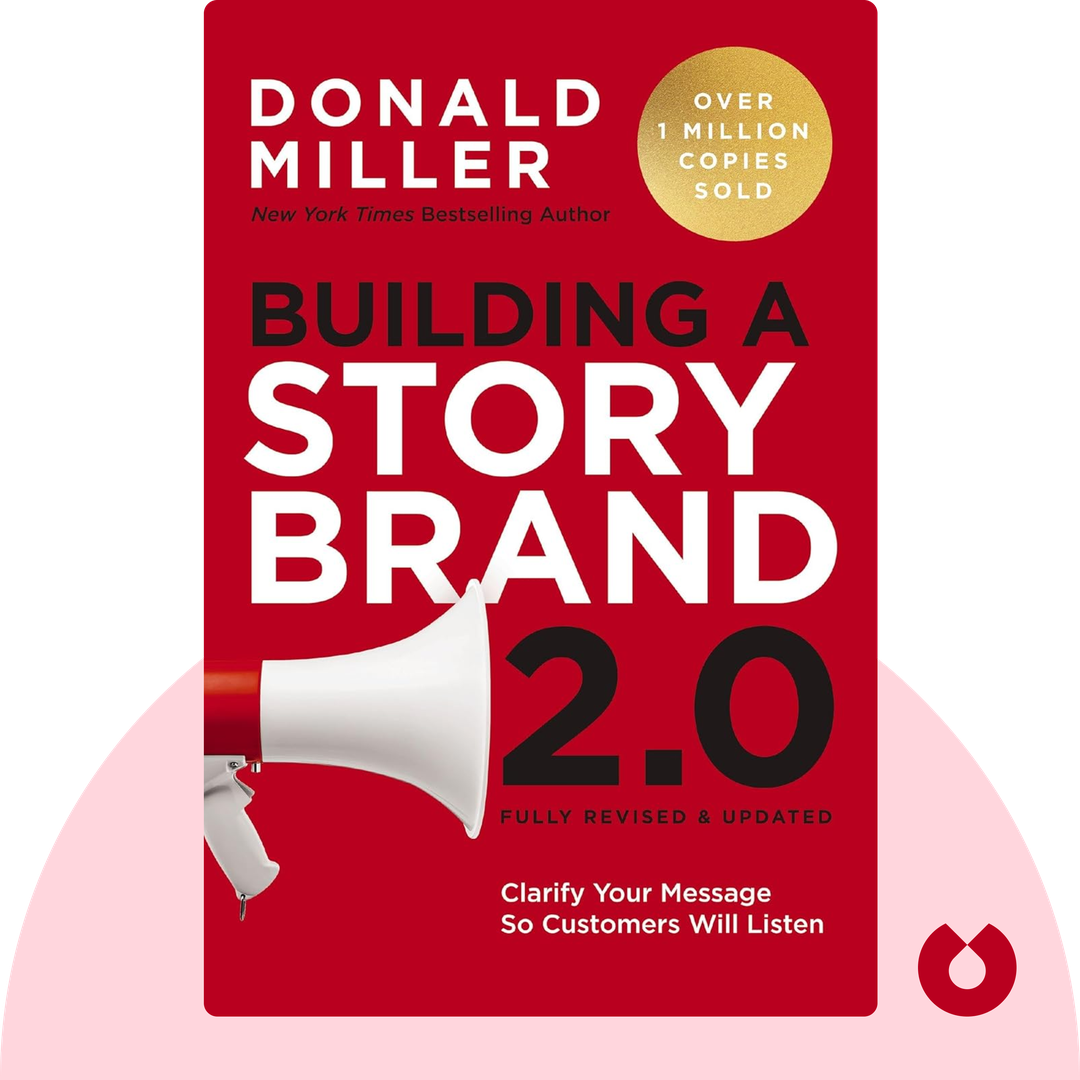
This summary explores Donald Miller’s StoryBrand approach: a practical way to communicate so clearly that customers can quickly see themselves in your message. Instead of positioning the business as the hero, StoryBrand invites brands to speak to the customer’s needs, problems, and hopes—using the familiar shape of a great story.
Across the chapters, you’ll hear how to build a brand narrative with seven core elements—character, problem, guide, plan, calls to action, failure, and success—so your marketing becomes easier to understand, easier to remember, and more likely to inspire real action.
Who Should Listen to Building a StoryBrand?
- Business owners, creators, and marketers who want customers to understand their offer quickly and clearly
- Anyone rewriting a website, sales page, pitch, or ad who feels their message is getting lost in the noise
- Teams who want a shared, simple language for talking about customer needs and brand messaging
Books Similar to Building a StoryBrand
Readers who enjoyed this also liked these titles.