If You're Curious About These Questions...
You should listen to this audiobook
- Have you ever wondered why a sad song or a rainy day can feel so deeply comforting instead of just depressing?
- What if your deepest sense of longing isn't a sign of lack, but a hidden compass pointing you toward your true purpose?
- Did you know that the secret to experiencing life’s greatest joys might actually lie in your willingness to embrace its most sorrowful moments?
Listen to Bittersweet — Free Audiobook
Loading player...
Key Takeaways from Bittersweet
- Discover why relentless positivity is overrated and how embracing the bittersweet side of life makes your moments of joy feel more profound.
- Understand the evolutionary 'compassion instinct' and learn why paying attention to sadness is crucial for building deep human connections.
- Find out why we are drawn to sad music and how cultural concepts like the Japanese 'mono no aware' reveal the hidden beauty in life's impermanence.
- Learn why accepting your negative emotions, rather than forcing closure, actually leads to less stress and a greater sense of overall well-being.
- Discover how to become a 'wounded healer' by refusing to turn away from life's inevitable pain and using your experiences to help others.
Learning Tools
Reinforce what you learned from Bittersweet
Mind Map
Bittersweet
The Nature of Bittersweetness+
The Value of Sadness+
Transforming Pain+
The Trap of Positivity+
Impermanence and Grief+
Quiz — Test Your Understanding
Question 1 of 7
Why is sadness considered to have an important evolutionary function, according to psychologist Dacher Keltner?
Question 2 of 7
What is the meaning behind the Japanese concept of 'mono no aware', which is celebrated during the cherry blossom season?
Question 3 of 7
According to the book, what is the key lesson to be learned from the painful life experiences of figures like Maya Angelou and Buckminster Fuller?
Question 4 of 7
In the Buddhist story of the mustard seed, why does the Buddha ask the grieving mother to find a seed from a house that has never seen pain or loss?
Question 5 of 7
How does the book explain the modern American tendency to constantly project positivity despite high rates of anxiety and depression?
Question 6 of 7
Based on James Pennebaker's research, what is an effective method for dealing with negative emotions and experiences?
Question 7 of 7
According to Dr. Laura Carstensen's research, why do elderly people tend to be happier and exhibit a 'positivity bias'?
Bittersweet — Full Chapter Overview
- 1Recommendation
- 2Emotions can’t be neatly separated.
- 3How we face pain shapes who we are.
- 4We lose a great deal when we see ourselves as winners.
- 5To embrace life, we must accept death.
- 6Final summary
Bittersweet Summary & Overview
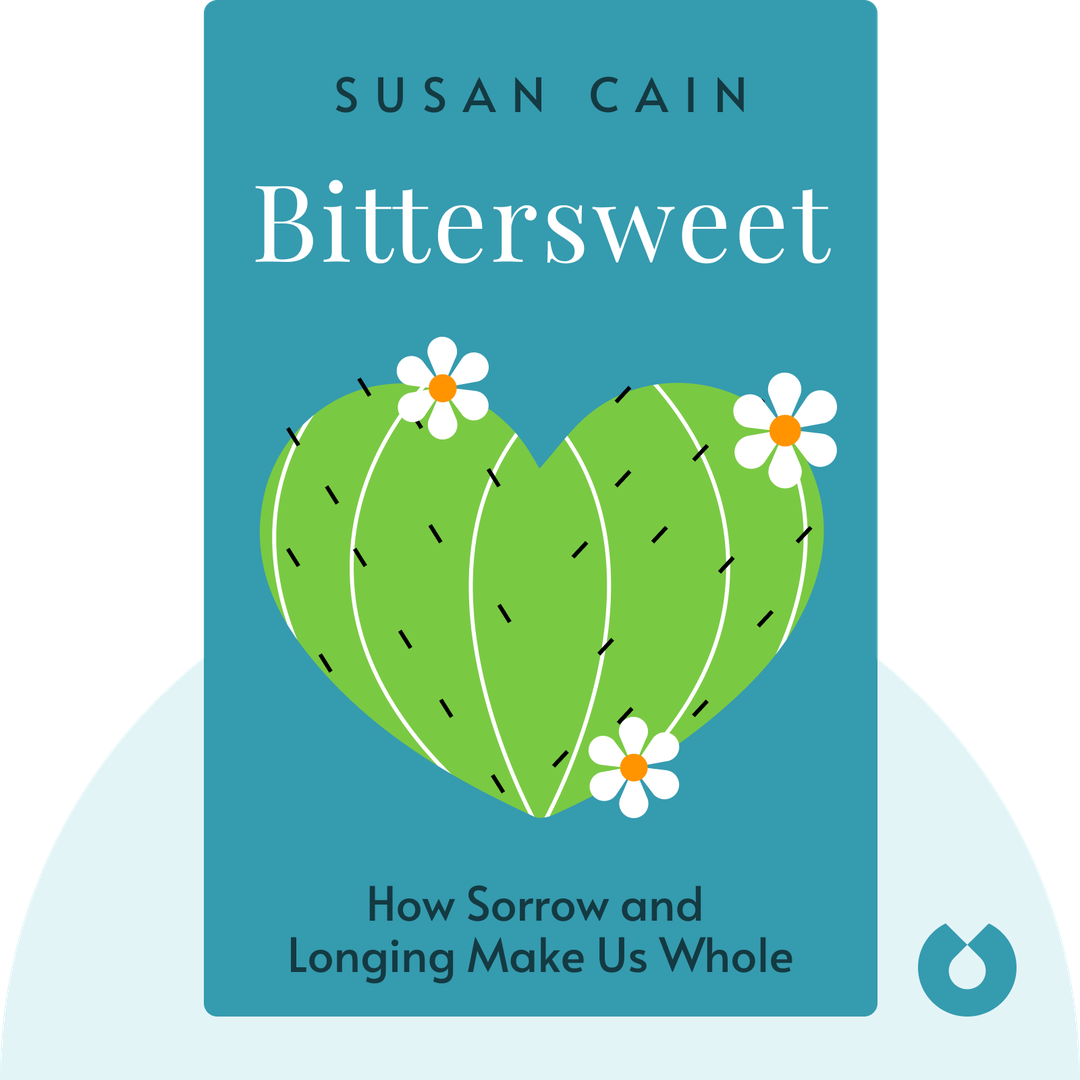
Bittersweet (2022) is a profound meditation on an often overlooked emotional experience – the bittersweet. It argues that opening up to the bittersweet, where pain and joy mingle, allows us to experience life to the fullest. It also shows how vulnerability can be a strength, longing can be a guide, and sorrow can set us on the path to joy and fulfillment.
Who Should Listen to Bittersweet?
- Anyone who finds pleasure in sad songs and tear-jerker movies
- People who’ve experienced loss or trauma and want to find a way back to joy
- Lovers of the ephemeral, the impermanent, and the fleeting
Books Similar to Bittersweet
Readers who enjoyed this also liked these titles.