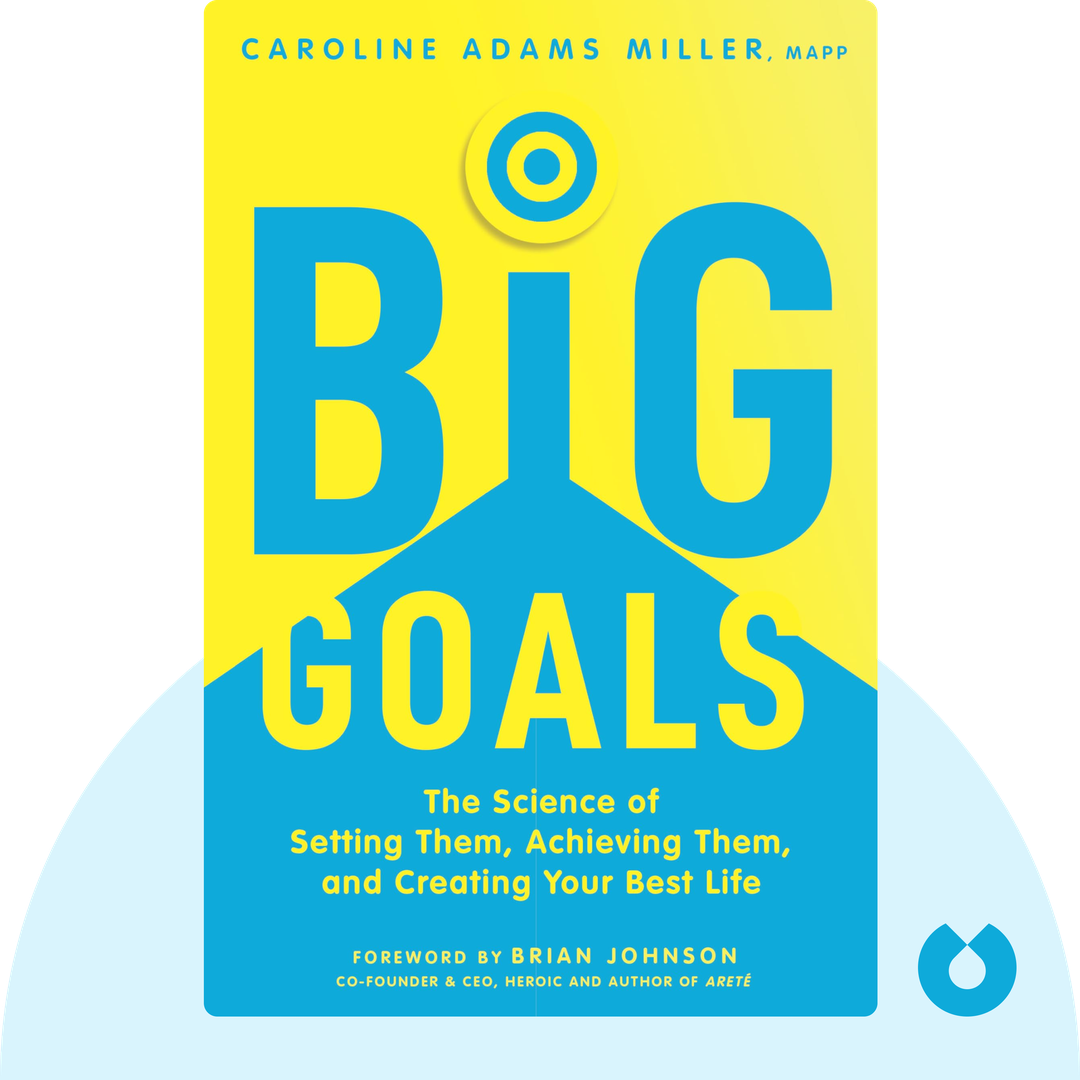
If You're Curious About These Questions...
You should listen to this audiobook
- Did you know that there is a specific scientific reason why some people consistently crush their most ambitious targets while others stay stuck in the planning phase?
- What if you could unlock a psychological roadmap that turns your deepest purpose into a series of actionable steps that practically guarantee progress?
- What’s the secret to pushing past your perceived limits and mastering the high-performance strategies used by the world’s most successful entrepreneurs and professionals?
Listen to Big Goals — Free Audiobook
Loading player...
Key Takeaways from Big Goals
- Discover how Goal-Setting Theory uses specificity, challenge, commitment, and feedback to transform vague aspirations into high performance.
- Learn the BRIDGE methodology—Brainstorming, Relationships, Investments, Decision-making, Grit, and Excellence—to translate science-backed research into highly achievable milestones.
- Understand why cultivating happiness and an 'I can do it' mindset first is crucial for building the self-efficacy required to overcome challenges.
- Find out how to identify your personal north star by journaling about your 'best possible future self' to align your dreams with actionable steps.
- Master the art of effective planning by distinguishing between performance goals and learning goals, while proactively preparing for potential setbacks.
Learning Tools
Reinforce what you learned from Big Goals
Mind Map
Big Goals
The Need for Better Strategies+
Goal Setting Theory (GST)+
The BRIDGE Methodology+
Quiz — Test Your Understanding
Question 1 of 8
What gap in traditional goal-setting advice does Caroline Adams Miller aim to fill with her BRIDGE methodology?
Question 2 of 8
According to Goal-Setting Theory (GST) developed by Locke and Latham, what type of goals yield the best outcomes?
Question 3 of 8
During the Brainstorming phase, the author distinguishes between two types of goals. What is the difference between a performance goal and a learning goal?
Question 4 of 8
What is the 'heliotropic effect' in the context of achieving goals?
Question 5 of 8
What does the author argue is the most important factor when applying the '10,000 hours' theory of mastery?
Question 6 of 8
When making decisions, the BRIDGE method warns against both 'bias' and 'noise.' How does the text differentiate between the two?
Question 7 of 8
How does the author define 'stupid grit'?
Question 8 of 8
What role does a 'persuasive other,' such as Katie Ledecky's coach Yuri Suguiyama, play in the pursuit of excellence?
Big Goals — Full Chapter Overview
- 1Recommendation
- 2Why we need better strategies
- 3Goal-Setting Theory
- 4Purposeful questions and meaningful connections
- 5Making investments and wise decisions
- 6Good grit and constructive pushing
- 7Final summary
Big Goals Summary & Overview
Big Goals (2025) looks at the science behind setting and achieving goals that truly matter, offering practical strategies backed by psychological research. Whether you’re chasing a personal dream or striving for success in your career, it helps you turn aspirations into reality by aligning purpose with action. Packed with actionable steps, it is designed to motivate you to push past limits and unlock your full potential.
Who Should Listen to Big Goals?
- Ambitious professionals
- Entrepreneurs
- Coaches and mentors
Books Similar to Big Goals
Readers who enjoyed this also liked these titles.