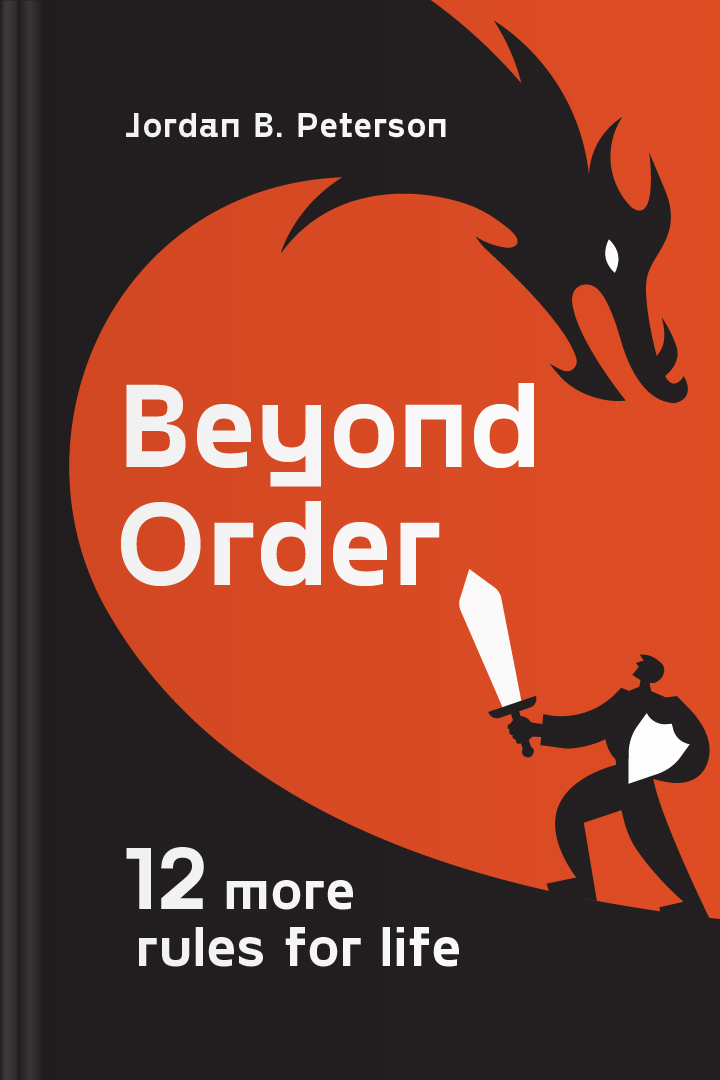
If You're Curious About These Questions...
You should listen to this audiobook
- Have you ever wondered why having too much order in your life can be just as dangerous as falling into total chaos?
- What if the secret to unlocking your hidden potential lies exactly where you’ve been most afraid to take responsibility?
- Are you curious about how the things you've been 'hiding in the fog' are actually preventing you from finding your direction?
Listen to Beyond Order — Cinematic Audio Edition
Key Takeaways from Beyond Order
- Understand why life constantly shifts between order and chaos, and learn how to navigate these changes without exhausting yourself by always bracing for disaster.
- Discover why maintaining social connections and respecting imperfect societal institutions are vital tools for regulating your mental and physical health.
- Learn how to awaken your dormant potential by clearly envisioning the person you want to be and taking intentional steps toward that goal.
- Find out why hiding small annoyances in the fog can slowly accumulate into misery, and discover how to honestly confront unresolved discomfort.
- Master practical, human-sized principles that serve as a steady hand, helping you stay grounded and resilient whenever life feels unpredictable.
Learning Tools
Reinforce what you learned from Beyond Order
Mind Map
Quiz — Test Your Understanding
Beyond Order — Full Chapter Overview
- 1Recommendation
- 2Social institutions are vital to individual success.
- 3Picture the person you want to become, then work to become that person.
- 4Don’t put up with small pains when they can be fixed.
- 5Taking responsibility is difficult, but it gives life meaning.
- 6Don’t tolerate things you hate.
- 7Be cautious of all ideologies, especially those with simple answers.
- 8Fully commit to a goal, and you’ll appreciate the results.
- 9Always make space for beauty, even if it’s only in one room.
- 10Explore and examine any memory that causes you pain.
- 11Put effort and planning into your closest relationships.
- 12Don’t believe stories that make you resentful, deceitful, or arrogant.
- 13Be grateful, even when facing great suffering.
- 14Final summary
Beyond Order Summary & Overview
This audio-friendly summary introduces a simple but powerful idea: human life always lives between order and chaos. Order is the place of routines, predictability, and things working the way we expect. Chaos is disruption—sometimes exciting and curious, sometimes sudden and frightening. The goal isn’t to live in one forever, but to learn how to move through both without becoming exhausted, bitter, or lost.
Across twelve rules, the book encourages a grounded approach to living: value relationships and institutions while staying flexible, imagine who you could become and aim toward it, face problems directly instead of hiding them, choose meaningful responsibility, practice mastery through steady effort, bring beauty and care into your surroundings, write through painful memories, protect intimacy and romance, avoid resentment and arrogance, and practice gratitude as a way to live above suffering.
Who Should Listen to Beyond Order?
- Anyone feeling overwhelmed by uncertainty who wants a steadier way to respond to change, disappointment, or anxiety.
- Listeners who want practical, reflective life principles—focused on responsibility, relationships, and meaning—without pretending life is always easy.
- People ready to gently revisit the past, learn from it, and move forward with more clarity, order, and gratitude.
Books Similar to Beyond Order
Readers who enjoyed this also liked these titles.