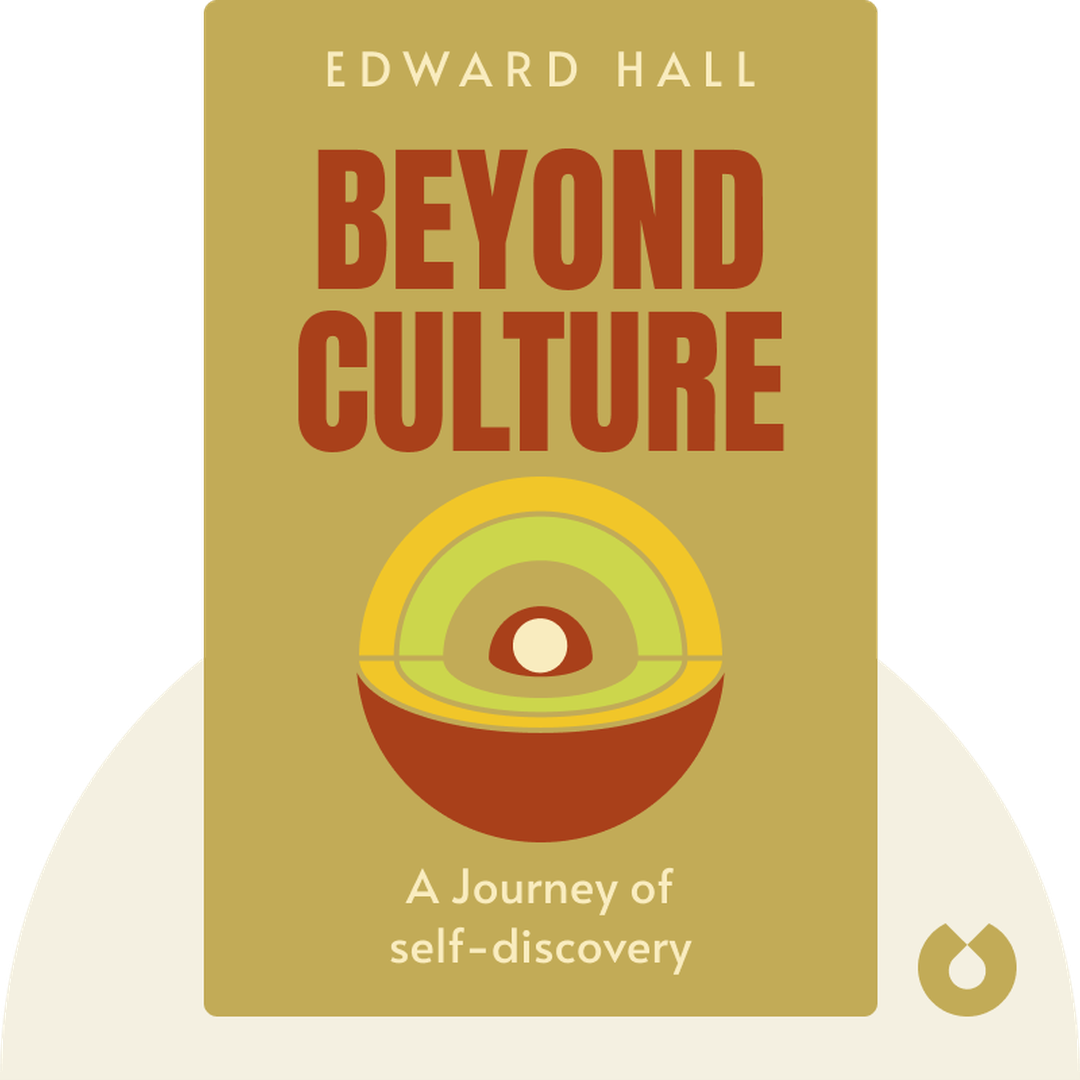
If You're Curious About These Questions...
You should listen to this audiobook
- Have you ever wondered why some cultures view time as a rigid, linear schedule while others see it as a fluid and flexible stream?
- Did you know that in many parts of the world, the most important part of a conversation is what is *never* actually said aloud?
- Are you curious about the hidden, unconscious patterns that dictate how you resolve conflicts and interact with others without you even realizing it?
Listen to Beyond Culture — Free Audiobook
Loading player...
Key Takeaways from Beyond Culture
- Discover why culture remains the ultimate invisible barrier in our globalized world, and learn how transcending ingrained habits can prevent painful misunderstandings.
- Learn how the specific language you speak fundamentally shapes your perception of reality, unconsciously influencing how you process and share information.
- Recognize the predictable cultural rituals you perform every day, and uncover how different societies have completely distinct methods for handling conflicts and social interactions.
- Understand the crucial differences between explicit and implicit communication styles, discovering why explicit cultures adapt to change easily while implicit cultures communicate much faster.
- Find out how your cultural background dictates far more than just your beliefs, literally shaping unconscious physical movements like how you sit, stand, and walk.
Learning Tools
Reinforce what you learned from Beyond Culture
Mind Map
Beyond Culture
The Nature of Culture+
Cultural Rituals+
Communication Styles+
Physicality and Time+
The Cultural Lens+
Transcending Barriers+
Quiz — Test Your Understanding
Question 1 of 7
What does the Sapir-Whorf hypothesis suggest about the relationship between language and culture?
Question 2 of 7
According to the text, why do people from Latin American or Mediterranean cultures often avoid direct confrontation when settling disputes?
Question 3 of 7
What is a primary advantage of explicit communication compared to implicit communication?
Question 4 of 7
How do cultures in the Middle East and Latin America typically view time and scheduling, as contrasted with Northern Europe and the US?
Question 5 of 7
Why might a Western guest be offended if Japanese hotel staff moved their luggage to another room without asking?
Question 6 of 7
How does the traditional Pueblo Indian educational approach differ from Western schooling?
Question 7 of 7
The varying degrees of politeness used in modern Japanese communication are an example of:
Beyond Culture — Full Chapter Overview
- 1Recommendation
- 2Your thoughts and actions are shaped by the culture you grow up in.
- 3You carry out learned cultural rituals every day, often without noticing.
- 4Cultures communicate in different ways, each with its own strengths and drawbacks.
- 5Cultural differences influence how you walk and how you understand time.
- 6You view the world through your cultural lens, which can cause many misunderstandings.
- 7Understanding another culture takes real effort, but it’s worth it.
- 8Final summary
Beyond Culture Summary & Overview
Beyond Culture (1976) explores how people across cultures display such diverse patterns of behavior, from resolving conflict to perceiving the passage of time. These blinks highlight the contrasts among cultures, showing us why we need to look beyond our culture to better understand other people.
Who Should Listen to Beyond Culture?
- Readers interested in the influence of culture on human behavior
- Travelers or adventurers who want to learn more about cultural subtleties
- Students eager to explore the work of famous anthropologist Edward Hall
Books Similar to Beyond Culture
Readers who enjoyed this also liked these titles.