If You're Curious About These Questions...
You should listen to this audiobook
- What if you could transform your school’s performance not by working harder in isolation, but by tapping into a powerful network of shared innovation?
- What’s the secret to creating a truly personalized learning experience that prepares every single student for the complexities of the modern workforce?
- Are you curious about how the most successful school districts are redesigning the classroom to make 'college and career ready' more than just a buzzword?
Listen to Better Together — Free Audiobook
Loading player...
Key Takeaways from Better Together
- Discover how joining educational learning networks provides the stability, shared resources, and supportive community educators need to transform their schools.
- Understand why connecting with a broader network of educators leads to consistently better student outcomes than trying to solve systemic classroom challenges in isolation.
- Learn why purely online education often fails struggling students, and realize why the human connection between teacher and student remains crucial for driving motivation.
- Find out how combining in-person teaching with digital education platforms can successfully track a child's continuous development without the stress of constant testing.
- Explore how shifting from rote test preparation to personalized, project-based learning can drastically improve student engagement and build essential soft skills like empathy and collaboration.
Learning Tools
Reinforce what you learned from Better Together
Mind Map
Better Together
The Traditional Education Problem+
The Power of Learning Networks+
Effective Learning Models+
Role of Technology+
Co-Teaching & Collaboration+
Choosing the Right Network+
Transforming School Culture+
Actionable Advice+
Quiz — Test Your Understanding
Question 1 of 8
Why do school networks provide more ongoing stability for member schools compared to independent schools?
Question 2 of 8
According to the text, what is a major flaw in relying solely on online learning platforms for school students?
Question 3 of 8
How does the New Tech Network (NTN) model differ from traditional education models in its approach to grading?
Question 4 of 8
What is the first step in the design thinking framework as used by schools like One Stone?
Question 5 of 8
What is a primary benefit of 'place-based education' as demonstrated by the Teton Science Schools network?
Question 6 of 8
Why are classrooms in the New Tech Network (NTN) often twice the size of standard school rooms?
Question 7 of 8
What is a potential drawback of a school joining a 'managed network'?
Question 8 of 8
According to Kathy Gomez, what is an essential quality a school leader must display to successfully guide teachers through a major cultural shift?
Better Together — Full Chapter Overview
- 1Recommendation
- 2Linking educators through school networks leads to better student learning outcomes.
- 3Online learning has great potential, but it isn’t an effective way to teach school students.
- 4Students become more engaged when learning is personalized and project-based.
- 5To develop the next generation of innovators, teaching must prioritize learning experiences over results.
- 6Connecting education to the real world is a powerful way to engage students.
- 7Students’ learning experiences improve greatly when teachers share responsibility for them.
- 8A clear vision of your goals will help you choose the right learning network.
- 9To change a child’s learning experience, you need to change the school’s culture.
- 10Final summary
Better Together Summary & Overview
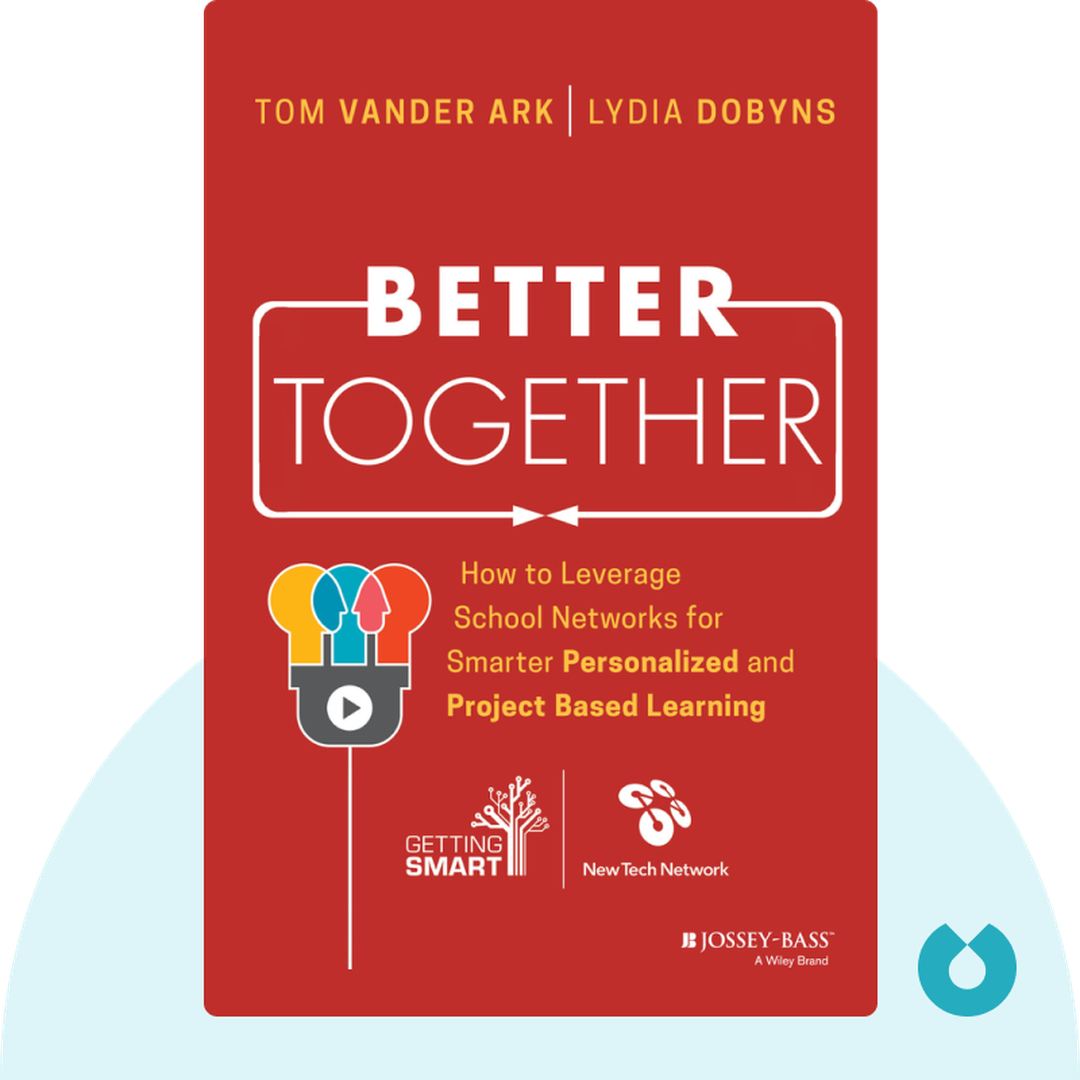
Better Together (2018) is an examination of how school networks are transforming students’ education experiences across the United States to make them college and career ready. It illuminates how networks provide new learning models, foster ongoing professional development, and facilitate personalized education to help each child reach their full potential.
Who Should Listen to Better Together?
- Educators establishing new schools with nontraditional learning models
- School leaders wanting to increase student engagement levels and performance
- District superintendents looking to innovate learning
Books Similar to Better Together
Readers who enjoyed this also liked these titles.