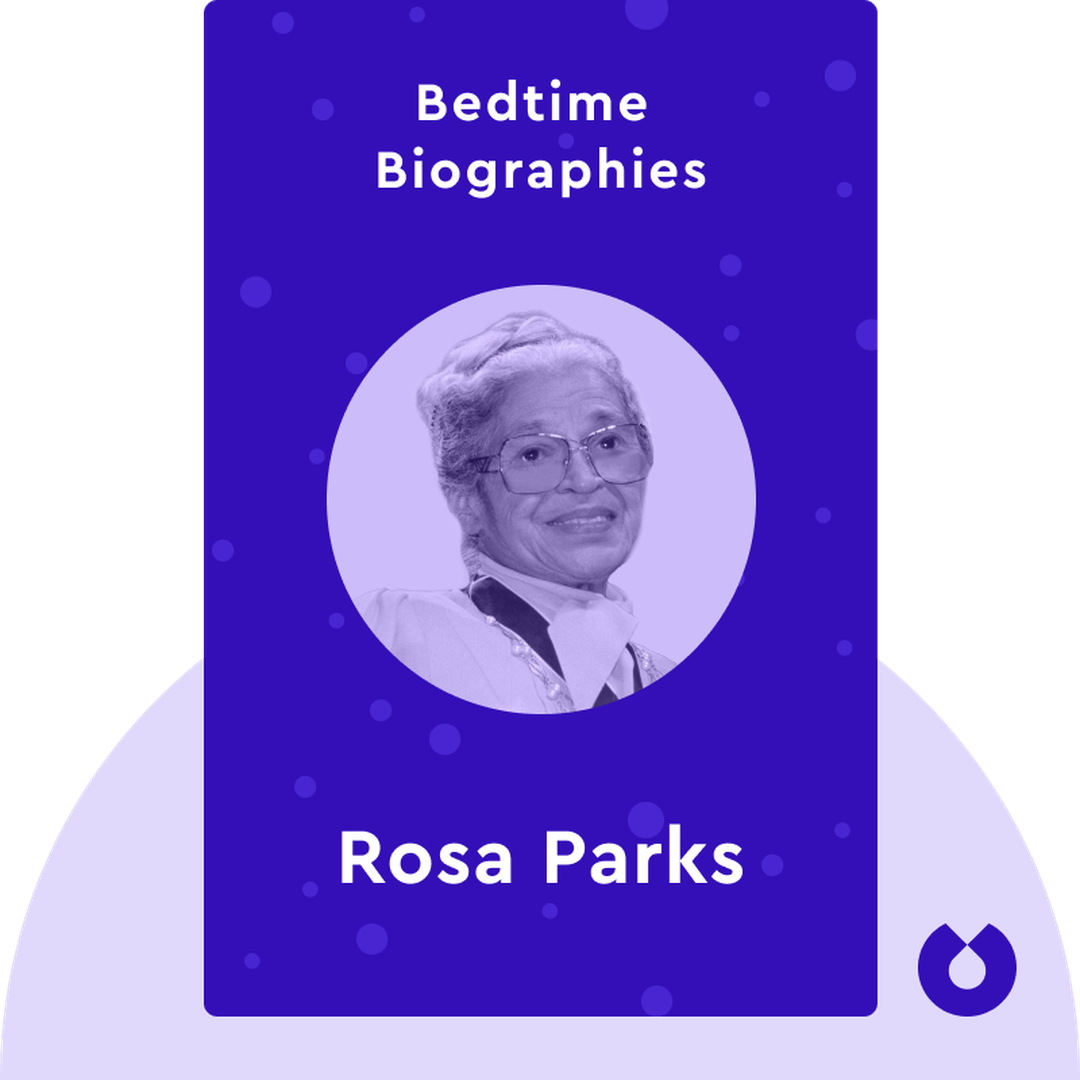
Bedtime Biography: The Rebellious Life of Mrs. Rosa Parks
Start ListeningDownload Try free on iPhoneScan to start in 5 seconds
Categories:
If You're Curious About These Questions...
You should listen to this audiobook
- Did you know that the popular image of Rosa Parks as a "tired seamstress" actually obscures a lifetime of radical, intentional activism?
- Have you ever wondered what personal sacrifices and hidden political challenges Mrs. Parks faced long after the famous bus boycott ended?
- Are you curious about how the true, rebellious personality of this civil rights icon differs from the simplified version we often learn in school?
Listen to Bedtime Biography: The Rebellious Life of Mrs. Rosa Parks — Free Audiobook
Loading player...
Key Takeaways from Bedtime Biography: The Rebellious Life of Mrs. Rosa Parks
- Discover why the popular myth of Rosa Parks as simply a tired commuter obscures her long, active history as a prominent civil rights leader.
- Understand how Rosa's upbringing and her formerly enslaved grandfather's outspoken defiance instilled in her an early, fierce intolerance for racism.
- Find out how her marriage to activist Raymond Parks catalyzed her early involvement in dangerous, high-profile civil rights battles like the Scottsboro Boys case.
- Recognize the deep psychological toll of Jim Crow segregation and the severe vulnerabilities Black women faced working in white households during this era.
- Learn about the courageous and often tragic history of pre-1955 bus resistance in Montgomery, including the defiant stands of Viola White, Hilliard Brooks, and Claudette Colvin.
Learning Tools
Reinforce what you learned from Bedtime Biography: The Rebellious Life of Mrs. Rosa Parks
Mind Map
Bedtime Biography: The Rebellious Life of Mrs. Rosa Parks
Dismantling the Myth+
Early Life & Influences+
Early Activism & Organizing+
The Montgomery Bus Boycott+
Later Life in Detroit+
Quiz — Test Your Understanding
Question 1 of 10
What persistent myth about Rosa Parks does the book primarily aim to debunk?
Question 2 of 10
How did Rosa Parks's early family life influence her attitude toward racial injustice?
Question 3 of 10
What was Rosa Parks's first major foray into community activism alongside her husband Raymond?
Question 4 of 10
Why did the NAACP choose not to build a legal case around 15-year-old Claudette Colvin when she refused to give up her bus seat?
Question 5 of 10
According to the book, what was actually on Rosa Parks's mind when she refused to give up her seat on December 1, 1955?
Question 6 of 10
Who initially coordinated the leaflets calling for a one-day bus boycott following Rosa Parks's arrest?
Question 7 of 10
Why did Rosa and Raymond Parks relocate to Detroit, Michigan, after the successful end of the bus boycott?
Question 8 of 10
How were Rosa Parks and other prominent female civil rights leaders treated during the 1963 March on Washington?
Question 9 of 10
How did Rosa Parks continue her activism after moving to Detroit?
Question 10 of 10
What is the author's critique of the Rosa Parks statue unveiled in the US Capitol in 2013?
Bedtime Biography: The Rebellious Life of Mrs. Rosa Parks — Full Chapter Overview
- 1Recommendation
- 2Chapter One
- 3Chapter Two
- 4Chapter Three
- 5Chapter Four
- 6Chapter Five
- 7The End
Bedtime Biography: The Rebellious Life of Mrs. Rosa Parks Summary & Overview
An honest and thorough rendering, this award-winning work chronicles the public and personal challenges that came to define the political life of civil-rights activist Rosa Parks. Among other details of her activism, those presented here set the record straight on the personality that sparked the well-known bus boycott, which became a key moment in the civil rights movement.
Who Should Listen to Bedtime Biography: The Rebellious Life of Mrs. Rosa Parks?
- Political historians looking to build on the details of this popular icon of the civil rights movement
- People interested in learning about the struggle for equal rights in the United States
- Anyone interested in a reflective and inspiring story
Books Similar to Bedtime Biography: The Rebellious Life of Mrs. Rosa Parks
Readers who enjoyed this also liked these titles.