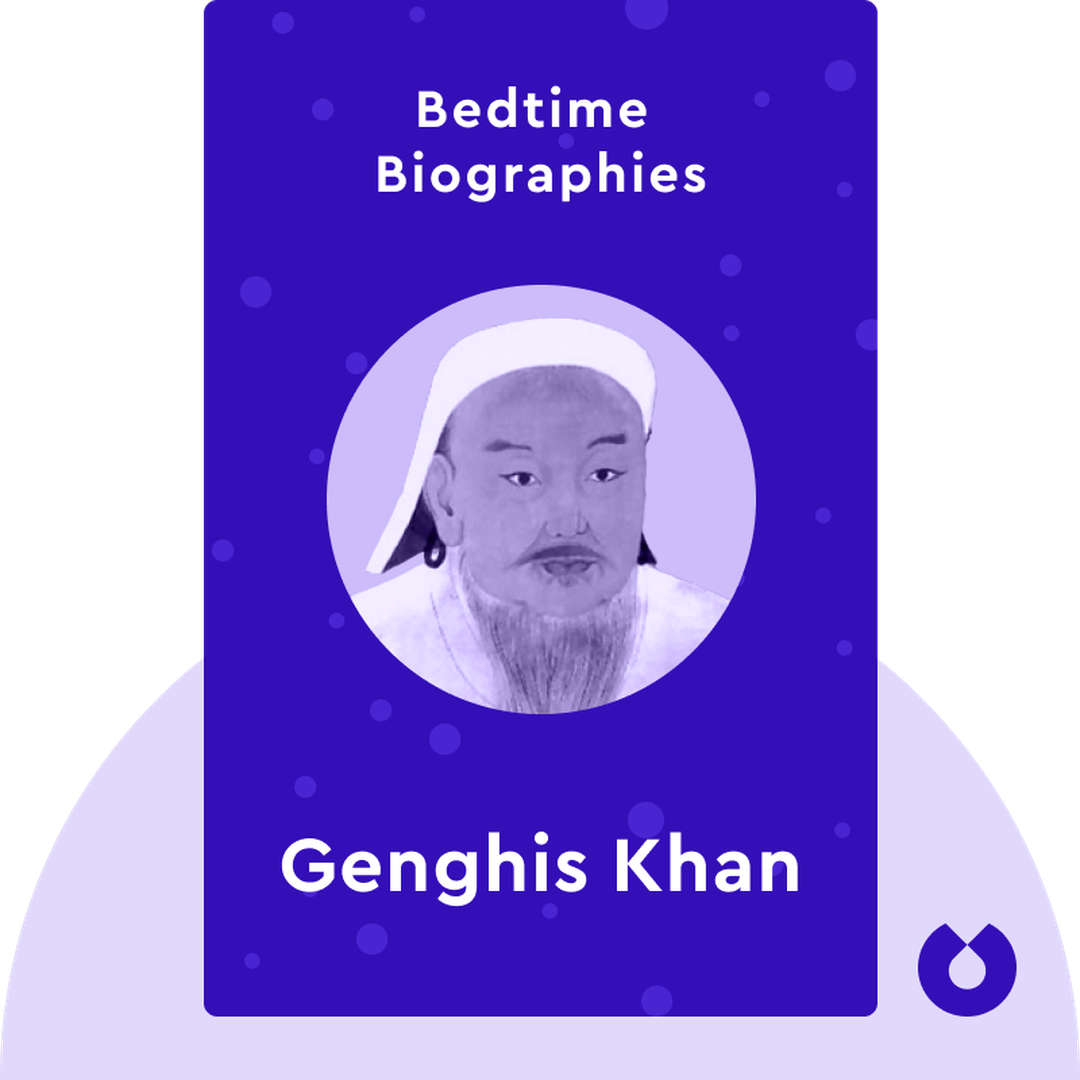
Bedtime Biography: Genghis Khan and the Making of the Modern World
Start ListeningDownload Try free on iPhoneScan to start in 5 seconds
Categories:
If You're Curious About These Questions...
You should listen to this audiobook
- Did you know that the man history remembers as a ruthless barbarian actually pioneered concepts like religious freedom, universal education, and international law?
- Have you ever wondered how the Mongol Empire, far from being just a force of destruction, actually laid the groundwork for the globalized world we live in today?
- Are you curious about the secret to how Genghis Khan transformed disparate nomadic tribes into a meritocratic society that valued trade and modernization over bloodshed?
Listen to Bedtime Biography: Genghis Khan and the Making of the Modern World — Free Audiobook
Loading player...
Key Takeaways from Bedtime Biography: Genghis Khan and the Making of the Modern World
- Discover how Genghis Khan's modern reputation as a ruthless destroyer contrasts with his complex historical reality as a potential uniter of civilizations.
- Learn how the incredible resilience and strategic sacrifices of Temujin’s mother, Hoelun, ensured the survival of the boy who would become a legendary conqueror.
- Understand why witnessing the senseless murder of a low-ranking defender taught a young Genghis Khan that a person's true value is defined by their deeds and kindness, not their social status.
- Find out how the taboo assassination of his dominant half-brother revealed Temujin's early tactical genius and his absolute refusal to submit to arbitrary authority.
- Explore how Temujin’s deteriorating relationship with his sworn brother Jamuka highlights his relentless drive for equality and independence.
Learning Tools
Reinforce what you learned from Bedtime Biography: Genghis Khan and the Making of the Modern World
Mind Map
Bedtime Biography: Genghis Khan and the Making of the Modern World
Early Life & Hardships+
Rise to Power+
Unifying the Mongols+
Global Conquest+
Death & Legacy+
Quiz — Test Your Understanding
Question 1 of 9
What early life event shaped Temujin's belief that a person's value should be based on deeds rather than social rank?
Question 2 of 9
Why did Temujin and his brother Khasar commit the deeply taboo act of killing their older half-brother, Begter?
Question 3 of 9
After claiming the title of khan, Temujin instituted a radical reform regarding how he appointed his assistants and bodyguards. What was this reform?
Question 4 of 9
How did Temujin reform the traditional Mongol policy of looting during warfare?
Question 5 of 9
What event led to the 'Baljuna Covenant', which became a foundational myth and origin story for the Mongol Empire?
Question 6 of 9
Which of the following was a key feature of Genghis Khan's 'Great Law'?
Question 7 of 9
What incident triggered Genghis Khan's massive, four-year military campaign into the Muslim lands of Khwarizm?
Question 8 of 9
How did Genghis Khan handle the succession of his empire before his death?
Question 9 of 9
According to the book, what was the unique 'great gift' of the Mongol Empire compared to other historical empires?
Bedtime Biography: Genghis Khan and the Making of the Modern World — Full Chapter Overview
- 1Recommendation
- 2Chapter One
- 3Chapter Two
- 4Chapter Three
- 5Chapter Four
- 6The End
Bedtime Biography: Genghis Khan and the Making of the Modern World Summary & Overview
Read to you by Marston York.
Genghis Khan and the Making of the Modern World (2004) tells the fascinating story of Genghis Khan, the man who founded the great Mongol Empire. Today, he’s remembered as a ruthless, violent conqueror who thrived on bloodshed and destruction. What has largely been forgotten, though, is how he united disparate peoples, fostered trade and modernization, and advanced democracy – and in so doing, ushered in the modern world.
Who Should Listen to Bedtime Biography: Genghis Khan and the Making of the Modern World?
- History buffs
- Global citizens interested in the roots of the modern world
- Anyone with preconceived notions about the Mongol Empire
Books Similar to Bedtime Biography: Genghis Khan and the Making of the Modern World
Readers who enjoyed this also liked these titles.