Barbarians at the Gate
Start ListeningDownload Try free on iPhoneScan to start in 5 seconds
Categories:
If You're Curious About These Questions...
You should listen to this audiobook
- Did you know that a single corporate battle in the 1980s became so legendary it redefined the meaning of greed and transformed the landscape of modern finance?
- Have you ever wondered what happens when a CEO's personal ambition triggers a $25 billion bidding war that pits the world’s most powerful bankers against each other?
- Are you curious about the secret tactics used by the original 'barbarians' of private equity to orchestrate the most audacious hostile takeover in history?
Listen to Barbarians at the Gate — Free Audiobook
Loading player...
Key Takeaways from Barbarians at the Gate
- Learn how the leveraged buyout (LBO) originally started as a clever legal strategy to help retiring business owners avoid massive estate taxes while maintaining control.
- Discover why the 1980s LBO craze exploded, fueled by tax deductions on corporate debt and the rapid fundraising power of high-risk junk bonds.
- Understand the double-edged sword of leveraged takeovers, which successfully forced companies to become leaner but often left them burdened with crippling debt.
- Find out how CEO Ross Johnson utilized a strategy of perpetual corporate flux and ruthless reorganizations to climb the ladder and fund his lavish lifestyle.
- Explore the 1980s shift in corporate culture through a new breed of executive who prioritized personal wealth and investor allegiance over loyalty to the company.
Learning Tools
Reinforce what you learned from Barbarians at the Gate
Mind Map
Barbarians at the Gate
Origins of LBOs+
The 1980s Boom+
Ross Johnson's Rise+
Rise of KKR+
RJR Nabisco Bidding War+
The Resolution+
Quiz — Test Your Understanding
Question 1 of 8
What was the original purpose of the Leveraged Buyout (LBO) when it was first devised in the late 1960s?
Question 2 of 8
Which two factors primarily fueled the massive surge and profitability of LBOs during the 1980s?
Question 3 of 8
How did Ross Johnson's management style reflect the changing corporate culture of his time?
Question 4 of 8
What caused the primary cultural friction when Nabisco merged with RJR Reynolds?
Question 5 of 8
How did Henry Kravis and his firm KKR shift the paradigm of the LBO industry?
Question 6 of 8
Why was Ross Johnson's initial LBO bid for RJR Nabisco heavily criticized and ultimately doomed?
Question 7 of 8
What was the deciding factor that led the RJR Nabisco board to accept KKR's bid over Ross Johnson's final bid?
Question 8 of 8
What was the ultimate fate of Ross Johnson following the RJR Nabisco buyout?
Barbarians at the Gate — Full Chapter Overview
- 1Recommendation
- 2Wall Street’s modern playbook began as a workaround for avoiding estate taxes.
- 3In the 1980s, LBOs became money-making machines, inspiring both fierce praise and criticism.
- 4A ruthless businessman with a craving for change and luxury reshaped the nature of business.
- 5Johnson expanded his power through a chain of mergers.
- 6A young Wall Street newcomer changed the nature of LBOs.
- 7When Ross Johnson entered the LBO game, his greed led to disaster.
- 8Johnson’s low initial offer encouraged other bidders to enter the race.
- 9The LBO deal ended Ross Johnson’s time at Nabisco, but not his career.
- 10Final summary
Barbarians at the Gate Summary & Overview
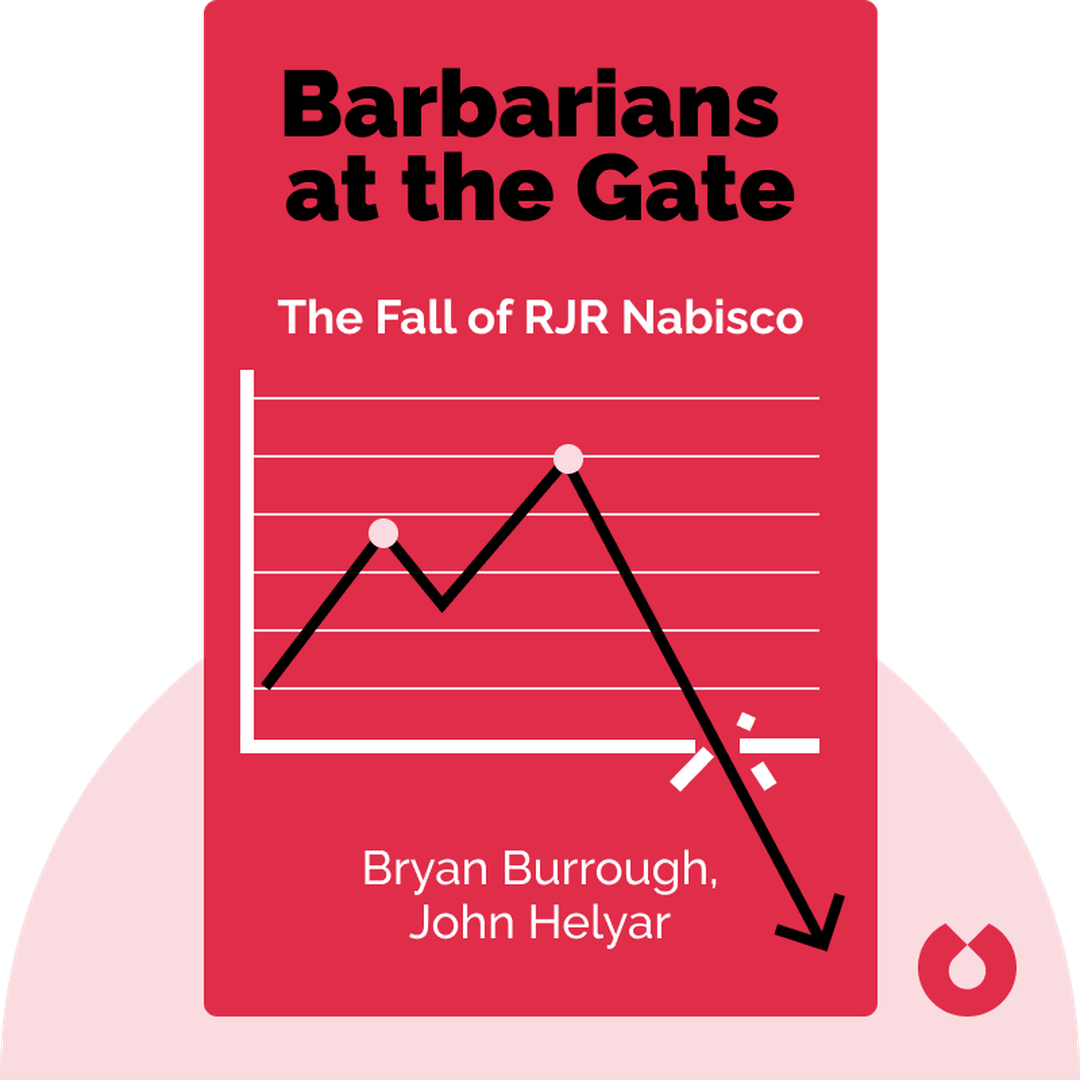
Barbarians at the Gate (1989) tells the story of one of the largest corporate deals in US history, the leveraged buyout of RJR Nabisco. These blinks provide a gripping portrait of the extreme and extravagant behavior in corporate America during the 1980s.
Who Should Listen to Barbarians at the Gate?
- Anyone working in finance or business who wants to learn about a legendary deal
- Citizens appalled by the excesses of corporate America
- Anyone enthralled by hostile takeovers and cutthroat dealings
Books Similar to Barbarians at the Gate
Readers who enjoyed this also liked these titles.