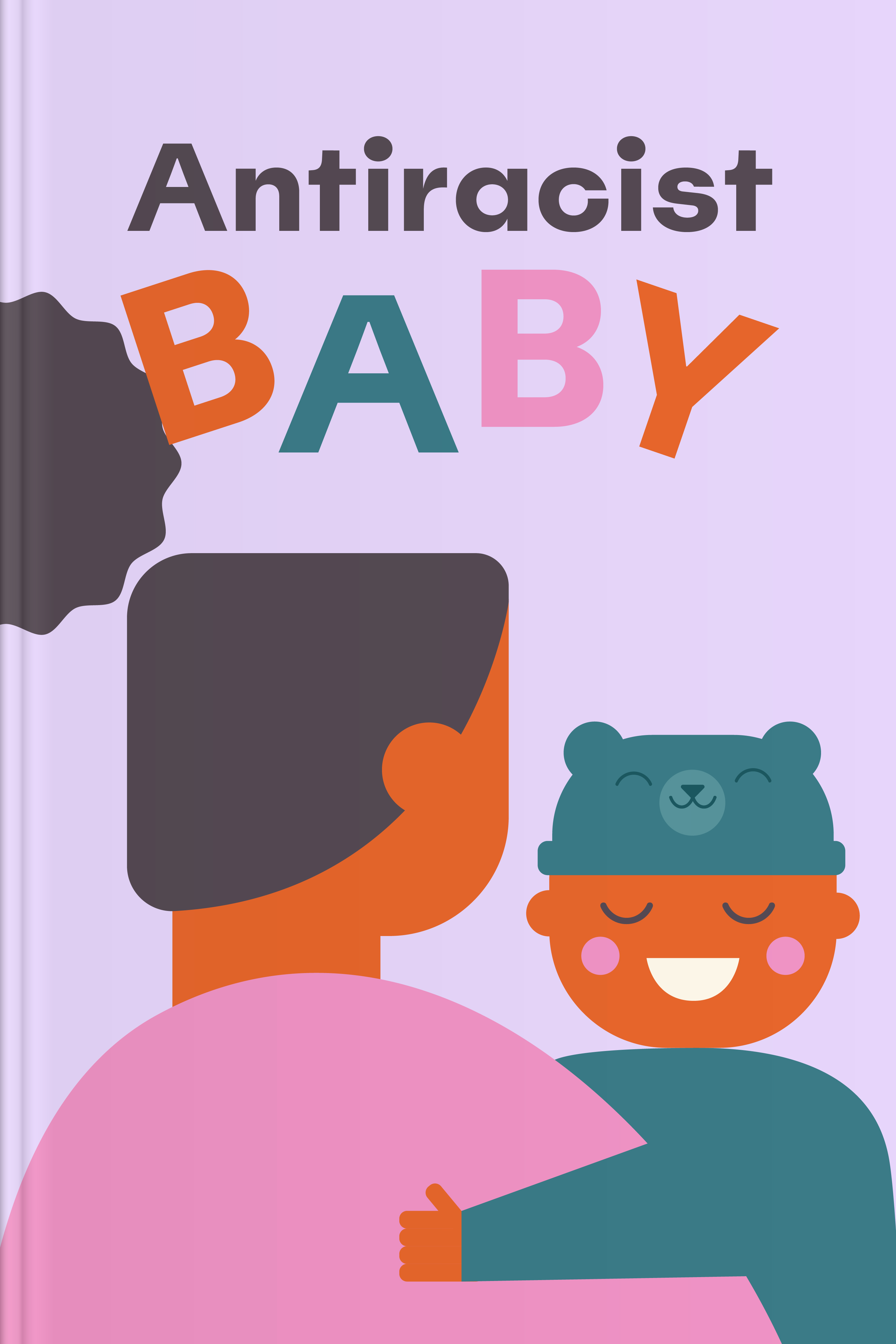
Antiracist Baby audiobook cover - This gentle, practical guide invites parents and caregivers to nurture children who notice difference with respect, speak up about unfairness, and grow into people who help build a world where everyone is treated with dignity and care.

Antiracist Baby

This gentle, practical guide invites parents and caregivers to nurture children who notice difference with respect, speak up about unfairness, and grow into people who help build a world where everyone is treated with dignity and care.

Ibram X. Kendi

4.4 / 5(8 ratings)
Start ListeningDownloadQR code that opens AudiobookHub on the App StoreTry free on iPhoneScan to start in 5 seconds

If You're Curious About These Questions...

You should listen to this audiobook

Listen to Antiracist Baby — Free Audiobook

Loading player...

Key Takeaways from Antiracist Baby

Learning Tools

Reinforce what you learned from Antiracist Baby

Mind Map

Antiracist Baby
Foundations: Learning Antiracism+
Core Conversations: Naming Race & Racism+
Broadening Perspective: Systems & Diversity+
Growth Mindset: Curiosity & Accountability+
Vision & Practical Actions+

Quiz — Test Your Understanding

Question 1 of 10
According to the book, where do children primarily learn racist ideas?
  • A. They are born with them as a natural instinct.
  • B. They are learned from their environment, including comments and silence from adults.
  • C. They develop them independently as a part of normal cognitive growth.
  • D. They learn them exclusively from negative media portrayals.
Question 2 of 10
What is the book's recommended approach for caregivers when talking about skin color with children?
  • A. To teach children to be 'color-blind' and pretend not to see differences.
  • B. To avoid the topic entirely in hopes that silence will prevent bias.
  • C. To talk about skin color calmly and respectfully, teaching that it doesn't determine a person's worth.
  • D. To only discuss skin color in response to a direct and awkward question from the child.
Question 3 of 10
What is a potential negative consequence when adults remain silent about racism in front of children?
  • A. Children learn that being silent is the most polite response to conflict.
  • B. Children may conclude that racism is not a serious issue or that it should be endured quietly.
  • C. Children become more curious and research the topic on their own.
  • D. Children understand that adults are protecting them from difficult topics.
Question 4 of 10
Beyond individual attitudes, what does the book identify as a primary driver of systemic inequality?
  • A. A lack of luck or good fortune among certain groups.
  • B. The personal choices and effort of individuals.
  • C. The rules and policies that society puts in place.
  • D. The natural competition between different communities.
Question 5 of 10
How does the book suggest we should think about human differences and shared humanity?
  • A. Focus only on our shared humanity to create unity.
  • B. Prioritize celebrating differences over acknowledging what we have in common.
  • C. Hold both truths at once: appreciate that people are wonderfully different AND profoundly connected.
  • D. Acknowledge that differences are minor and our shared biology is all that truly matters.
Question 6 of 10
What attitude towards diversity does the book encourage caregivers to foster in children?
  • A. Tolerance, viewing diversity as a reality that must be endured.
  • B. Suspicion, treating cultural differences with caution.
  • C. Joy and delight, seeing diversity as a source of beauty and learning.
  • D. Indifference, teaching that cultural differences are not important.
Question 7 of 10
When a child says or thinks something racist, what is the recommended approach for a caregiver?
  • A. Ignore the comment to avoid shaming the child.
  • B. Treat it as a moment for learning by admitting the harm and discussing it gently.
  • C. Administer a punishment to show that such words are unacceptable.
  • D. Assume the child will grow out of it naturally.
Question 8 of 10
How does nurturing curiosity help in raising an antiracist child?
  • A. It ensures the child will never have a biased thought.
  • B. It makes children more likely to question their parents' values.
  • C. It helps children approach differences with interest instead of fear.
  • D. It guarantees the child will get along with everyone they meet.
Question 9 of 10
What is the ultimate hope or goal in teaching children about racism?
  • A. To make children feel hopeless about the future of the world.
  • B. To build clarity and courage for the next generation to create positive change.
  • C. To encourage children to judge everyone as an individual, ignoring systemic problems.
  • D. To ensure children are completely 'color-blind' and unaware of racial differences.
Question 10 of 10
Which of the following is one of the three simple practices recommended in the book's conclusion?
  • A. Shielding children from all news related to racism.
  • B. Discouraging questions about race to avoid difficult conversations.
  • C. Sharing books, movies, and shows that highlight different cultures.
  • D. Pretending that racism is a problem that was solved in the past.

Antiracist Baby — Full Chapter Overview

Antiracist Baby Summary & Overview

This audio summary explores a hopeful idea: children aren’t born with racist beliefs—those beliefs are taught. And because ideas can be taught, they can also be un-taught and replaced with something better: curiosity, honesty, and a commitment to fairness.

Across ten short chapters, the narration offers supportive ways to talk about skin color, name racism when it appears, understand how unfair policies shape people’s lives, and build a family culture where learning and growth are welcomed. The message is steady and encouraging: small everyday choices can help raise children who celebrate diversity and help change the world.

Who Should Listen to Antiracist Baby?

  • Parents, caregivers, and educators who want simple language for talking with children about race, fairness, and difference
  • Adults who want to model accountability—learning, apologizing, and growing—so children feel safe doing the same

About the Author: Ibram X. Kendi

Ibram X. Kendi is a writer and scholar known for his work on antiracism and how people can actively oppose racist ideas and systems. His children’s-focused work invites families to build values of fairness, truth-telling, and respect from the very beginning.

🎧
Listen in the AppOffline playback & background play
Get App