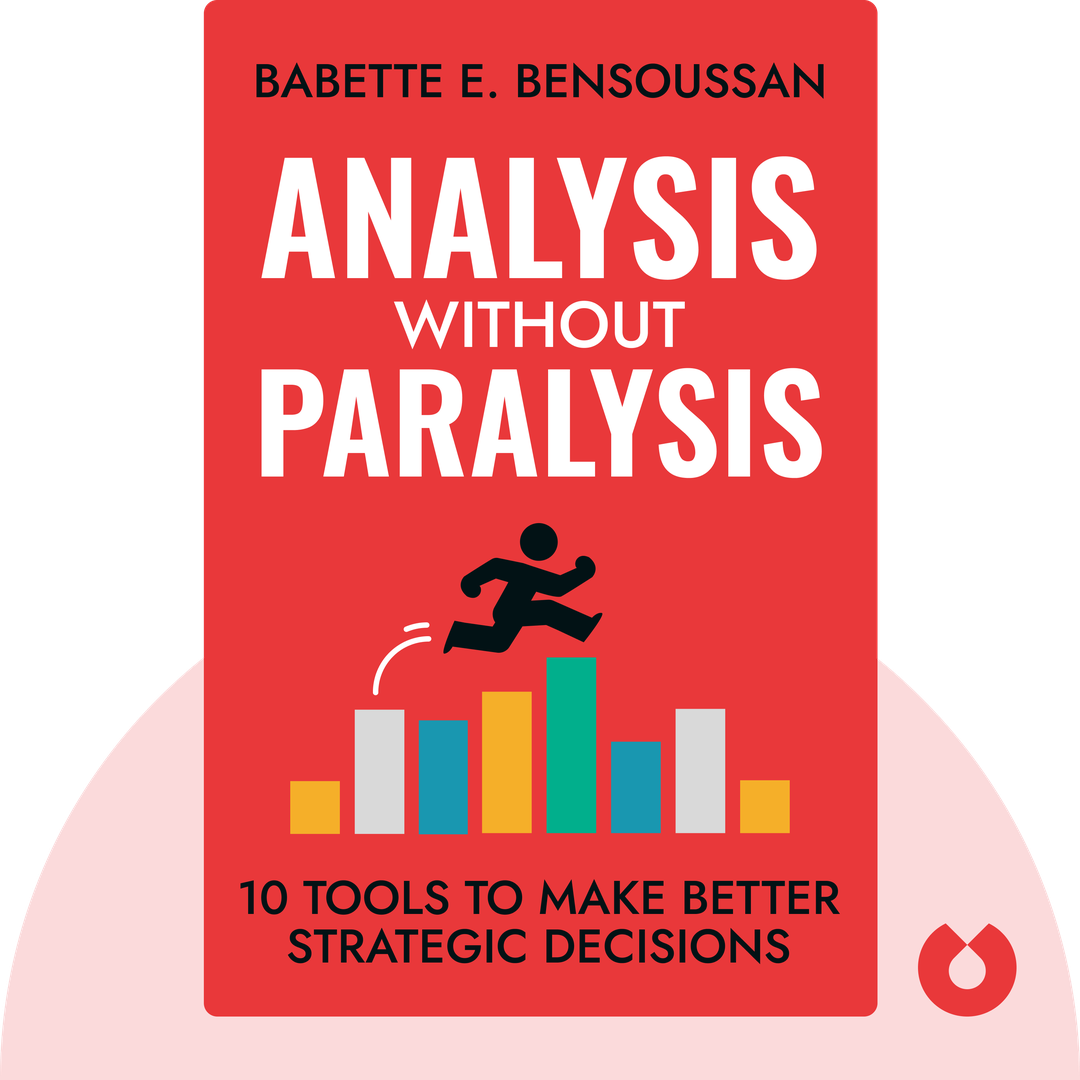
Analysis Without Paralysis
Start ListeningDownload Try free on iPhoneScan to start in 5 seconds
Categories:
If You're Curious About These Questions...
You should listen to this audiobook
- What if you could master the ten most powerful strategic tools to turn overwhelming data into a clear roadmap for success?
- Have you ever wondered why some leaders make lightning-fast decisions while others get trapped in "analysis paralysis"?
- What’s the secret to choosing the perfect analysis model—like SWOT or Porter’s Five Forces—to outmaneuver your competition every time?
Listen to Analysis Without Paralysis — Free Audiobook
Loading player...
Key Takeaways from Analysis Without Paralysis
- Discover how to strategically prioritize your product portfolio and allocate resources using the Boston Matrix to categorize offerings into Stars, Cash Cows, Question Marks, and Dogs.
- Learn to anticipate your rivals' next moves by applying the Four Corners Model to dissect their internal motivations, strategies, and operational capabilities.
- Master the use of Financial Ratios to transform raw accounting numbers into meaningful, actionable indicators that measure liquidity, profitability, and overall business health.
- Understand how to evaluate industry attractiveness and shape effective strategies using Porter's Five Forces to analyze buyer power, supplier leverage, and competitive threats.
- Find out how to stress-test your business strategies against an uncertain future by conducting Scenario Analysis across optimistic, neutral, and pessimistic conditions.
Learning Tools
Reinforce what you learned from Analysis Without Paralysis
Mind Map
Analysis Without Paralysis
Core Purpose+
Portfolio Analysis+
Competitor & Industry Analysis+
Internal & Financial Analysis+
Environmental & Risk Analysis+
Strategic Planning & Problem Solving+
Quiz — Test Your Understanding
Question 1 of 10
In the Boston Matrix, how is a 'Cash Cow' product characterized?
Question 2 of 10
According to Michael Porter's Four Corners Model, which category focuses on what a competitor's management believes about themselves and the industry?
Question 3 of 10
What does a 'current ratio' primarily help a business evaluate?
Question 4 of 10
In Porter's Five Forces Model, what does the 'Threat of Substitutes' refer to?
Question 5 of 10
What is the primary purpose of conducting a Scenario Analysis?
Question 6 of 10
In a SWOT analysis, how are 'Opportunities' and 'Threats' classified?
Question 7 of 10
When conducting a PEST analysis, examining cultural trends, demographics, and income distributions falls under which category?
Question 8 of 10
In Value Chain Analysis, which of the following is considered a 'Support Activity'?
Question 9 of 10
In the Policy Cycle of Issue Analysis, why is the 'Consultation' phase crucial before implementation?
Question 10 of 10
What is a defining characteristic of the Delphi Method used in political risk analysis?
Analysis Without Paralysis — Full Chapter Overview
- 1Recommendation
- 2The Boston Matrix
- 3The Four Corners Framework
- 4Financial Ratio Analysis
- 5The Five Forces Model
- 6Scenario Planning Analysis
- 7SWOT Analysis
- 8Macroenvironment Analysis
- 9Value Chain Analysis
- 10Analyzing Strategic Issues
- 11Political Risk Assessment
- 12Final summary
Analysis Without Paralysis Summary & Overview
Analysis Without Paralysis is a practical guide to the ten most powerful strategic analysis tools that will help you make better and faster business decisions. It is a simple and straightforward tour through models such as Porter’s Five Forces, PEST, and SWOT, teaching you when and how to utilize these powerful techniques.
Who Should Listen to Analysis Without Paralysis?
- Managers who want to build a competitive strategy
- All types of entrepreneurs
- Business Owners wanting to turn data into information
Books Similar to Analysis Without Paralysis
Readers who enjoyed this also liked these titles.