If You're Curious About These Questions...
You should listen to this audiobook
- Did you know that the leader who guided America through its gravest constitutional crisis since the Civil War was the only person to serve as president without ever being elected to the executive branch?
- Have you ever wondered how a man often dismissed as 'ordinary' managed to navigate the most profound economic slump since the Great Depression while restoring faith in a shattered government?
- Are you curious about the hidden political maneuvers and surprising legacy that transformed Gerald Ford from an 'accidental' placeholder into one of the most significant figures in modern history?
Listen to An Ordinary Man — Free Audiobook
Loading player...
Key Takeaways from An Ordinary Man
- Discover how Gerald Ford's core values of integrity, bipartisanship, and compassion offer a powerful and necessary contrast to today's political landscape.
- Understand why Richard Nixon's attempt to use an unassuming politician like Ford as an insurance policy against impeachment spectacularly backfired.
- Learn how Ford's modest Grand Rapids upbringing instilled a commitment to public service, leading him to prioritize impactful legislation over self-aggrandizing monuments.
- Find out how Ford's personal history with an abusive biological father inspired his quiet, unexploited effort to federalize child support payments.
- Explore how Ford navigated unprecedented constitutional and economic crises by treating the presidency as a humble duty to clean up inherited messes.
Learning Tools
Reinforce what you learned from An Ordinary Man
Mind Map
An Ordinary Man
Character & Values+
Early Life & Influences+
The Unexpected President+
Safeguarding Institutions+
Civil Rights Advocate+
Quiz — Test Your Understanding
Question 1 of 6
Why did Richard Nixon appoint Gerald Ford as his vice president?
Question 2 of 6
What political position did Gerald Ford originally dream of holding, rather than the presidency?
Question 3 of 6
How did Ford's early family history influence his later legislative actions?
Question 4 of 6
According to the text, what was Ford's primary motivation for pardoning Richard Nixon?
Question 5 of 6
How did President Ford respond to the fall of Saigon in 1975?
Question 6 of 6
What motivated Gerald Ford to publicly defend affirmative action in a 1999 New York Times op-ed?
An Ordinary Man — Full Chapter Overview
- 1Recommendation
- 2An unexpected president
- 3A life of public service
- 4Protecting America’s institutions
- 5Champion of equal opportunity
- 6Final summary
An Ordinary Man Summary & Overview
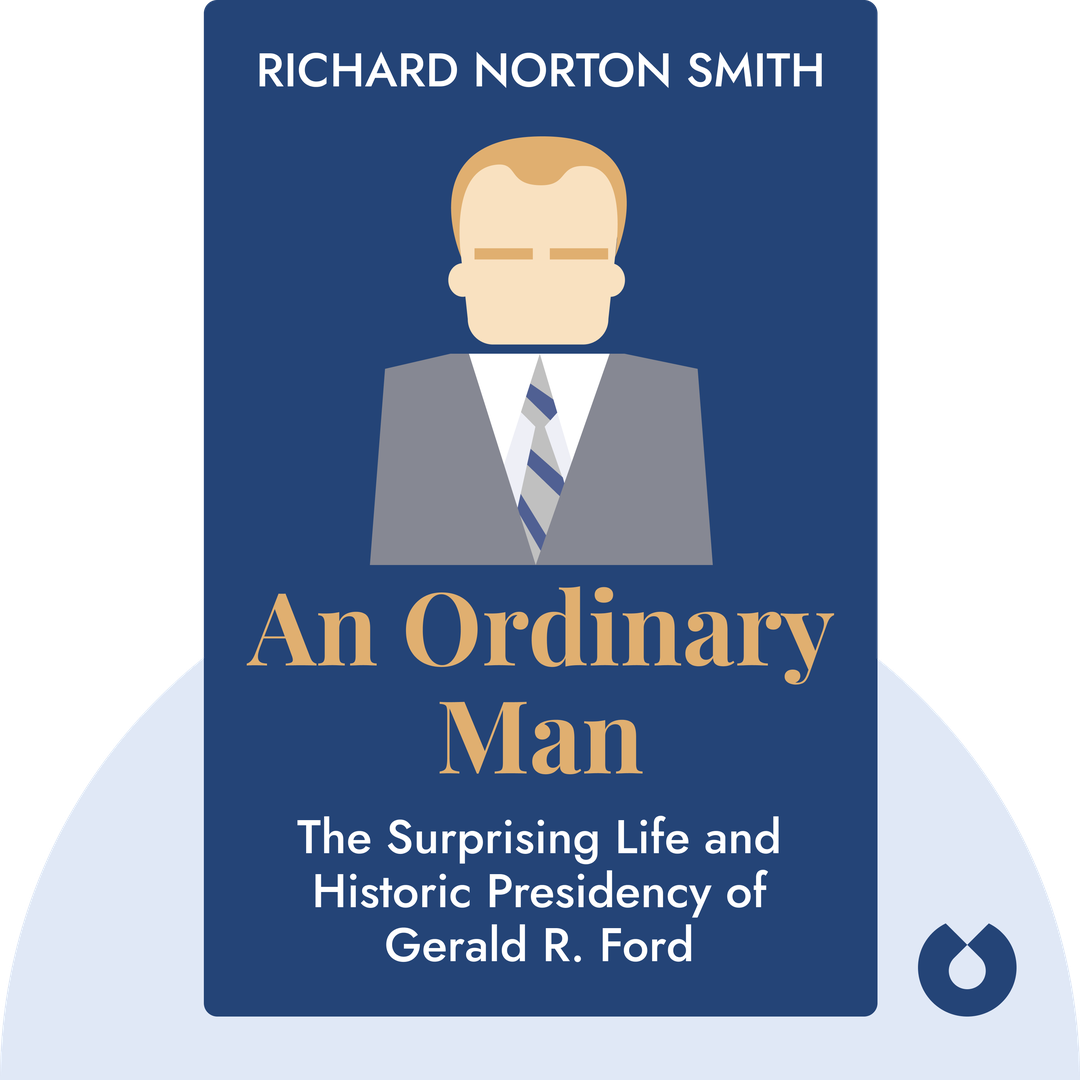
An Ordinary Man (2023) is the complete biography of Gerald R. Ford, the thirty-eighth president of the United States. Under his leadership, America navigated its gravest constitutional crisis since the Civil War and confronted its most profound economic slump since the Great Depression. While Ford can be seen as an “accidental president,” historian Richard Norton Smith argues that his accomplishments were numerous and significant.
Who Should Listen to An Ordinary Man?
- History buffs
- Politicos interested post-Watergate America
- Fans of in-depth biographical works
Books Similar to An Ordinary Man
Readers who enjoyed this also liked these titles.