If You're Curious About These Questions...
You should listen to this audiobook
- Have you ever wondered how a humble online bookstore managed to disrupt almost every industry on the planet and redefine the way we live?
- What’s the secret to Amazon's 'customer obsession' strategy, and why is it the one thing most businesses get completely wrong?
- Are you curious about what the future of shopping really looks like and how traditional retailers can actually thrive in an Amazon-dominated world?
Listen to Amazon — Free Audiobook
Loading player...
Key Takeaways from Amazon
- Discover how Amazon uses the flywheel business strategy—a continuous cycle of low prices, increased traffic, and third-party sellers—to build unstoppable momentum and dominate global retail.
- Understand why Amazon acts as much more than a traditional retailer, expanding into private brands, cloud storage, and original electronics to continuously feed its long-term growth.
- Learn why Customer Obsession is Amazon's top leadership principle, driving unique development practices like writing mock press releases to work backward from the shopper's perspective.
- Explore how Amazon leverages its massive trove of user data—representing over half of all online product searches—to pioneer e-commerce innovations and anticipate consumer needs.
- Find out why the Amazon Prime membership intentionally operates at a loss on shipping and entertainment to secure a fiercely loyal customer base that spends five times more than average shoppers.
Learning Tools
Reinforce what you learned from Amazon
Mind Map
Amazon
The Flywheel Strategy+
Customer Obsession+
Amazon Prime+
Merging Online & Offline+
Technological Innovation+
Logistics & Infrastructure+
Competing in the Amazon Era+
Quiz — Test Your Understanding
Question 1 of 10
What is the core business strategy that underpins Amazon's continuous growth and expansion?
Question 2 of 10
How does Amazon ensure its new products and services remain highly customer-focused during the development phase?
Question 3 of 10
Which of the following is true regarding the economics of an Amazon Prime membership?
Question 4 of 10
According to the book, what is one of the main reasons Amazon began opening physical retail locations despite its online dominance?
Question 5 of 10
What made the acquisition of Whole Foods a logical strategic step for Amazon's expansion into groceries?
Question 6 of 10
Originally developed for its own retail infrastructure, which highly profitable Amazon service now provides cloud storage for companies like Netflix and NASA?
Question 7 of 10
How has Amazon attempted to manage more parts of its delivery chain itself, reducing its reliance on traditional carriers like UPS and FedEx?
Question 8 of 10
To survive the 'retail apocalypse,' what strategy does the book recommend for traditional retailers to compete against Amazon?
Question 9 of 10
What is the very first of Amazon's 14 leadership principles, demonstrating its core business philosophy?
Question 10 of 10
Which of the following products is highlighted in the book as one of Amazon's biggest failures, demonstrating the company's willingness to take risks and learn from mistakes?
Amazon — Full Chapter Overview
- 1Recommendation
- 2Amazon is the world’s most successful retailer because it’s far more than just a retailer.
- 3Amazon’s success rests on its deep commitment to customers.
- 4The Prime membership program is the backbone of Amazon’s business model.
- 5Amazon is a major innovator in blending online and offline shopping.
- 6Amazon’s acquisition of Whole Foods confirmed its major move into groceries.
- 7A tech company at its core, Amazon keeps developing new tools to better serve customers.
- 8To meet ever-rising customer expectations, Amazon keeps expanding its logistics infrastructure.
- 9Retailers that want to thrive in the digital age must offer what Amazon can’t.
- 10Final summary
Amazon Summary & Overview
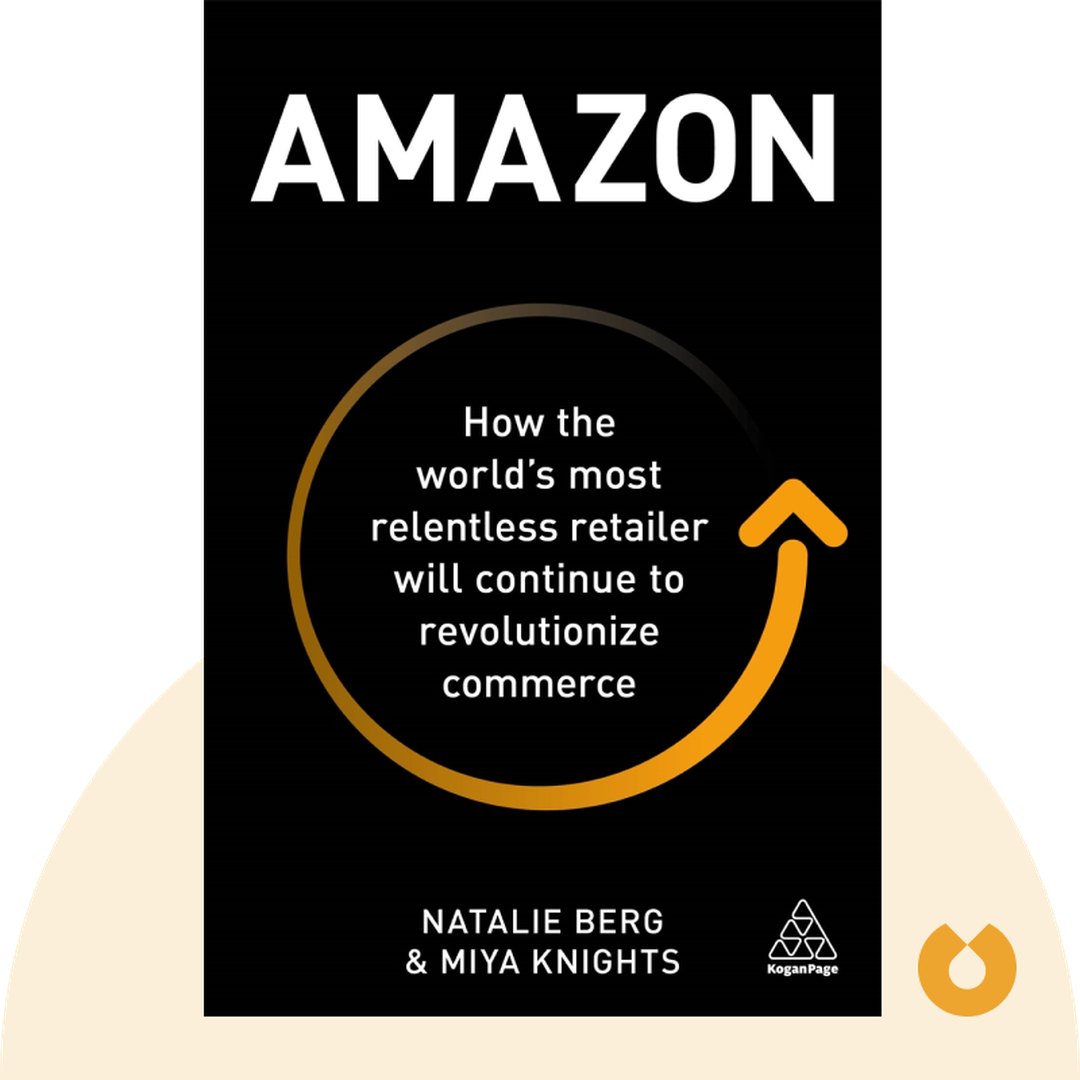
Amazon (2019) investigates the rise of the most disruptive online retailer of the twenty-first century, from humble online bookstore to global business empire. Drawing on industry data and insider knowledge, retail experts Natalie Berg and Miya Knights explain why Amazon dominates today’s e-commerce market, how it will continue to revolutionize retail, and what other businesses can do to keep up.
Who Should Listen to Amazon?
- Aspiring business strategists and marketing experts
- Anyone wondering how their business can thrive in an Amazon world
- Online shoppers interested in the future of retail
Books Similar to Amazon
Readers who enjoyed this also liked these titles.