If You're Curious About These Questions...
You should listen to this audiobook
- Have you ever wondered why certain words are suddenly disappearing from social media, only to be replaced by a strange new "coded" vocabulary?
- Did you know that the digital platforms you use every day are actually rewriting the rules of human language faster than at any other point in history?
- Are you curious about how the hidden logic of online algorithms is subtly reshaping the way you speak, write, and even think in your offline life?
Listen to Algospeak — Cinematic Audio Edition
Loading player...
Key Takeaways from Algospeak
- Discover how social media platforms have developed unique verbal 'accents,' such as rapid-fire speech on YouTube, to strategically maximize engagement algorithms.
- Understand how automated content moderation drives real-world language change, forcing algorithmic slang like 'unalive' to unexpectedly bleed into formal, offline settings.
- Explore the perpetual cat-and-mouse game where creators invent clever linguistic workarounds, novel acronyms, and emoji codes to dodge algorithmic penalties and demonetization.
- Learn why modern digital euphemisms spread at an unprecedented speed and scale, evolving across millions of users in mere weeks to bypass platform censorship.
- Trace the internet's evolution from organically grown community slang to a centralized ecosystem heavily dictated by secret, personalized machine-learning algorithms.
Learning Tools
Reinforce what you learned from Algospeak
Mind Map
Algospeak
Platform Accents+
Algorithmic Censorship+
Evolution of Algorithms+
Linguistic Virality+
Machine-Optimized Content+
Hidden Costs+
Quiz — Test Your Understanding
Question 1 of 7
Why do content creators on different social media platforms adopt distinct speaking styles, such as rapid-fire delivery on YouTube or stretched words on TikTok?
Question 2 of 7
What originally prompted the creation of the term 'unalive' on TikTok?
Question 3 of 7
According to the text, how does modern algorithmic censorship evasion differ from historical examples of coded language, like the early Christian fish symbol?
Question 4 of 7
What significant shift in social media mechanics occurred around 2017, as exemplified by Reddit?
Question 5 of 7
In the context of linguistic evolution, what gives a new slang term an 'endurance factor' for long-term survival?
Question 6 of 7
What did a 2010 Wharton study on New York Times articles reveal about the type of content users are most likely to share?
Question 7 of 7
How are modern digital platforms contributing to the threat against global language diversity?
Algospeak — Full Chapter Overview
- 1Recommendation
- 2When platform language moves offline
- 3Evading the algorithm
- 4The rise of machine learning
- 5What it means to “go viral”
- 6Designed for the machine
- 7Engagement and its hidden costs
- 8Final summary
Algospeak Summary & Overview
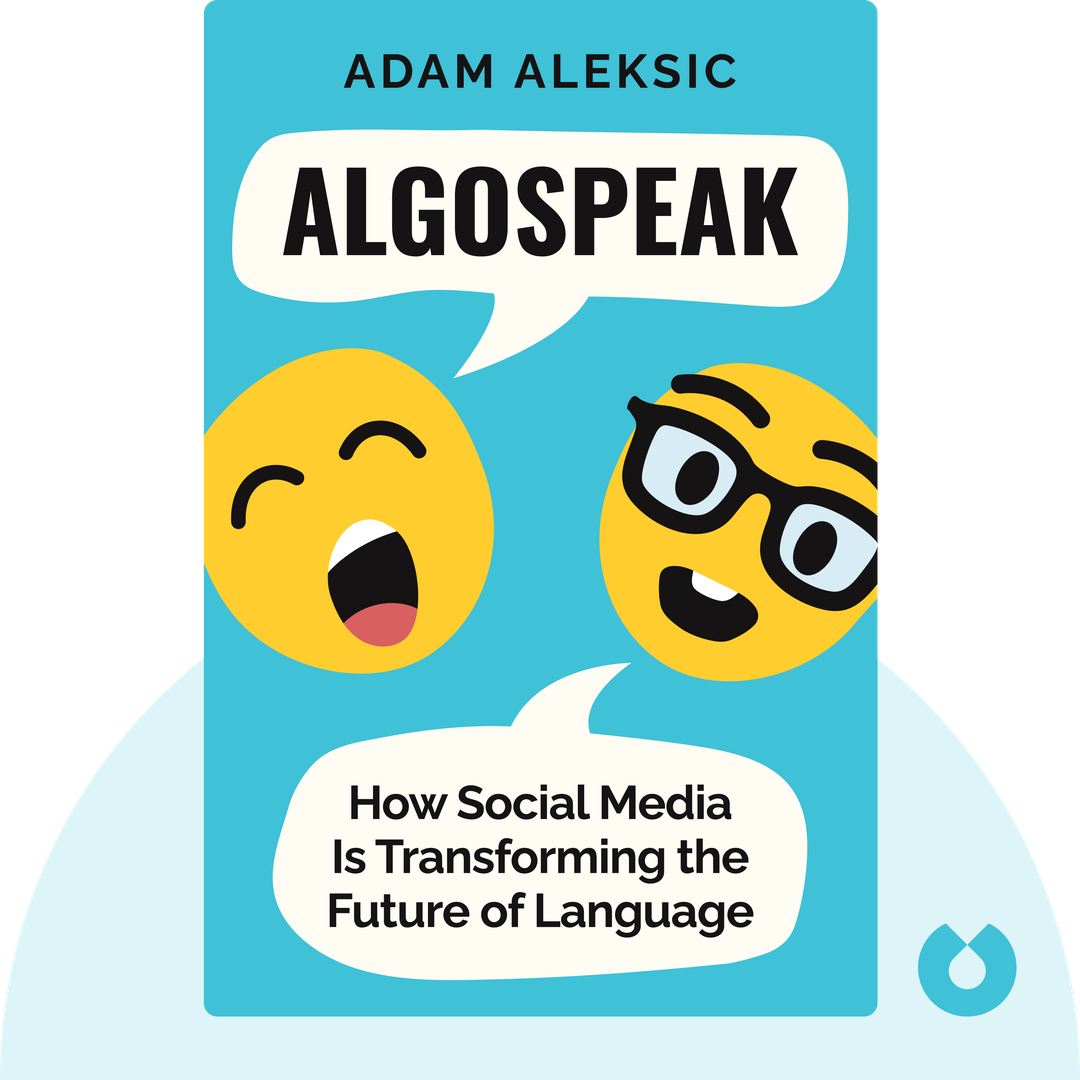
Algospeak examines how digital platforms are transforming language. It shows how internet culture creates new ways of speaking and writing, shaping both online and offline communication. It also reveals how this technology-driven linguistic change reflects broader shifts in social norms, as well as our relationship to language itself.
Who Should Listen to Algospeak?
- Linguistics enthusiasts interested in how technology is accelerating language change
- Tech-savvy professionals looking to understand online platforms
- Anyone interested in slang and popular culture
Books Similar to Algospeak
Readers who enjoyed this also liked these titles.