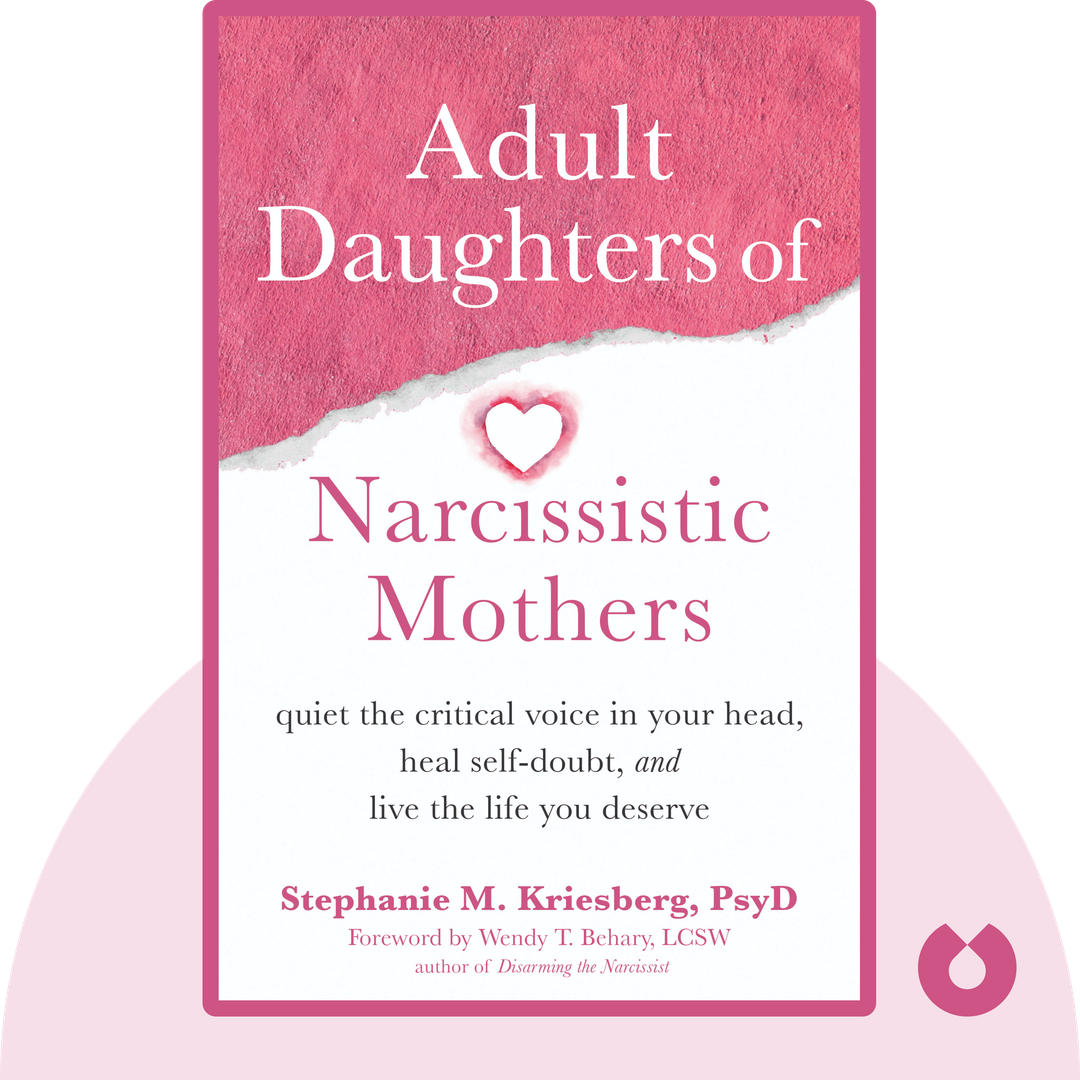
Adult Daughters of Narcissistic Mothers
Start ListeningDownload Try free on iPhoneScan to start in 5 seconds
Categories:
If You're Curious About These Questions...
You should listen to this audiobook
- Have you ever wondered why you’ve felt fundamentally flawed since childhood, even when there's no logical reason for it?
- What if you could finally silence the persistent voice of self-doubt and anxiety that a narcissistic upbringing left behind?
- Are you curious about the secret to setting healthy boundaries with a manipulative parent without being consumed by guilt?
Listen to Adult Daughters of Narcissistic Mothers — Free Audiobook
Loading player...
Key Takeaways from Adult Daughters of Narcissistic Mothers
- Understand that your mother's hurtful behavior is driven by her own pathological insecurity and lack of empathy, not by your personal shortcomings.
- Accept that you cannot change a narcissistic parent, and discover how to focus your energy on managing the relationship's emotional impact instead.
- Recognize that the constant stream of repetitive negative thinking in your mind is actually an echo of your mother's voice, rather than your own.
- Learn a powerful technique to disarm your inner critic by giving it a name, helping you separate yourself from anxiety and turn down the volume of endless worries.
- Discover why childhood trauma makes you feel fundamentally flawed, and understand how your brain automatically triggers deep-seated shame before logic can intervene.
Learning Tools
Reinforce what you learned from Adult Daughters of Narcissistic Mothers
Mind Map
Adult Daughters of Narcissistic Mothers
Understanding Narcissistic Mothers+
Overcoming Anxiety+
Dismantling Shame+
Reclaiming Power+
Ultimate Acceptance+
Quiz — Test Your Understanding
Question 1 of 6
According to the text, what is the underlying driver of a narcissistic mother's cruel or manipulative behavior?
Question 2 of 6
How does the text suggest dealing with the critical inner voice, or repetitive negative thinking (RNT)?
Question 3 of 6
Why does the emotion of shame often linger and trigger so quickly in adult daughters of narcissistic mothers?
Question 4 of 6
When triggered by shame, what does the text recommend as a helpful step to move forward?
Question 5 of 6
Why is setting boundaries particularly difficult for children raised by narcissistic mothers?
Question 6 of 6
What is the recommended approach for someone who is learning to set boundaries for the first time?
Adult Daughters of Narcissistic Mothers — Full Chapter Overview
- 1Recommendation
- 2There’s a reason your mom is a narcissist – and it isn’t you
- 3Anxiety: the inner voice’s endless worries
- 4Shame: believing you are fundamentally flawed
- 5Powerlessness: the vulnerable child inside you
- 6Final summary
Adult Daughters of Narcissistic Mothers Summary & Overview
Adult Daughters of Narcissistic Mothers (2022) explores the ramifications of having a narcissistic parent, and what you as an adult can do to release yourself from your mother’s toxic hold. Its toolkit will help you manage the difficult feelings that come with being raised by a narcissist – like self-doubt, shame, and anxiety – so that you can start living on your own terms.
Who Should Listen to Adult Daughters of Narcissistic Mothers?
- Adults with controlling, manipulative, or domineering mothers
- Those who have struggled with anxiety and insecurity since they were young
- Anyone who has felt fundamentally flawed since they were a child
Books Similar to Adult Daughters of Narcissistic Mothers
Readers who enjoyed this also liked these titles.