If You're Curious About These Questions...
You should listen to this audiobook
- Have you ever wondered why Virginia Woolf argued that a woman must have exactly five hundred pounds a year and a room of her own to truly master the art of fiction?
- What if William Shakespeare had a sister as gifted as he was—and what does her tragic, imagined fate reveal about the hidden history of female genius?
- Are you curious about the secret to a 'perfectly incandescent' mind and why the greatest art requires us to look beyond the limits of gender?
Listen to A Room of One’s Own — Free Audiobook
Loading player...
Key Takeaways from A Room of One’s Own
- Discover why talent alone is never enough, and understand how true creativity requires the physical and mental space to fail safely and begin again.
- Understand how systemic oppression often hides in ordinary, routine restrictions, proving that true freedom begins with basic dignity, privacy, and the right to exist without apology.
- Learn why the most compelling stories rely on unembellished truth, as Woolf demonstrates that portraying reality without exaggeration is the strongest way to communicate a message.
- Recognize the crucial link between financial autonomy and ambition, and see how denying individuals the rights to the fruits of their own labor makes true independence impossible.
- Uncover the psychological root of prejudice, and learn how individuals who emphatically insist on the inferiority of others are often merely trying to protect their own sense of superiority.
Learning Tools
Reinforce what you learned from A Room of One’s Own
Mind Map
A Room of One’s Own
Material Prerequisites for Art+
Patriarchal Power & Insecurity+
Historical Suppression+
Evolution of Female Writers+
The Ideal Artistic Mind+
Quiz — Test Your Understanding
Question 1 of 7
What does Virginia Woolf argue are the two essential conditions for a woman to achieve artistic greatness?
Question 2 of 7
When Woolf visited the British Library to research gender disparities, what glaring imbalance did she discover?
Question 3 of 7
Why does Woolf introduce the fictional character of Judith, Shakespeare’s sister?
Question 4 of 7
According to Woolf, why did 19th-century female authors like Jane Austen and the Brontë sisters primarily write novels?
Question 5 of 7
In her analysis of Mary Carmichael’s contemporary novel, why does Woolf find the sentence 'Chloe liked Olivia' so groundbreaking?
Question 6 of 7
What concept, originally coined by Samuel Taylor Coleridge, does Woolf believe is essential for producing the greatest art?
Question 7 of 7
According to the text, what is a primary danger of men retreating into a self-consciously masculine ideal out of insecurity?
A Room of One’s Own — Full Chapter Overview
- 1Recommendation
- 2To reach artistic greatness, a woman needs money and space.
- 3Men use their power to place their own gender above women.
- 4Throughout history, society has prevented gifted women from using their talents.
- 5Even successful women writers remain constrained by social realities.
- 6Contemporary women can use fiction to explore new artistic ground.
- 7The best artists can think beyond categories like gender.
- 8Final summary
A Room of One’s Own Summary & Overview
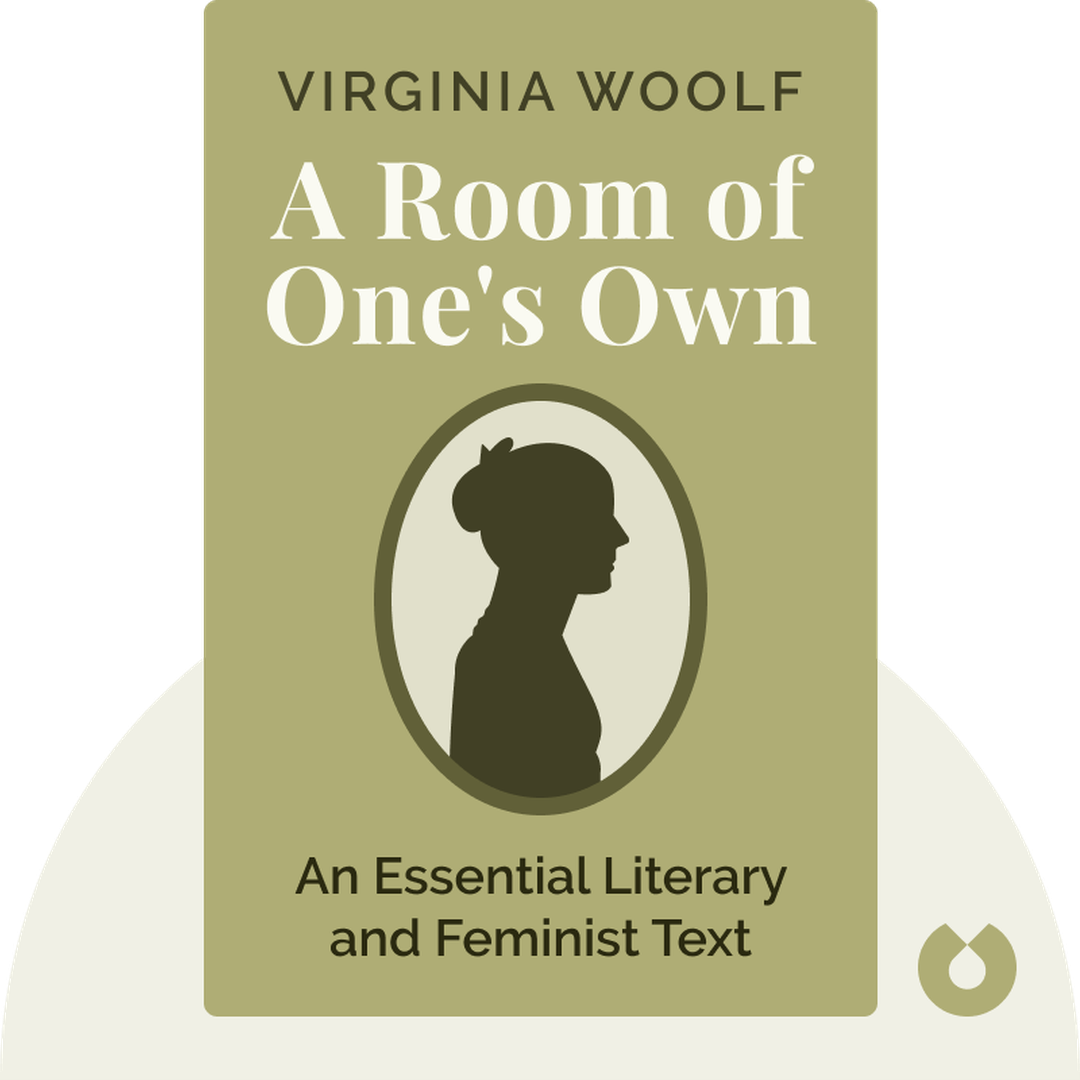
A Room of One's Own (1929) is a perceptive rumination on gender and self-expression. This extended essay explores the social and structural barriers women face when creating art.
Who Should Listen to A Room of One’s Own?
- Artists looking for inspiring words
- Women exploring the history of feminism
- Those struggling to understand social injustice
Books Similar to A Room of One’s Own
Readers who enjoyed this also liked these titles.