If You're Curious About These Questions...
You should listen to this audiobook
- Have you ever wondered why the exact same task can feel effortless at one time of day and nearly impossible at another?
- Did you know that the secret to a stronger immune system and lower disease risk might not be what you’re doing, but exactly *when* you’re doing it?
- What if you could unlock your body’s hidden 24-hour biological clock to finally achieve the deep, restorative sleep you’ve been missing?
Listen to Life Time — Free Audiobook
Loading player...
Key Takeaways from Life Time
- Discover how a tiny brain structure called the SCN acts as your master internal clock, coordinating biological rhythms and hormone releases across billions of cells.
- Learn how to optimize your daily schedule by aligning activities with your natural peaks, such as tackling complex mental tasks in the late morning and physical challenges in the late afternoon.
- Understand why your circadian system needs 1,000 to 2,000 lux of daily light exposure to function properly, and how typical dim indoor lighting leaves your body in a perpetual state of biological twilight.
- Find out how the timing of light exposure alters your biological clock, with morning light shifting your rhythms earlier while evening blue light from screens dangerously delays your sleep cycle.
- Recognize the health impacts of sleep and circadian rhythm disruption (SCRD), a state where conflicting environmental signals throw essential daytime hormones like cortisol completely out of balance.
Learning Tools
Reinforce what you learned from Life Time
Mind Map
Life Time
The Internal Timekeeper+
The Power of Light+
Consequences of Disruption (SCRD)+
Natural Cycle Optimization+
Practical Alignment Strategies+
Quiz — Test Your Understanding
Question 1 of 7
Which brain structure serves as the master biological clock, keeping the entire body on schedule?
Question 2 of 7
According to the book, sleep is regulated by two connected systems working together. What are they?
Question 3 of 7
How does your circadian system's response to light differ from your regular vision?
Question 4 of 7
What effect does the timing of light exposure have on your internal biological clock?
Question 5 of 7
What happens to the hormone cortisol when a person experiences chronic sleep and circadian rhythm disruption (SCRD)?
Question 6 of 7
How do the body's natural daily rhythms affect metabolism and immune responses?
Question 7 of 7
Based on the body's natural circadian patterns, when do physical strength and coordination typically peak?
Life Time — Full Chapter Overview
- 1Recommendation
- 2Understanding your internal timekeeper
- 3The benefits of body rhythms
- 4When your body clocks fall out of sync
- 5Optimizing your natural cycles
- 6Living better through timing
- 7Final summary
Life Time Summary & Overview
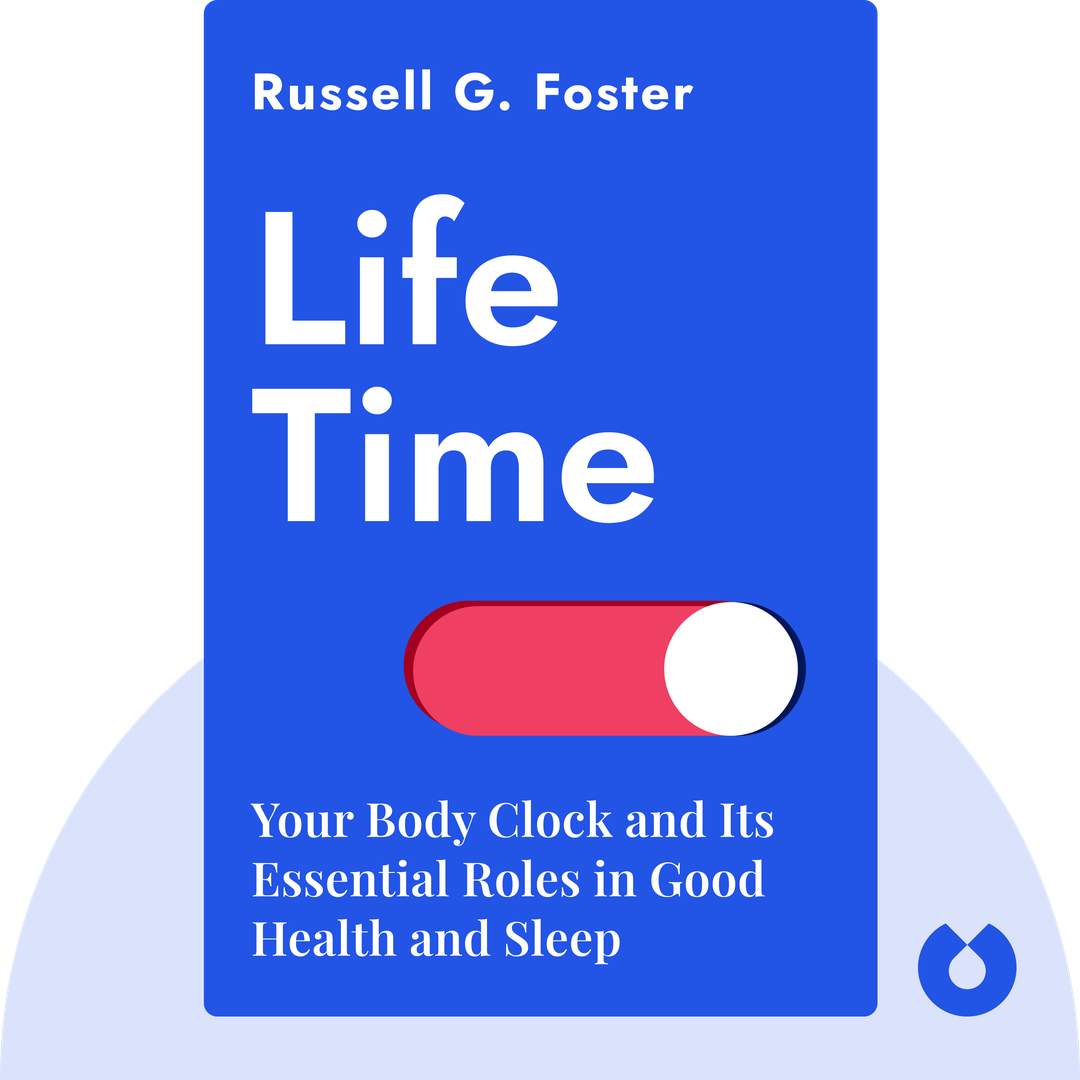
Life Time (2022) reveals how your body’s 24-hour biological clock shapes your health, sleep, and mental performance. Through groundbreaking research in circadian science, you’ll discover how simple timing adjustments can dramatically improve immunity, sharpen thinking, and prevent disease. Armed with this revolutionary understanding of daily rhythms, you’ll learn to optimize every hour for better health and longevity.
Who Should Listen to Life Time?
- Insomniacs searching for science-based solutions to sleep better
- Working professionals trying to optimize their daily performance rhythms
- Health-conscious individuals interested in preventing disease through lifestyle timing
Books Similar to Life Time
Readers who enjoyed this also liked these titles.