Theme Song
If You're Curious About These Questions...
You should listen to this audiobook
- Have you ever wondered why the pace of life feels frantically fast in some cities while others seem to move in a permanent state of relaxation?
- Did you know that your cultural background might be the invisible force determining whether you’re chronically early or perpetually late?
- What’s the secret link between the way a society perceives time and the physical health and stress levels of its people?
Listen to A Geography of Time — Cinematic Audio Edition
Loading player...
Key Takeaways from A Geography of Time
- Discover why the pace of life varies globally, with wealthier, colder, and industrialized nations exhibiting a much faster cultural tempo than warmer regions.
- Understand the paradox of modern technology, where time-saving devices actually increase productivity expectations and leave us feeling more pressed for time.
- Learn how the invention of mechanical clocks and railroad schedules transformed time from a natural rhythm into a standardized tool for efficiency and societal control.
- Recognize the symptoms of hurry sickness, a modern condition caused by living strictly by the clock that triggers restless anxiety whenever we are forced to slow down.
- Find out how personal factors like mood, surroundings, and body temperature warp our perception of time, explaining why hotter climates often cultivate a more leisurely pace of life.
Learning Tools
Reinforce what you learned from A Geography of Time
Mind Map
A Geography of Time
Cultural Tempo+
Evolution of Clock Time+
Psychology of Time+
Measuring Global Pace+
Health and Happiness+
Time Literacy and Adaptability+
Quiz — Test Your Understanding
Question 1 of 8
How do wealth and climate generally affect a region's pace of life, according to the author's research?
Question 2 of 8
What industry was primarily responsible for the standardization of time and the creation of time zones in the United States?
Question 3 of 8
According to the text, what is the actual psychological effect of 'time-saving' technological innovations like the personal computer?
Question 4 of 8
How does the concept of 'waiting' relate to social status and power?
Question 5 of 8
Which three metrics did the author and his team use to measure the cultural tempos of 31 different countries?
Question 6 of 8
What paradoxical finding did researchers discover about fast-paced 'Type A' cities?
Question 7 of 8
Why does Japan maintain remarkably low rates of coronary heart disease despite having an intensely fast-paced and long-houred work culture?
Question 8 of 8
What is the defining characteristic of living by 'event time'?
A Geography of Time — Full Chapter Overview
- 1Recommendation
- 2Every Culture Has Its Own Time
- 3The Recent Rise of Clock Time
- 4Timing Is Personal
- 5The Five Fastest
- 6Maintaining a Healthy Tempo
- 7Becoming Time-Literate and Adaptable
- 8Final summary
A Geography of Time Summary & Overview
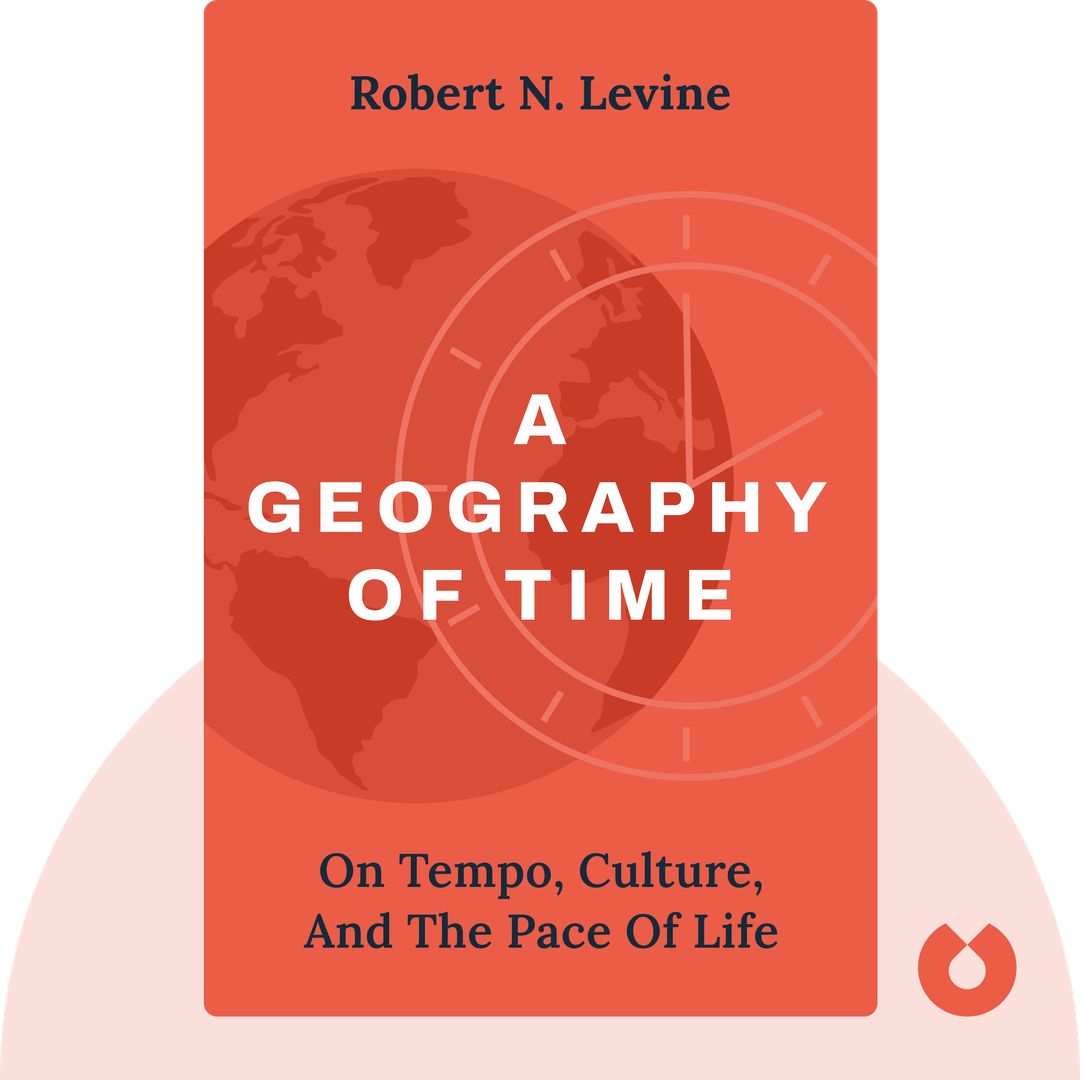
Geography of Time (1997) takes you on a fascinating journey across cultures, revealing how different societies perceive and experience time – whether it’s the fast-walking streets of New York or the laid-back rhythms of rural Brazil. It uncovers the hidden forces shaping our daily lives and may just change the way you think about time itself.
Who Should Listen to A Geography of Time?
- Cultural explorers
- Business professionals and travelers
- History and sociology buffs
Books Similar to A Geography of Time
Readers who enjoyed this also liked these titles.