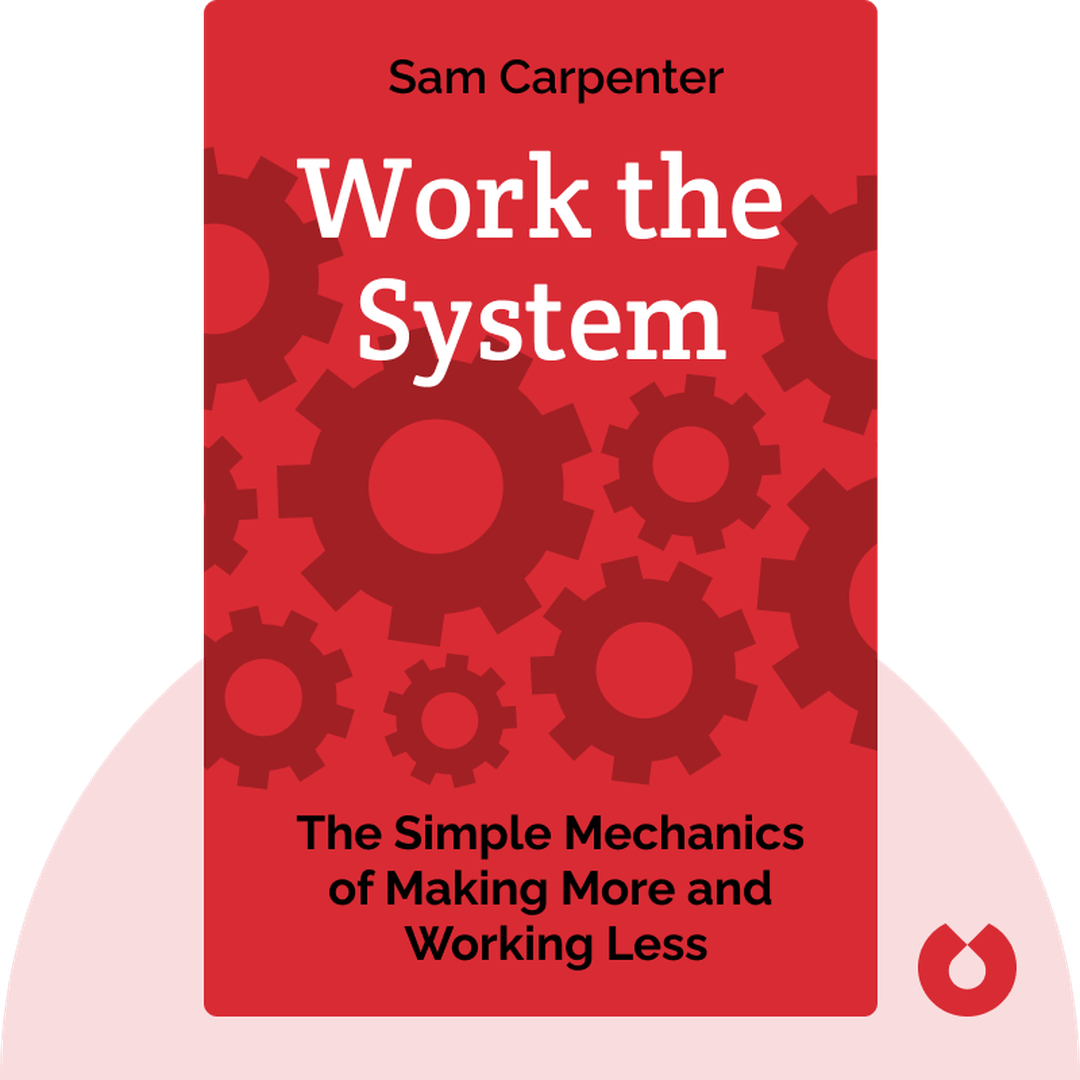
Theme Song
If You're Curious About These Questions...
You should listen to this audiobook
- Have you ever wondered why some businesses run like clockwork while others are trapped in a never-ending cycle of firefighting?
- What if you could stop being a victim of circumstance and start mastering the invisible systems that actually rule your daily life?
- Are you curious about the specific shift in perspective that allows top entrepreneurs to work less while achieving significantly more?
Listen to Work the System — Cinematic Audio Edition
Loading player...
Key Takeaways from Work the System
- Understand why the world operates as a logical series of processes rather than a chaotic mess, allowing you to recognize that bad outcomes are usually fixable human errors rather than bad luck.
- Stop agonizing over circumstances beyond your control and start focusing your energy on actively managing the daily systems you can actually influence.
- Learn how to adopt an outsider's perspective to analyze your life, breaking down complex routines into manageable subsystems to easily spot and fix underlying flaws.
- Discover the importance of defining crystal-clear objectives and strategies to act as your compass, ensuring every decision moves you closer to your ultimate goals.
- Master the mindset of a systems manager by treating today's problems as tomorrow's opportunities, fixing issues at their root rather than just treating recurring symptoms.
Learning Tools
Reinforce what you learned from Work the System
Mind Map
Work the System
The Systems Mindset+
System Analysis+
Leadership Focus+
Execution & Maintenance+
Efficiency & Communication+
Quiz — Test Your Understanding
Question 1 of 8
According to the book, what is the primary cause of chaos or dysfunction within a system?
Question 2 of 8
How does the author suggest you handle large-scale systems that are beyond your total control, such as a national election?
Question 3 of 8
Why is it important to take a step back and view the systems in your life from an 'outsider perspective'?
Question 4 of 8
What is the first ground rule for becoming an effective system manager?
Question 5 of 8
In a business context, what is the primary responsibility of a leader once subsystems have been established?
Question 6 of 8
When repairing the subsystems of your business, how should you approach the dysfunctional parts?
Question 7 of 8
What is the author's view on aiming for 100-percent perfection in your business processes?
Question 8 of 8
How does the author suggest preventing misunderstandings and conflicts within your business systems?
Work the System — Full Chapter Overview
- 1Recommendation
- 2Embrace the systems mindset: our world functions via logical processes, not a chaotic mess at all.
- 3Quit agonizing about systems outside your influence, and start controlling the ones you can change now, in practical ways.
- 4Take a step back to analyze systems from an outsider’s perspective.
- 5Get in the driver’s seat: become a systems manager.
- 6Focus on your responsibilities as a leader.
- 7Operate your business like a machine.
- 8Maximize your process efficiency with realistic goals and effective communication.
Work the System Summary & Overview
Work the System (2008) starts with a tough question: Which forces rule the world? It proposes that the world is neither reigned by chaos nor a predetermined fate, but by inherently stable systems. The key to getting what you want, therefore, lies in understanding how systems operate, both personal and professional, and fine-tuning them to match your goals and aspirations.
Who Should Listen to Work the System?
- Managers, entrepreneurs and CEOs
- Anyone who is striving for a better work–life balance
- Anyone who wants to work more efficiently
Books Similar to Work the System
Readers who enjoyed this also liked these titles.