If You're Curious About These Questions...
You should listen to this audiobook
- Did you know that the global giant we now know as Visa began with one man’s radical vision to financially empower the common person through the Bank of America?
- Have you ever wondered how a single local idea managed to scale into a massive network that today connects over 22,000 banks and financial institutions across the globe?
- What’s the secret behind the technological evolution that transformed a simple payment concept into the backbone of modern e-commerce and global finance?
Listen to VISA — Free Audiobook
Loading player...
Key Takeaways from VISA
- Learn how A.P. Giannini disrupted the early twentieth-century financial status quo by creating a banking system designed specifically to serve everyday working people instead of just the wealthy.
- Discover how the devastating 1906 San Francisco earthquake directly inspired the invention of the installment loan system to help local communities and families rebuild.
- Find out how Bank of America solved the frustratingly slow processing times of early charge cards by launching the BankAmericard, the world's first revolving credit card.
- Understand how visionary Dee Hock transformed a failing, money-losing credit program by uniting competing banks under a single democratic, self-governing organization.
- Discover why the BankAmericard was strategically rebranded to Visa in 1979 to reflect the globalization of credit and build a unified financial community.
Learning Tools
Reinforce what you learned from VISA
Mind Map
VISA
Foundational Vision: A.P. Giannini+
Reinvention: Dee Hock+
Technological Leap+
Global Identity & Evolution+
Enduring Philosophy+
Quiz — Test Your Understanding
Question 1 of 6
What primary observation motivated A. P. Giannini to start the Bank of Italy?
Question 2 of 6
What major flaw in early charge cards, like the Diner’s Club Card, did the Bank of America solve in 1958 with the BankAmericard?
Question 3 of 6
How did Dee Hock restructure the failing BankAmericard system in the late 1960s?
Question 4 of 6
What was the primary impact of the BASE I and BASE II systems introduced by Dee Hock's team?
Question 5 of 6
Why did Dee Hock decide to rebrand the BankAmericard to 'Visa' in 1979?
Question 6 of 6
According to former CEO Malcolm Williamson, how are the first two phases of Visa's history best described?
VISA — Full Chapter Overview
- 1Recommendation
- 2The person behind the card
- 3An unforeseen new leader
- 4Becoming digital
- 5The final picture
VISA Summary & Overview
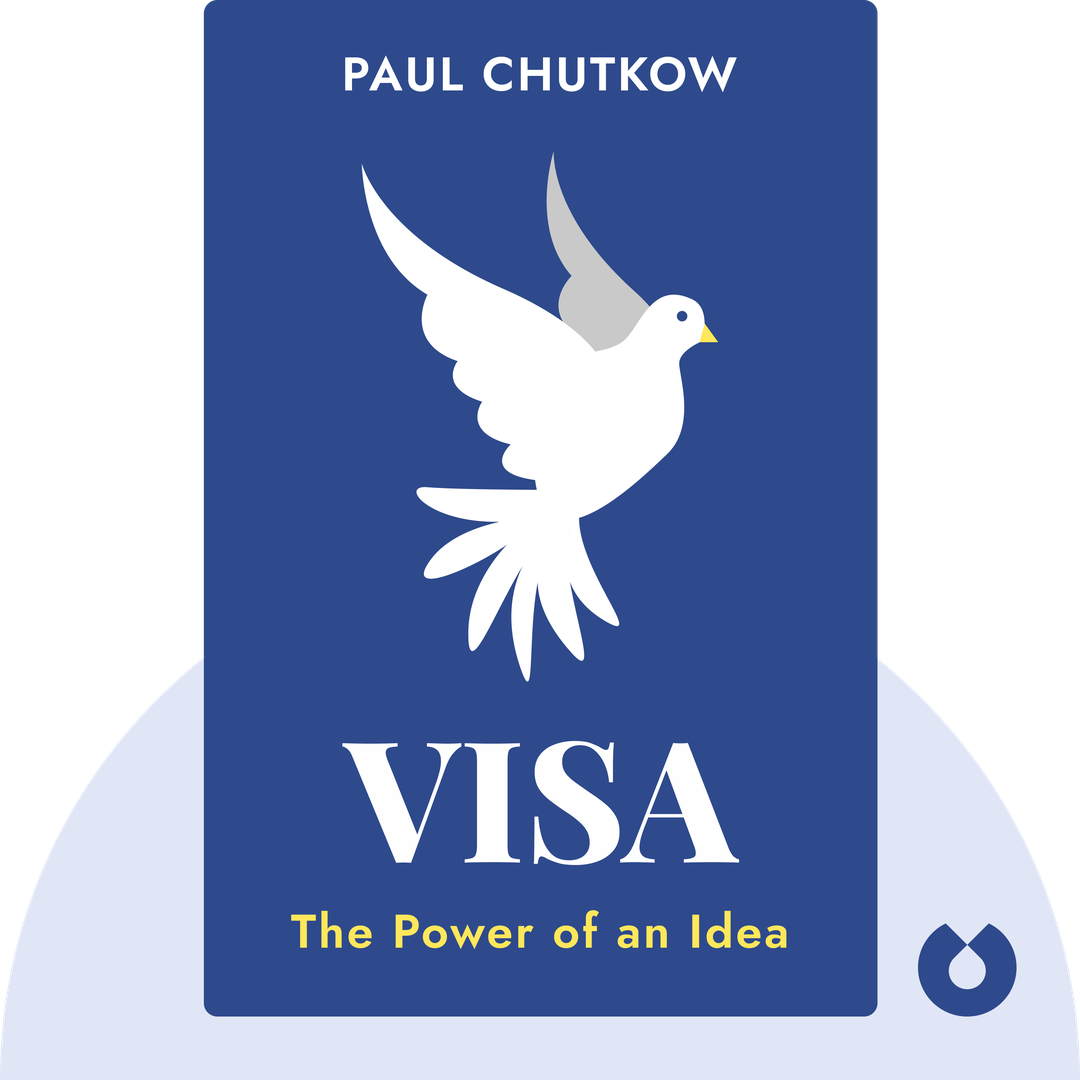
Visa (2001) chronicles the humble beginnings of the founder of the Bank of America whose vision to financially empower the people gave rise to an idea that today connects over 22,000 banks and financial institutions.
Who Should Listen to VISA?
- History buffs particularly interested in financial history
- E-commerce enthusiasts who want to know more about technology’s role in the success of Visa
- Finance professionals and students looking for a deeper understanding of the growth of payment systems
Books Similar to VISA
Readers who enjoyed this also liked these titles.