If You're Curious About These Questions...
You should listen to this audiobook
- Have you ever wondered what truly happens behind the closed doors of billion-dollar startups when the glossy marketing and buzzwords are stripped away?
- Did you know that the Silicon Valley 'gold rush' might be hiding a darker reality of surveillance, toxic masculinity, and inflated egos?
- Are you curious about why even the most successful startup employees are beginning to question if they've traded their personal values for a seat at the big tech table?
Listen to Uncanny Valley — Free Audiobook
Loading player...
Key Takeaways from Uncanny Valley
- Discover how major life shifts often begin with a quiet breaking point, and learn why embracing curiosity allows you to safely outgrow a path that no longer fits.
- Learn to recognize when you are bending yourself to match a demanding workplace, and understand the vital difference between merely fitting in and genuinely being well.
- Understand the Silicon Valley mantra of 'ask forgiveness, not permission,' which prioritizes rapid momentum and action over the careful observation valued in traditional industries.
- Explore the realities of navigating a male-dominated, youth-obsessed startup culture where informality acts as a badge and traditional professionalism doesn't always translate.
- Find out how to handle the fear of failure during a career pivot, and discover why staying authentic is far more empowering than shrinking to blend into an unfamiliar environment.
Learning Tools
Reinforce what you learned from Uncanny Valley
Mind Map
Uncanny Valley
The Lure of Tech+
Absurdity of Start-up Culture+
Ethical Blind Spots+
Disillusionment & Exit+
Quiz — Test Your Understanding
Question 1 of 8
Why did Anna and her peers find the New York publishing industry an untenable career path after the 2008 recession?
Question 2 of 8
What realization caused Anna to become disillusioned with the New York publishing start-up she initially joined?
Question 3 of 8
What did Anna learn about the purpose of the intense, bizarre questioning during Silicon Valley job interviews?
Question 4 of 8
How did the engineers at Anna's mobile analytics start-up handle user privacy?
Question 5 of 8
In Silicon Valley, how were nontechnical employees typically viewed compared to software engineers?
Question 6 of 8
What was the actual result of the 'flat hierarchy' and 'name-your-own-salary' policies at the open-source software start-up Anna joined?
Question 7 of 8
How did the tech industry attempt to 'solve' the San Francisco housing crisis, according to Anna's observations?
Question 8 of 8
How did Anna ultimately view the $200,000 she made from her stock options when she left the tech industry?
Uncanny Valley — Full Chapter Overview
- 1Recommendation
- 2Anna chased her dream career in New York publishing, but after the 2008 recession, it started to feel like a dead end.
- 3Anna joined the publishing start-up for its seemingly meaningful mission, but she quickly began noticing cracks in the facade there.
- 4Tech promised a lucrative, impactful future, yet when Anna reached San Francisco, she felt alienated and completely out of place.
- 5In her new role, Anna eagerly embraced the company culture and felt useful for the first time in her career.
- 6Despite her surge of enthusiasm at work, Anna’s new life sometimes felt isolating.
- 7Once she began forming real friendships, the glossy veneer of Anna’s job started to wear off.
- 8The hacker spirit at another start-up felt energizing at first, but sexism and alienation still haunted Anna.
- 9Anna realized she would need to compromise herself to build a successful career in Silicon Valley.
- 10Anna’s breaking point came when she saw the tech community couldn’t recognize, much less solve, real-world problems.
- 11Once she could distinguish her own values from those of the tech industry, Anna finally found meaning in her work again.
Uncanny Valley Summary & Overview
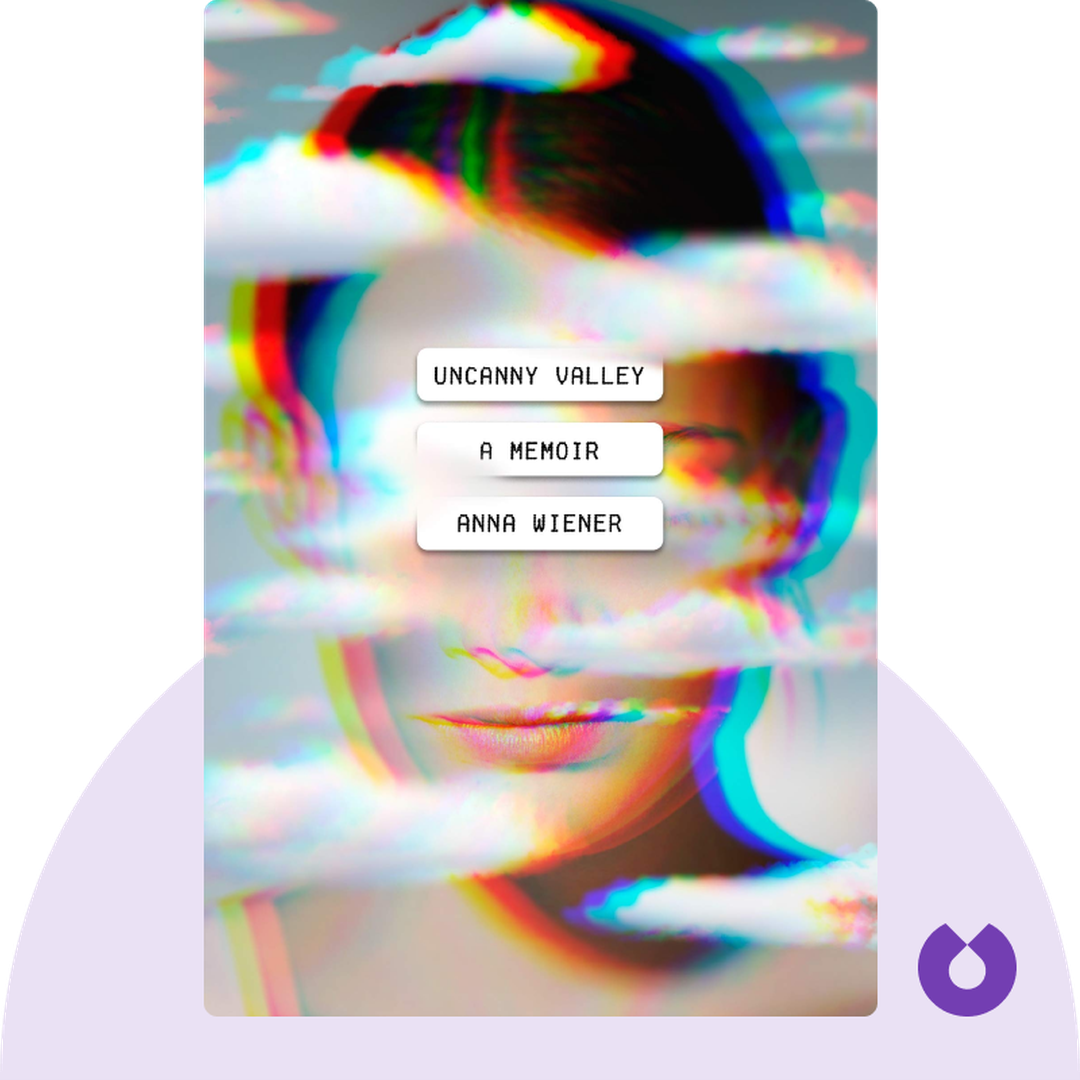
At the peak of the tech boom, Anna Wiener left a dismal professional life in New York for the modern Californian gold rush in Silicon Valley. Looking for money, stability, and social affirmation, she found an industry running on inflated valuations, gargantuan egos, toxic masculinity, and a whole lot of jargon. In Uncanny Valley (2020), you’ll follow her journey through three start-up jobs toward a more realistic valuation of herself.
Who Should Listen to Uncanny Valley?
- Anyone terrified by big tech’s takeover of our lives
- Those disappointed by the inaction following Snowden's revelations
- Start-up employees wondering if they've made the right career choice
Books Similar to Uncanny Valley
Readers who enjoyed this also liked these titles.