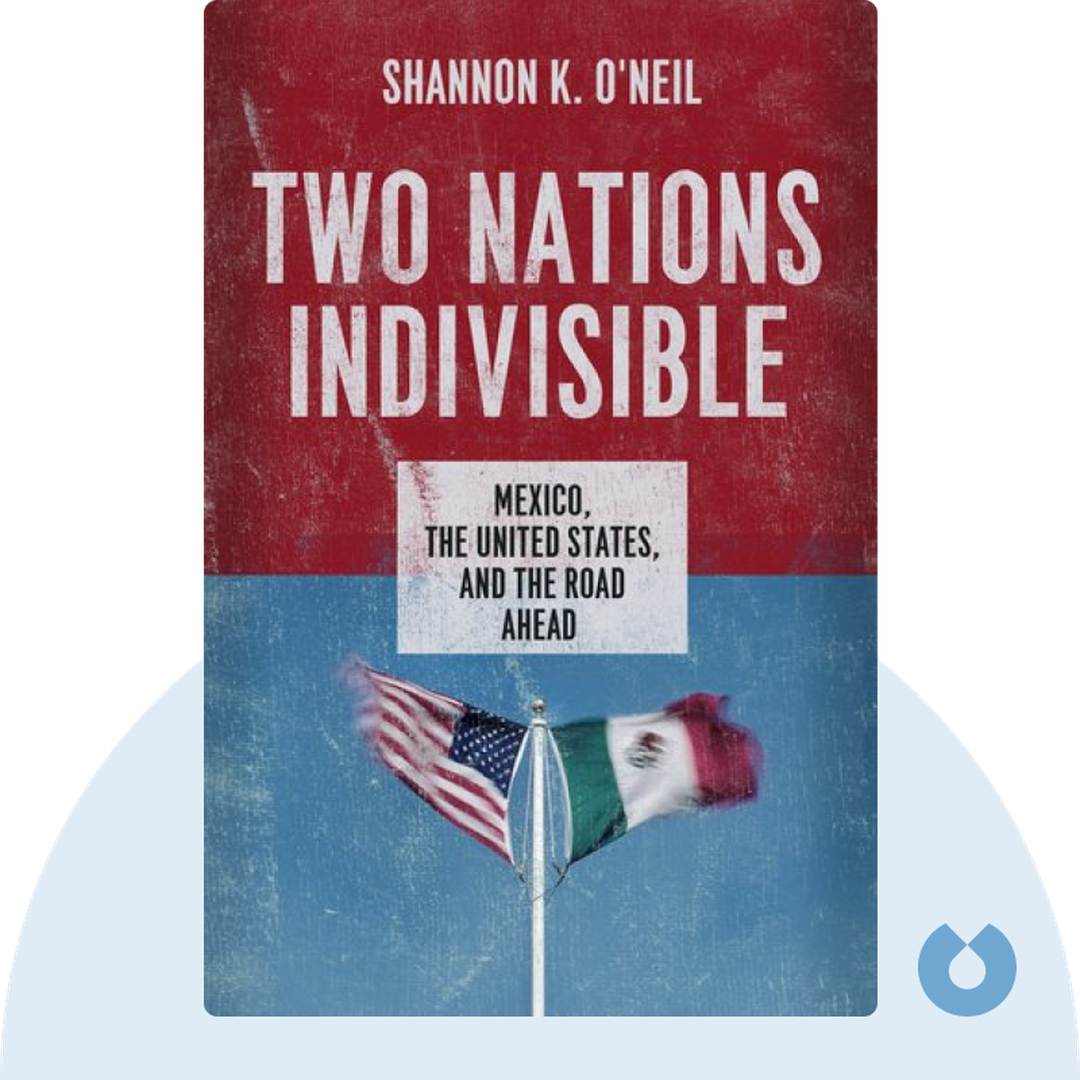
Two Nations Indivisible
Start ListeningDownload Try free on iPhoneScan to start in 5 seconds
Categories:
If You're Curious About These Questions...
You should listen to this audiobook
- Did you know that the economic bond between the US and Mexico is so deep that the two countries don't just trade with each other, but actually build products together?
- Have you ever wondered why the traditional narrative of Mexico's struggles overlooks a burgeoning middle class that is reshaping the North American landscape?
- Are you curious about the hidden political and economic ties that make the prosperity of the United States inseparable from the success of its neighbor to the south?
Listen to Two Nations Indivisible — Free Audiobook
Loading player...
Key Takeaways from Two Nations Indivisible
- Discover how the US media's fixation on drug-related violence in border cities overshadows Mexico's rapid economic growth and increasing multinational investments.
- Understand the complex hurdles of US-Mexico diplomacy by examining how political resistance and leaked communications derailed promising cross-border security strategies.
- Learn how the collapse of Mexico's oil industry and the peso devaluation in the 1980s fueled a massive wave of poverty-driven immigration into the United States.
- Explore the ongoing struggle to integrate undocumented Mexican immigrants in the US and the critical legislative efforts, like the DREAM Act, aimed at protecting undocumented youth.
- Find out how the financial turmoil of the 1990s empowered Mexico's middle class to rise up against decades of authoritarian rule, sparking the nation's first truly democratic elections in 2000.
Learning Tools
Reinforce what you learned from Two Nations Indivisible
Mind Map
Two Nations Indivisible
US-Mexico Relations+
Immigration+
Political Evolution+
Economy & Trade+
The Drug Trade+
Path Forward+
Quiz — Test Your Understanding
Question 1 of 8
How does the US media primarily portray Mexico, and what reality does this portrayal obscure?
Question 2 of 8
Why did US Ambassador Carlos Pascual's ambitious security strategy fail to gain traction with the Mexican government in 2009?
Question 3 of 8
What primary economic event in the 1980s triggered a massive wave of Mexican immigration into the United States?
Question 4 of 8
What significant political milestone did Mexico achieve in the year 2000?
Question 5 of 8
Despite the economic boost from international trade agreements like NAFTA, what major domestic issue continues to hinder Mexico's economic progress?
Question 6 of 8
According to the text, why did drug-related violence in Mexico sharply escalate in the late 1990s?
Question 7 of 8
What approach does the author suggest the United States take to better manage legal immigration?
Question 8 of 8
What fundamental political reform is suggested in the text to increase the accountability of elected officials in Mexico?
Two Nations Indivisible — Full Chapter Overview
- 1Recommendation
- 2US media coverage of Mexico often fixates on drug-related crime, while overlooking the nation’s significant gains.
- 3The United States and Mexico have sought to deepen ties, yet their diplomacy remains strained.
- 4Since the 1980s, immigration to the USA from Mexico has grown.
- 5Protests in the 1990s led to Mexico’s first truly democratic elections in 2000.
- 6Trade deals have bolstered Mexico’s economy, but liberalization won’t fix everything.
- 7Drug trafficking has grown into big business in Mexico, bringing immense violence with it.
- 8The United States and Mexico must deepen collaboration on immigration and strengthen their economic ties.
- 9If political and economic reforms continue, Mexico will emerge a strong new democracy.
Two Nations Indivisible Summary & Overview
Two Nations Indivisible (2013) tells the story of the United States’ relationship with its neighbor to the south: Mexico. These blinks explain the profound connections between the two countries as well as the misunderstandings that keep them apart, with an emphasis on political and economic relations.
Who Should Listen to Two Nations Indivisible?
- Policy makers who want to understand more about the US-Mexico relationship
- Educators and students interested in world politics
- Americans and Mexicans hoping to understand each other better
Books Similar to Two Nations Indivisible
Readers who enjoyed this also liked these titles.