If You're Curious About These Questions...
You should listen to this audiobook
- Did you know that the world’s first billionaire was the son of a traveling “snake oil” salesman who frequently vanished for months at a time?
- Have you ever wondered how one man systematically built a monopoly so powerful it controlled 90 percent of the American oil industry?
- What’s the secret behind the transformation of a man once labeled the most hated person in America into history’s greatest philanthropist?
Listen to Titan — Free Audiobook
Loading player...
Key Takeaways from Titan
- Understand why Rockefeller believed immense wealth was meant for charitable distribution rather than hoarding, creating a philanthropic legacy that still supports Nobel laureates today.
- Discover how a challenging childhood with an absentee father and strict Baptist teachings forged Rockefeller's lifelong dedication to the Protestant work ethic and continuous self-improvement.
- Learn how to secure a massive competitive advantage by leveraging guaranteed product volume to negotiate steep logistical discounts, just as Rockefeller did with railroad transportation rebates.
- Find out how strategically acquiring competitor businesses near vital shipping hubs allowed Standard Oil to dictate market terms and build an unstoppable American monopoly.
- Discover how the government dismantling of the Standard Oil empire actually multiplied Rockefeller's wealth through wise investments and fueled his greatest era of global philanthropy.
Learning Tools
Reinforce what you learned from Titan
Mind Map
Titan
Early Life & Influences+
Rise of Standard Oil+
Management & Persona+
Scrutiny & Dismantling+
Retirement & Succession+
Philanthropic Legacy+
Final Years+
Quiz — Test Your Understanding
Question 1 of 10
What significant childhood influence shaped John D. Rockefeller's work ethic and commitment to continuous self-improvement?
Question 2 of 10
How did Rockefeller gain a crucial early advantage over competing oil refiners in the late 1860s?
Question 3 of 10
Why was the Standard Oil Trust created in 1882?
Question 4 of 10
Despite his immense wealth and monopoly power, how was Rockefeller's management style and personal lifestyle described during his peak business years?
Question 5 of 10
Which of the following was a major philanthropic achievement of the General Education Board (GEB), founded by Rockefeller in 1902?
Question 6 of 10
What was the significant impact of investigative journalist Ida Tarbell's work regarding Rockefeller?
Question 7 of 10
What was the paradoxical outcome of the Supreme Court's 1911 decision to dismantle the Standard Oil monopoly?
Question 8 of 10
Why did John D. Rockefeller Jr. eventually cut business ties with Standard Oil to focus solely on philanthropy?
Question 9 of 10
Which 1914 event severely damaged the Rockefeller family's reputation by highlighting the ruthless side of their capitalist ventures?
Question 10 of 10
How did Rockefeller's demeanor change in his final years at his Ormond Beach home in Florida?
Titan — Full Chapter Overview
- 1Recommendation
- 2Young John D. Rockefeller’s family moved often due to his absent father.
- 3At the age of sixteen, Rockefeller eagerly entered business and quickly found rapid success in that world.
- 4During the late 1860s, Rockefeller unified his oil interests within the Standard Oil Company.
- 5By 1875, Rockefeller ruled American oil, yet stayed very frugal indeed in his own habits.
- 6A reorganized, New York–based Standard Oil started to encounter competition overseas.
- 7Standard Oil entered oil production, and Rockefeller boldly financed the new University of Chicago.
- 8Rockefeller retired in 1897, and his son started his tenure at Standard Oil.
- 9In retirement, Rockefeller kept up his philanthropy and confronted attacks from the public press.
- 10As the press hunted for Rockefeller’s absent father, he focused more instead on philanthropy.
- 11In 1911, Standard Oil was compelled to break up, ending the Rockefeller monopoly for good.
- 12In 1913, Rockefeller founded a global charity, but his efforts were overshadowed by miners shot while striking.
- 13The 1910s saw intensified philanthropy from both father and son.
- 14Rockefeller lived to a ripe old age, and he died on May 23, 1937, at 97.
Titan Summary & Overview
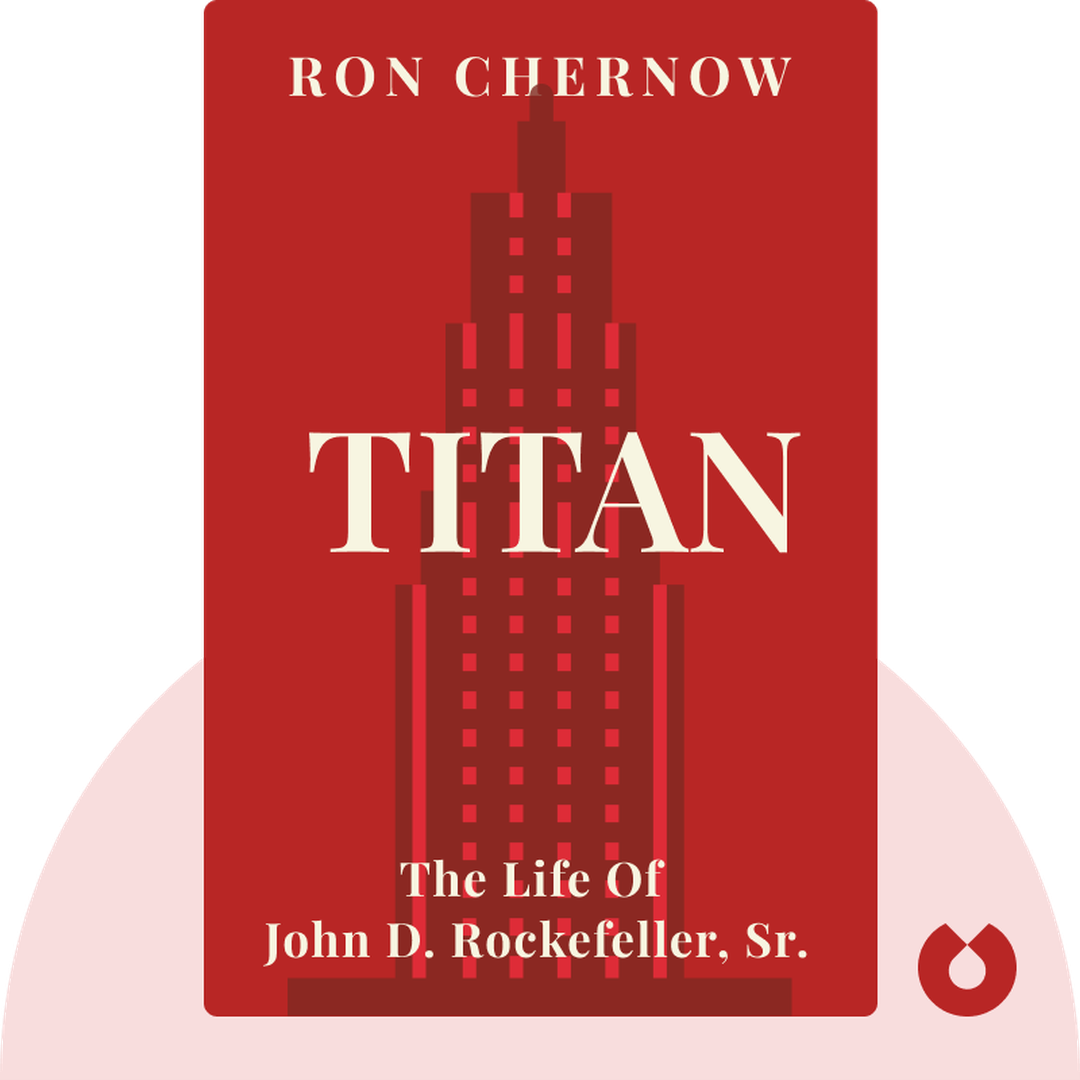
Titan (1998) is a comprehensive biography of John D. Rockefeller, Sr., the original oil tycoon and founder of Standard Oil, the industry’s biggest name through the nineteenth and early twentieth centuries. The book tells Rockefeller’s story from his humble childhood through to his becoming the richest man in American history and his quirky retirement. It provides an insight into Rockefeller’s personal life, business practices and philanthropic efforts.
Who Should Listen to Titan?
- Lovers of biographies and inspiring life stories
- Advocates and skeptics of capitalism
- Entrepreneurs looking for inspiration
Books Similar to Titan
Readers who enjoyed this also liked these titles.