Theme Song
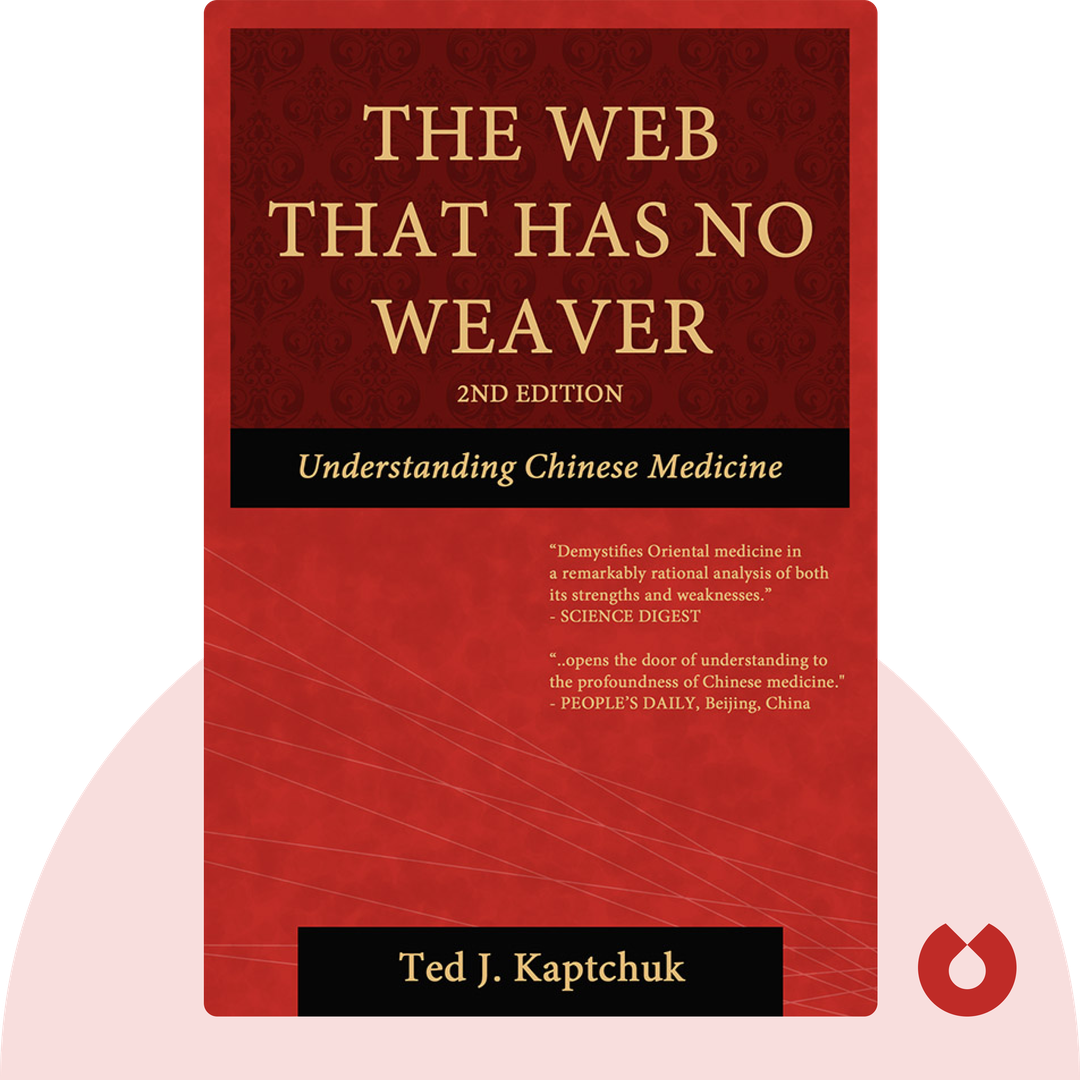
The Web That Has No Weaver
Start ListeningDownload Try free on iPhoneScan to start in 5 seconds
Categories:
If You're Curious About These Questions...
You should listen to this audiobook
- Have you ever wondered why ancient Chinese medicine views the body as a 'web' with no single weaver, and how that perspective transforms the way we heal?
- What if you could understand your health by reading the subtle 'patterns of disharmony' that Western medicine often overlooks?
- Are you curious about how the philosophical concepts of Yin, Yang, and Qi serve as a practical map for achieving total physical and mental harmony?
Listen to The Web That Has No Weaver — Cinematic Audio Edition
Loading player...
Key Takeaways from The Web That Has No Weaver
- Discover why traditional Chinese medicine is a highly logical and practical healing system best understood on its own terms, rather than through the lens of Western science.
- Understand the fundamental difference between Western medicine's search for isolated causes and Chinese medicine's focus on identifying holistic patterns of disharmony.
- Learn how Chinese physicians diagnose ailments by weaving together a patient's physical symptoms, psychological state, and personal biography into a complete picture.
- Grasp the foundational concept of Yin and Yang to see how health depends on a dynamic, interdependent balance between active and passive forces.
- Find out how applying the Chinese philosophy of harmony can help you avoid everyday disharmonies, like burnout from overwork or lethargy from excessive rest.
Learning Tools
Reinforce what you learned from The Web That Has No Weaver
Mind Map
The Web That Has No Weaver
Core Philosophy+
Medical Paradigms+
Yin-Yang Theory+
Health and Nature+
The Physician's Role+
Integration and Value+
Quiz — Test Your Understanding
Question 1 of 7
How does the fundamental diagnostic approach of traditional Chinese medicine differ from that of Western medicine?
Question 2 of 7
In the clinical study involving six patients with stomach pain, what was the outcome of the Chinese doctor's examination compared to the Western doctor's?
Question 3 of 7
According to the yin-yang theory described in the text, which of the following best represents a 'yin' phenomenon?
Question 4 of 7
What does the phrase 'The person isn’t sick because she has an illness – she has an illness because she is sick' mean in the context of Chinese medicine?
Question 5 of 7
Why is the Chinese physician compared to a gardener in the text?
Question 6 of 7
How does a Chinese physician interpret the symptom of excessive thirst in a patient with diabetes?
Question 7 of 7
According to the conclusion, what type of medical conditions is traditional Chinese medicine particularly well-equipped to describe and treat?
The Web That Has No Weaver — Full Chapter Overview
- 1Recommendation
- 2Chinese medicine seeks patterns rather than isolated causes.
- 3Chinese philosophy strives to reveal patterns of balance and imbalance in nature itself.
- 4A healthy body stays in harmony with nature.
- 5The Chinese doctor preserves order and balance.
- 6Conclusion
The Web That Has No Weaver Summary & Overview
The Web That Has No Weaver (2000) is a classic introduction to Chinese medicine. The product of years of research and a close reading of original sources, it provides an in-depth yet accessible overview of a millenia-old tradition of healing and its philosophical foundations.
Who Should Listen to The Web That Has No Weaver?
- Anyone interested in holistic medicine
- Students of Eastern philosophy
- Medical practitioners curious about alternative approaches to healing
Books Similar to The Web That Has No Weaver
Readers who enjoyed this also liked these titles.