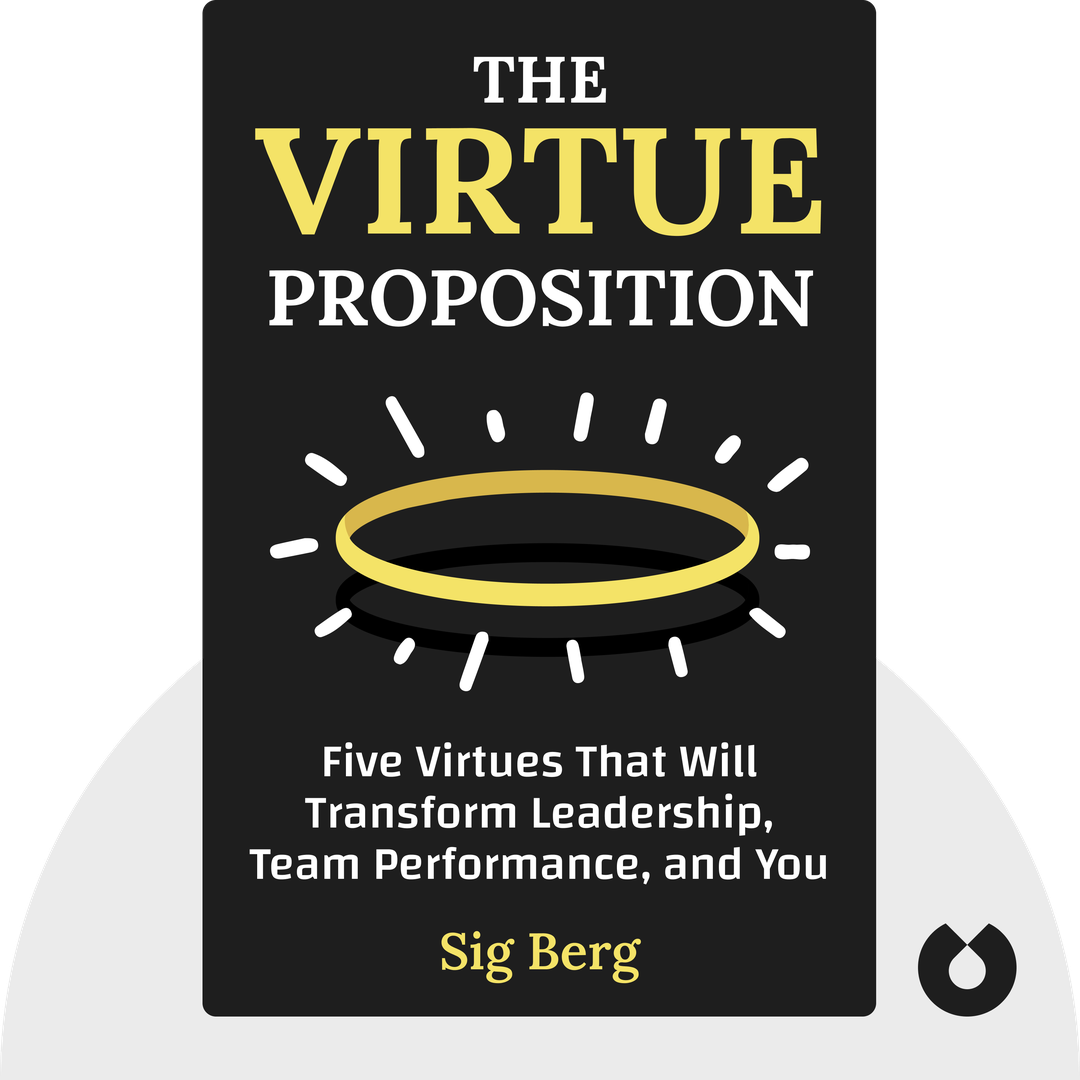
The Virtue Proposition
Start ListeningDownload Try free on iPhoneScan to start in 5 seconds
Categories:
If You're Curious About These Questions...
You should listen to this audiobook
- Have you ever wondered why conventional leadership models often fail to produce lasting success, and what it takes to master the 'courageous third way'?
- What if you could unlock superior business results by integrating virtues like love and integrity directly into your management style?
- Are you curious about the secret to building a high-performance career that remains perfectly aligned with your deepest personal values?
Listen to The Virtue Proposition — Free Audiobook
Loading player...
Key Takeaways from The Virtue Proposition
- Understand the fundamental difference between pursuing short-term value propositions and committing to timeless, objective virtue propositions for sustainable success.
- Discover the five core leadership virtues—love, integrity, truth, excellence, and relationships—and learn why integrating them requires the essential catalyst of courage.
- Learn why the path to becoming a transformative leader actually begins with being a virtuous follower who combines core principles with deep self-awareness.
- Master the practice of servant leadership by shifting your focus from individual heroism to empowering your team and prioritizing their continuous growth.
- Find out how to actively cultivate diversity and build strong relational dynamics to maximize team success and combat workplace disengagement like quiet quitting.
Learning Tools
Reinforce what you learned from The Virtue Proposition
Mind Map
The Virtue Proposition
Virtues vs. Values+
The Core Virtues+
Servant Leadership+
Leveraging Diversity+
The Leaderless Organization+
Quiz — Test Your Understanding
Question 1 of 6
According to the book, what is the primary difference between a team guided by value propositions and one guided by virtue propositions?
Question 2 of 6
Which of the following is identified as the sixth virtue that integrates and facilitates the synergy of the five core leadership virtues?
Question 3 of 6
How does 'servant leadership' contrast with the conventional mythology of leadership?
Question 4 of 6
When soliciting and giving feedback, what does the 'CCI' framework stand for?
Question 5 of 6
To avoid the trap of micromanaging a diverse team, what approach should a virtuous leader take?
Question 6 of 6
What is considered the pinnacle of virtuous leadership according to the concept of a 'leaderless organization'?
The Virtue Proposition — Full Chapter Overview
- 1Recommendation
- 2Five core virtues
- 3Be a servant leader
- 4Embrace diverse perspectives
- 5Create a leaderless organization
The Virtue Proposition Summary & Overview
The Virtue Proposition (2024) argues that traditional leadership approaches lack an emphasis on virtues and consequently fail to deliver consistently superior results. It advocates instead for a "courageous third way" of virtuous leadership grounded in love, integrity, truth, excellence, and relationships.
Who Should Listen to The Virtue Proposition?
- Corporate leaders who can’t connect with conventional models of leadership
- Management track employees keen to align their career trajectory with their core values
- Early-career employees looking for an inspiring blueprint for transforming into leaders
Books Similar to The Virtue Proposition
Readers who enjoyed this also liked these titles.