If You're Curious About These Questions...
You should listen to this audiobook
- Have you ever wondered what really goes on behind the scenes at the FBI and how they manage the immense pressure of protecting an entire nation?
- Did you know that a former top official identifies a surprising internal source as one of the most significant threats to the FBI’s mission today?
- Are you curious about the secret methods and high-stakes decision-making processes used by the world's premier law enforcement agency to combat global terrorism?
Listen to The Threat — Free Audiobook
Loading player...
Key Takeaways from The Threat
- Understand how the devastating events of September 11 fundamentally transformed the FBI's internal culture, instantly uniting deeply divided departments to focus on counterterrorism.
- Discover how the FBI utilizes 'enterprise theory' to map out vast criminal networks and prosecute gang members for the collective crimes of their syndicates.
- Learn how highly skilled undercover employees and cooperating witnesses are strategically deployed to gather the devastating firsthand evidence needed to bring down organized crime.
- Find out why modern law enforcement has shifted away from the exhaustively broad 'muscling' approach in favor of more precise and strategic 'targeting' techniques.
- Explore former Deputy Director Andrew McCabe's urgent warning about how unprecedented political interference poses a direct threat to the FBI and American democracy.
Learning Tools
Reinforce what you learned from The Threat
Mind Map
The Threat
Evolution of the FBI+
Investigative Techniques+
Interrogation Protocols+
Levels of Investigation+
The Trump Threat+
Quiz — Test Your Understanding
Question 1 of 7
How did the events of September 11, 2001, fundamentally change the internal culture and focus of the FBI?
Question 2 of 7
What is the primary advantage of "enterprise theory" in FBI investigations?
Question 3 of 7
According to the text, what is the difference between "muscling" and "targeting" investigative techniques?
Question 4 of 7
Why did President Obama order the creation of the High-Value Detainee Interrogation Group (HIG) in 2009?
Question 5 of 7
In the context of HIG interrogations, what defines a "pop-up" target?
Question 6 of 7
What level of evidence is required for an FBI agent to open a "full investigation" on a suspect?
Question 7 of 7
How does the book describe President Trump's impact on the FBI and the broader intelligence community?
The Threat — Full Chapter Overview
- 1Recommendation
- 2The FBI has changed greatly since 9/11.
- 3Enterprise theory is one of the Bureau’s main investigative methods.
- 4Over time, the FBI shifted from muscling to targeting.
- 5By President Obama’s directive, the Bureau altered how it officially categorized interrogation targets.
- 6The FBI runs three kinds of investigations, and each has a distinct level of oversight.
- 7The FBI is being weakened by the Trump administration.
The Threat Summary & Overview
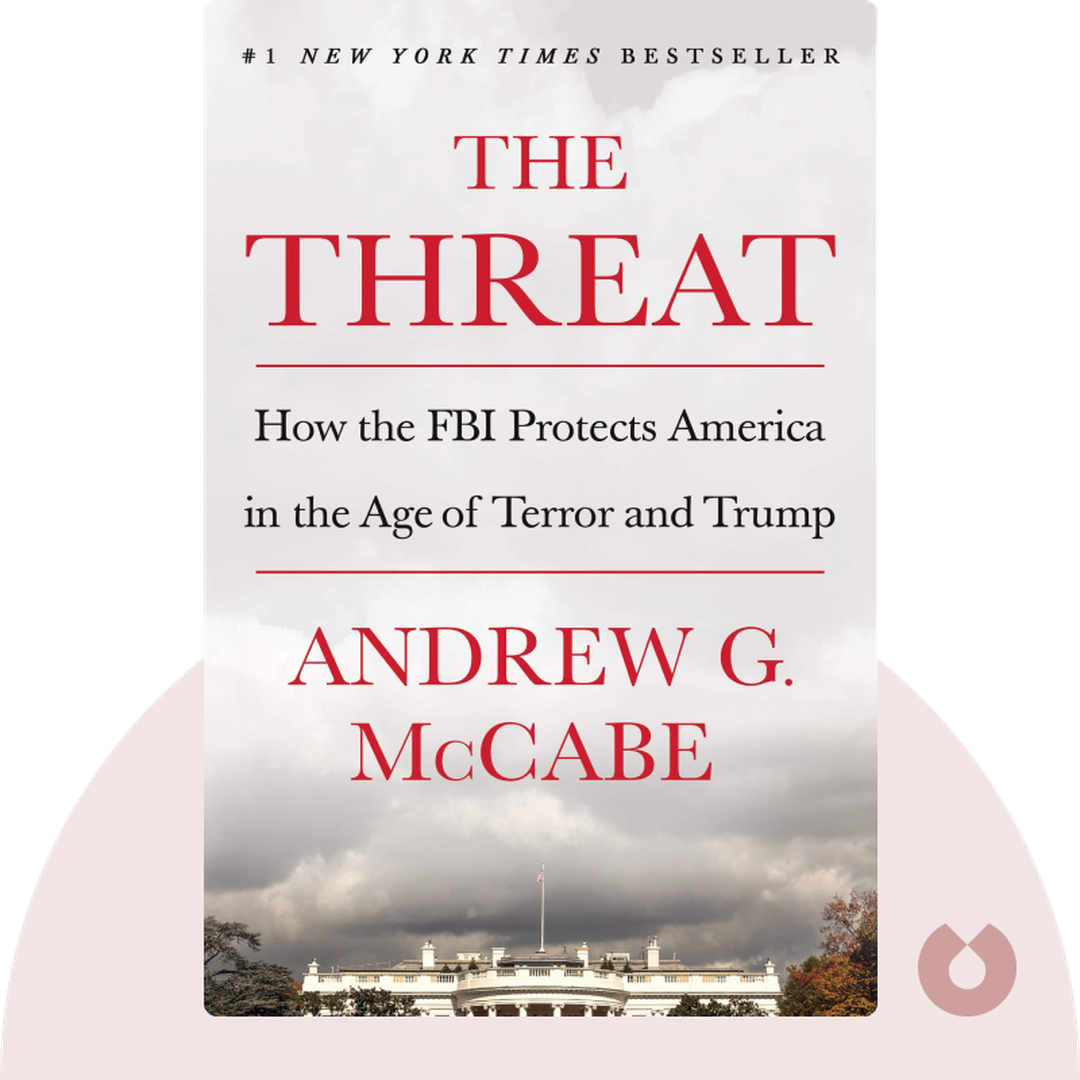
The Threat (2019) offers an inside look at America’s famous nation-wide law enforcement agency, the Federal Bureau of Investigation or FBI. Written with the lucid precision you’d expect from a high-ranking former FBI official, this book depicts the organization’s inner workings, details the methods it uses to protect the public, and explains why terrorism and President Donald Trump are currently the nation’s biggest threats.
Who Should Listen to The Threat?
- Law-enforcement buffs wondering how the FBI operates
- Concerned Americans curious about how the organization protects them
- Law-abiding citizens seeking to understand the FBI’s biggest challenges today
Books Similar to The Threat
Readers who enjoyed this also liked these titles.