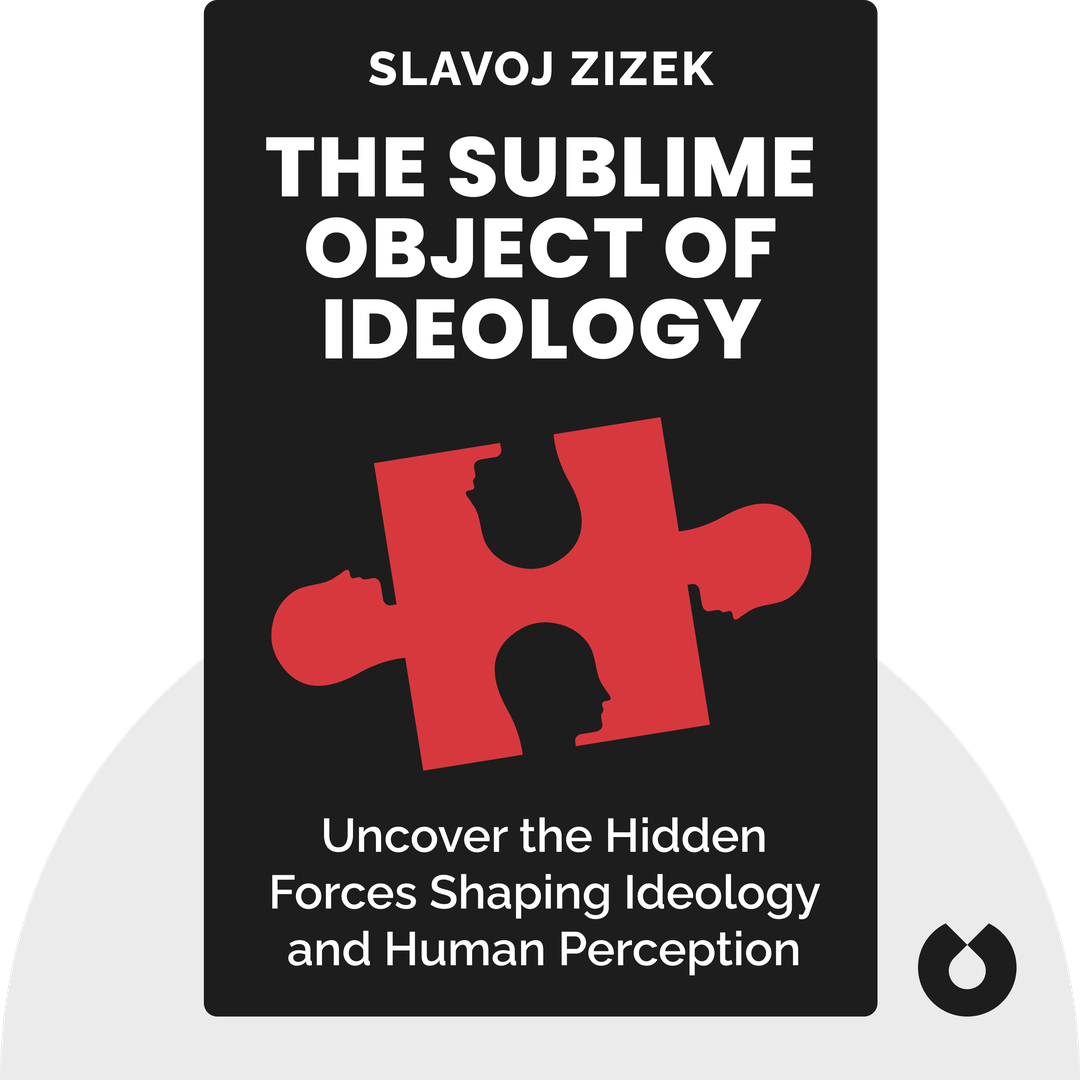
The Sublime Object of Ideology
Start ListeningDownload Try free on iPhoneScan to start in 5 seconds
Categories:
If You're Curious About These Questions...
You should listen to this audiobook
- How does classic literature like Jane Austen's Pride and Prejudice secretly reveal the invisible 'grammar' of ideology that shapes our most intimate personal desires?
- According to Lacan's three orders of reality, why do our 'symbolic' languages and 'imaginary' identities ultimately fail to capture the raw, unfiltered experiences of the 'real'?
- What is 'ideological jouissance,' and how does it explain the paradoxical thrill we get from participating in societal contradictions, like celebrating consumerism while worrying about our carbon footprint?
Listen to The Sublime Object of Ideology — Free Audiobook
Loading player...
Key Takeaways from The Sublime Object of Ideology
- Ideology did not end with the fall of the Berlin Wall; it transitioned into an invisible framework that shapes our daily thoughts and actions from within.
- Meaning in language and reality is never fixed, but is instead a shifting network of symbols that influences how we perceive the world.
- The human unconscious functions like a language, where thoughts and desires are shaped by complex associations and cultural narratives rather than just repressed instincts.
- Ideology provides a sense of 'jouissance' or pleasure, meaning we are often drawn to social structures because of the joy found in either conforming to or defying them.
- Human desire is often sustained by the 'objet petit a,' an elusive object that keeps us perpetually engaged in ideological systems like consumerism and social status.
Learning Tools
Reinforce what you learned from The Sublime Object of Ideology
Mind Map
The Sublime Object of Ideology
The Nature of Ideology+
The Object of Desire+
Lacan's Three Orders of Reality+
Symptoms and Contradictions+
Ideological Quilting+
Quiz — Test Your Understanding
Question 1 of 7
How does French psychoanalyst Jacques Lacan's view of the unconscious differ from Sigmund Freud's traditional view?
Question 2 of 7
How does Žižek define ideology in the context of the modern world?
Question 3 of 7
What characterizes the 'objet petit a' (the object of desire) in late capitalism?
Question 4 of 7
In Lacan's three orders of reality, what does 'the real' represent?
Question 5 of 7
According to Žižek, how do 'symptoms' function at a societal level?
Question 6 of 7
What is meant by the concept of 'ideological jouissance'?
Question 7 of 7
What role do 'quilting points' (points de capiton) play in society's belief systems?
The Sublime Object of Ideology — Full Chapter Overview
- 1Recommendation
- 2The end of ideology?
- 3The sublime object
- 4Reality and the three orders
- 5The symptom
- 6The stitches that quilt meaning
The Sublime Object of Ideology Summary & Overview
The Sublime Object of Ideology (1989) explores how ideology shapes our perception of reality and influences our desires, even in a supposedly post-ideological world. The book examines the unconscious structures underlying our beliefs, the nature of social and political symptoms, and the paradoxical enjoyment we derive from ideological systems, offering a fresh perspective on how meaning is constructed in society.
Who Should Listen to The Sublime Object of Ideology?
- Philosophy lovers looking to understand complex contemporary thinkers
- Cultural critics interested in fresh perspectives on ideology and society
- Anyone grappling with questions of identity and societal influence in the modern world
Books Similar to The Sublime Object of Ideology
Readers who enjoyed this also liked these titles.