If You're Curious About These Questions...
You should listen to this audiobook
- Have you ever wondered if the '10,000-hour rule' is actually a myth when it comes to reaching the pinnacle of elite sports?
- What is the hidden biological secret that allows athletes from specific regions of the world to dominate certain Olympic events year after year?
- Did you know that your DNA might have already chosen the perfect sport for you, long before you ever picked up a ball or hit the track?
Listen to The Sports Gene — Free Audiobook
Loading player...
Key Takeaways from The Sports Gene
- Discover why an incredible 17 percent of American men over seven feet tall play in the NBA, and how hereditary traits like disproportionately wide arm spans provide massive advantages in basketball.
- Understand how your innate skeletal structure and ancestral center of mass predetermine whether you are naturally built to excel at swimming, sprinting, or long-distance running.
- Learn how your genetically inherited ratio of fast-twitch to slow-twitch muscle fibers dictates your potential for explosive power versus endurance, as well as your ability to build muscle.
- Find out how your baseline aerobic capacity is hardwired by your genes, establishing an initial starting point for your cardiovascular fitness that you can then elevate through training.
- Uncover the surprising biological limits of your athletic potential, including how your inherited bone structure directly restricts the maximum amount of muscle mass your body can physically support.
Learning Tools
Reinforce what you learned from The Sports Gene
Mind Map
The Sports Gene
Skeletal Structure+
Muscle Physiology+
Aerobic Capacity (VO2max)+
Brain and Resilience+
Evolutionary Hotspots+
Practical Application+
Quiz — Test Your Understanding
Question 1 of 7
How do shorter-than-average basketball players typically compensate for their lack of height in the NBA?
Question 2 of 7
According to the text, why are shorter legs advantageous for sprinters compared to long-distance runners?
Question 3 of 7
Which of the following is true regarding the genetic makeup of human muscle fibers?
Question 4 of 7
How does high-altitude training improve an athlete's aerobic capacity (VO2max)?
Question 5 of 7
How might genetics explain why some athletes, like triathlete Pam Reed, feel overwhelmingly compelled to train excessively?
Question 6 of 7
What evolutionary and geographical factors contribute to the dominance of the Kalenjin and Oromo tribes in long-distance running?
Question 7 of 7
According to the text, what is a potential evolutionary reason for the high ratio of fast-twitch muscle fibers in West African sprinters?
The Sports Gene — Full Chapter Overview
- 1Recommendation
- 2Hereditary traits like height and arm span offer crucial advantages in basketball.
- 3Skeletal structure is also crucial for success in running, sprinting and swimming.
- 4Your muscles’ suitability for particular sports is also determined by your genes.
- 5Your aerobic capacity strongly affects performance and, though genetically based, can be increased by training.
- 6Your genes also affect your drive and capacity to train hard, as well as your risk of injury.
- 7Two tribes in Kenya and Ethiopia have evolved an ideal build for long-distance running.
- 8Malaria and the traumas of slavery may help explain why West Africans and Jamaicans dominate sprinting.
The Sports Gene Summary & Overview
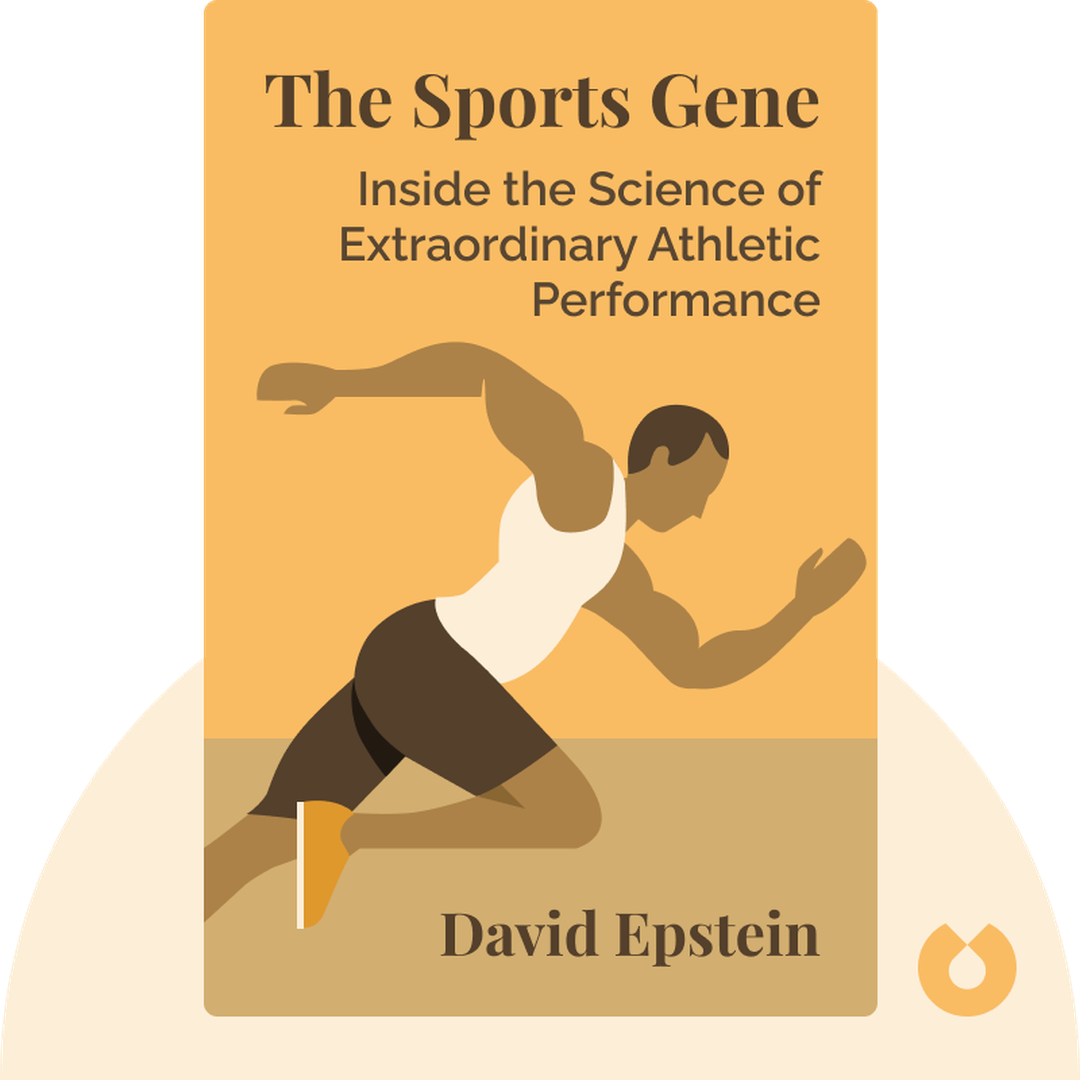
The Sports Gene takes a look at the physiological traits that are beneficial in various sports, and at their hereditary background. It also examines why people in certain parts of the world have evolved in their particular way, and how this is beneficial in the realm of certain sports.
Who Should Listen to The Sports Gene?
- Anyone who follows sports
- Anyone who wants to understand what sport they might be naturally good at
- Anyone who is interested in the physiology behind top athletic performance
Books Similar to The Sports Gene
Readers who enjoyed this also liked these titles.