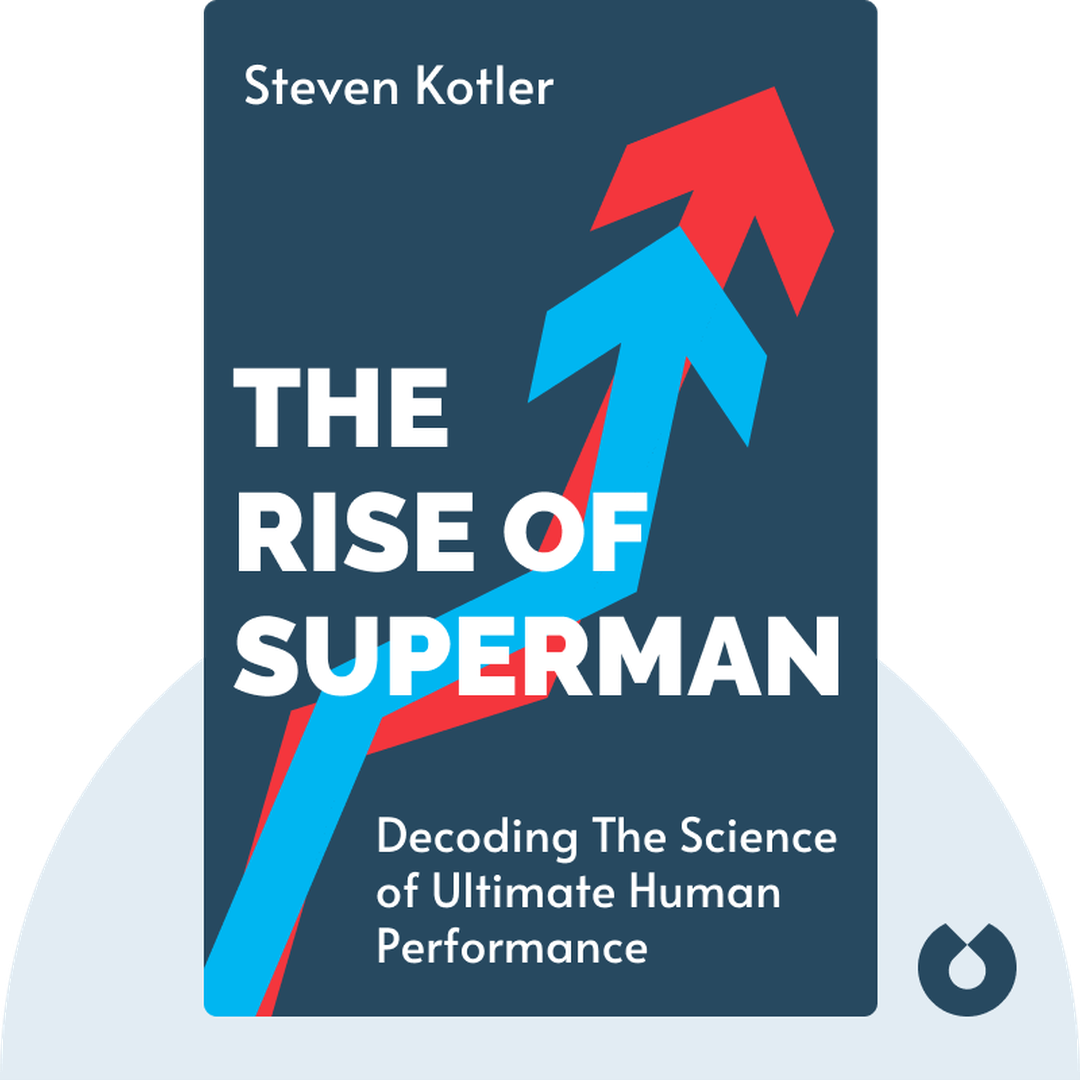
If You're Curious About These Questions...
You should listen to this audiobook
- What if you could hack your brain to enter a state of 'flow' where time slows down and your performance reaches superhuman levels?
- Have you ever wondered why extreme athletes are able to accomplish feats that seem physically impossible—and what their brains are doing differently in those moments?
- What’s the secret to bypassing your internal critic and tapping into the neurological 'sweet spot' that triggers ultimate human performance?
Listen to The Rise of Superman — Free Audiobook
Loading player...
Key Takeaways from The Rise of Superman
- Discover the scientific cocktail of five powerful neurochemicals that propel your brain into the zone, allowing you to achieve extraordinary focus and success.
- Learn how the concept of flow was discovered and understand why entering this state is the ultimate key to finding deep joy and purpose in any activity.
- Understand how taking calculated risks, whether physical, mental, or creative, can quiet self-doubt and instantly trigger a state of peak human performance.
- Find out how immersing yourself in environments rich with novelty, unpredictability, and complexity can naturally launch your mind into a highly productive flow state.
- Master the art of split-second decision-making by understanding how your brain anticipates future events, helping you conquer paralyzing fears and achieve the impossible.
Learning Tools
Reinforce what you learned from The Rise of Superman
Mind Map
The Rise of Superman
Understanding Flow+
The Neuroscience of Flow+
Conditions for Flow+
Mindset & Mental Tools+
The Role of Community+
Expanding Human Potential+
Quiz — Test Your Understanding
Question 1 of 9
According to the book, what is the primary reason extreme athletes are able to continually push the boundaries of human performance?
Question 2 of 9
Which neurochemical released during flow is primarily responsible for boosting creativity, increasing lateral thought, and reducing fear?
Question 3 of 9
How does the brain's functioning change to increase performance during a flow state?
Question 4 of 9
To successfully induce a flow state, how difficult should a task be relative to your current skill level?
Question 5 of 9
How does adopting a 'growth mindset' affect an individual's ability to achieve peak performance?
Question 6 of 9
What role does finding a community with a shared passion play in achieving flow and peak performance?
Question 7 of 9
What did an experiment measuring the physical effects of visualization reveal about the power of the mind?
Question 8 of 9
What is the 'Roger Bannister Effect' as described in the book?
Question 9 of 9
According to the book's actionable advice, what type of goals are most effective for maintaining concentration and staying in the flow state?
The Rise of Superman — Full Chapter Overview
- 1Recommendation
- 2Flow is a mental state that helps us perform at our peak and often feels deeply spiritual.
- 3The flow state is closely connected with our brain chemistry.
- 4To boost our performance, certain parts of the brain actually shut down during flow.
- 5Accessing flow requires deep engagement in what you love and setting realistic goals.
- 6Cultivating the right mindset is vital for reaching your highest performance.
- 7The most effective path to flow is finding a community that shares your passion.
- 8The more we learn about the mind, the closer we come to peak performance.
- 9As we keep expanding human performance, we can only raise our expectations.
The Rise of Superman Summary & Overview
The Rise of Superman examines the top performers in extreme sports in order to gain insight into how they use flow, i.e., the transcendental experience of being in “the zone,” to accomplish their amazing feats and connects the dots between the experience of flow and the neurology behind it.
Who Should Listen to The Rise of Superman?
- Anyone interested in achieving optimal performance
- Anyone involved in extreme sports
- Anyone interested in neuroscience and the mind
Books Similar to The Rise of Superman
Readers who enjoyed this also liked these titles.