If You're Curious About These Questions...
You should listen to this audiobook
- How does Almustafa use the analogy of a ship's rudder and sails to explain the delicate balance between human reason and emotion?
- Why does the prophet describe human pain as the 'breaking of a shell,' and how can this perspective completely shift the way we experience grief?
- According to the prophet, why do people talk incessantly, and what profound personal truths are they trying to avoid through constant conversation?
Listen to The Prophet — Free Audiobook
Loading player...
Key Takeaways from The Prophet
- Discover why true love and lasting marriages require personal freedom and space to grow, just as an oak tree and a cypress cannot thrive in each other's shadows.
- Understand how joy and sorrow are inextricably linked, and learn to embrace emotional pain as the necessary breaking of a shell that allows your soul to grow.
- Learn to maintain a deep spiritual connection with the natural world, ensuring that modern comforts like urbanization and clothing do not become a harness that restricts your spirit.
- Explore a profound perspective on justice that prioritizes radical forgiveness over petty human-made laws, recognizing that a person's genuine remorse is the ultimate remedy.
- Master the balance between reason and emotion by treating them as the rudder and sails of a ship, utilizing both in harmony to navigate successfully through life.
Learning Tools
Reinforce what you learned from The Prophet
Mind Map
The Prophet
Core Philosophy & Introduction+
Love, Marriage, & Childhood+
Joy, Sorrow, & Pain+
Society, Dwellings, & Laws+
Reason, Emotion, & Connection+
Pleasure & Beauty+
Time & Death+
Quiz — Test Your Understanding
Question 1 of 10
What does Almustafa emphasize as essential for a successful marriage?
Question 2 of 10
How does the prophet view the relationship between parents and children?
Question 3 of 10
What is the relationship between joy and sorrow in Almustafa's teachings?
Question 4 of 10
According to the prophet, what is the fundamental purpose of experiencing pain?
Question 5 of 10
What does Almustafa believe is the true effect of clothes on human beings?
Question 6 of 10
How does Almustafa view a person who has committed a crime?
Question 7 of 10
What metaphor does the prophet use to describe the harmony between reason and emotion?
Question 8 of 10
Why does Almustafa suggest people often engage in excessive talking?
Question 9 of 10
Which part of the human being does Almustafa claim is responsible for perceiving true beauty?
Question 10 of 10
How does Almustafa encourage people to view death?
The Prophet — Full Chapter Overview
- 1Recommendation
- 2Love, Marriage, and Children
- 3Joy, Sorrow, and Pain
- 4Homes and Clothing
- 5Law, Crime, and Punishment
- 6Reason and Feeling
- 7Friendship and Speech
- 8Pleasure and Beauty
- 9Time and Death
- 10Final summary
The Prophet Summary & Overview
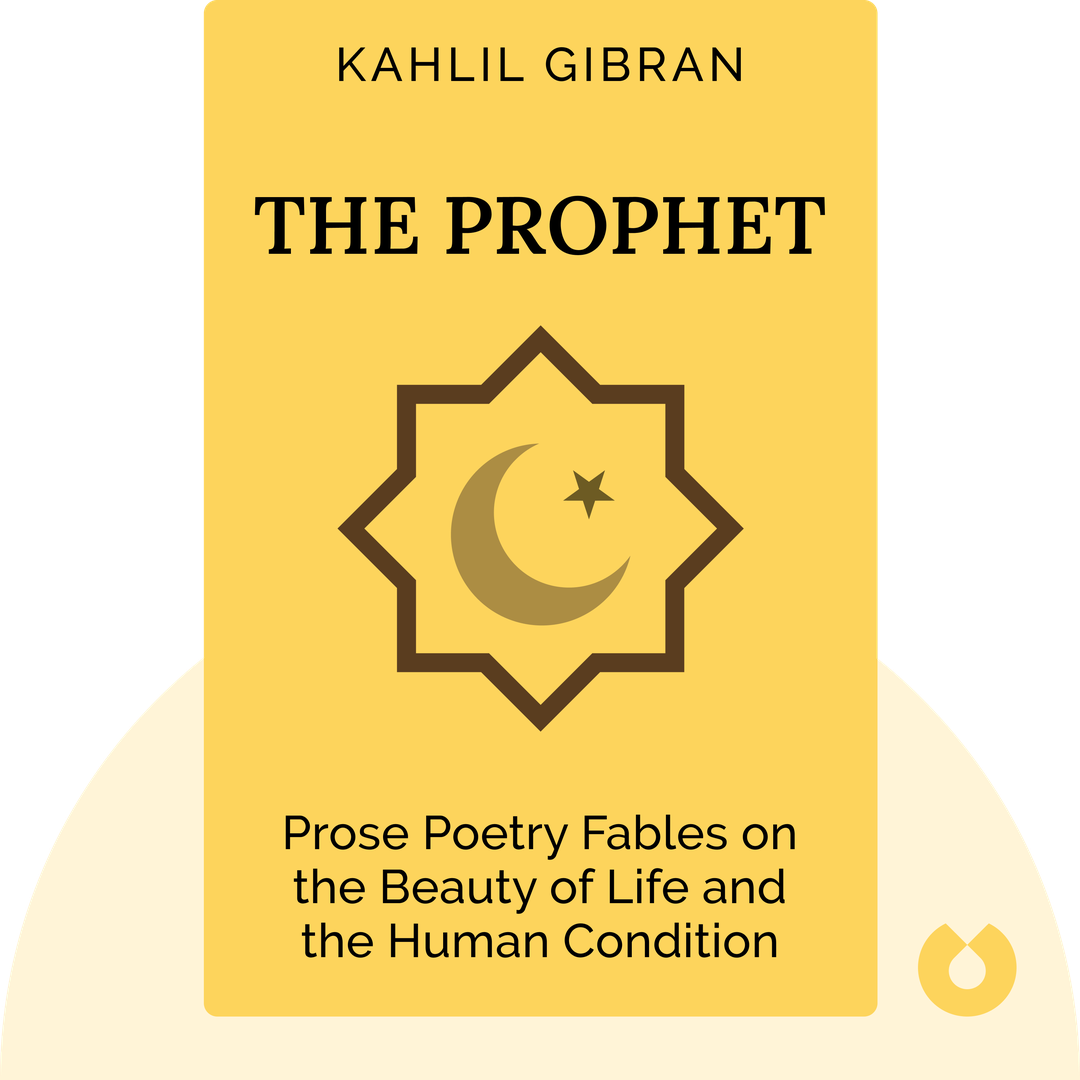
The Prophet (1923) follows the prophet Almustafa during his departure from the fictional city of Orphalese. As the community bids Almustafa farewell by the harbor, they petition him to share some final nuggets of wisdom from the deep well of his mind. What follows is a collection of profound insights into various aspects of life and the human condition.
Who Should Listen to The Prophet?
- Anyone seeking inspiration
- Teenagers on the cusp of adulthood
- Lost souls in need of spiritual guidance
Books Similar to The Prophet
Readers who enjoyed this also liked these titles.