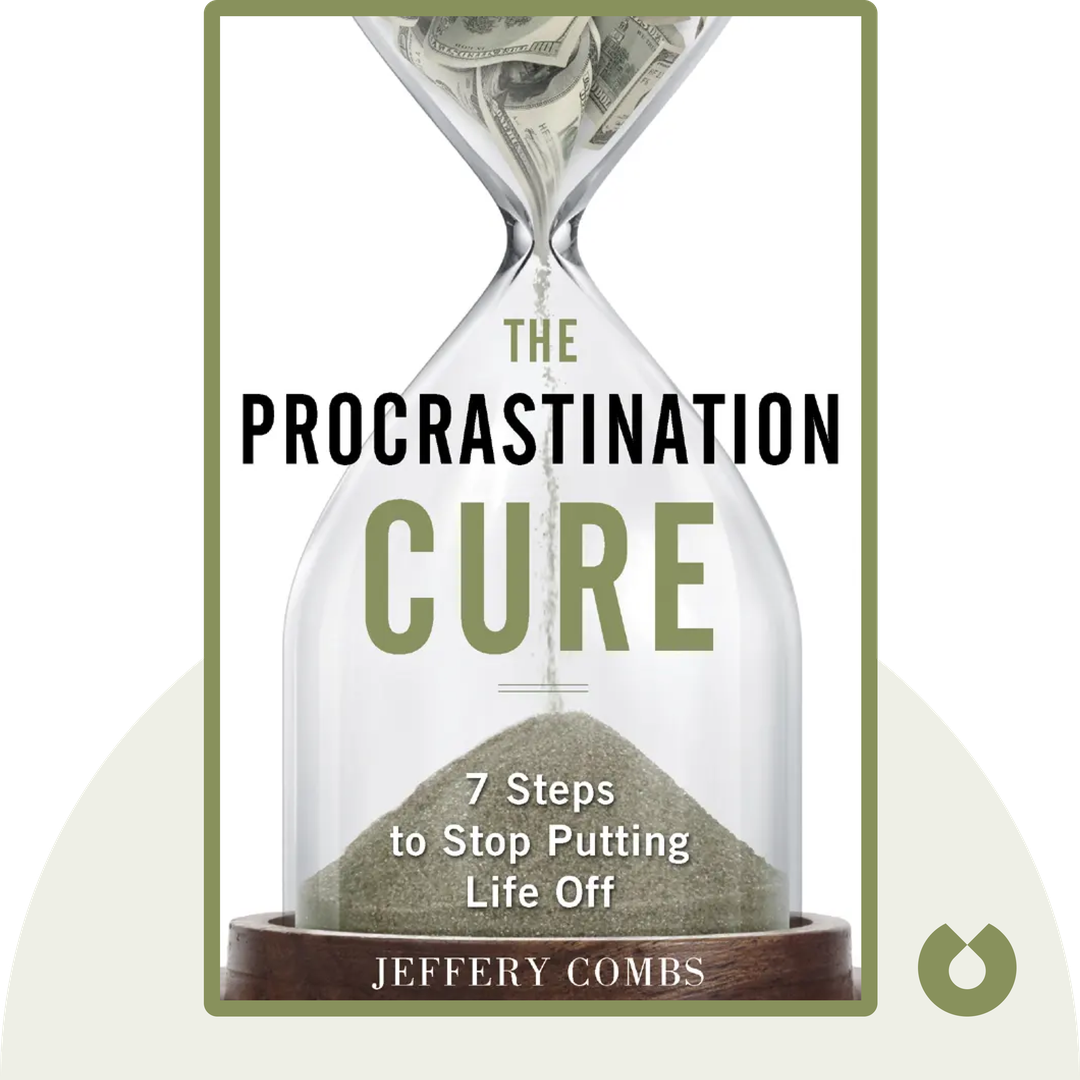
The Procrastination Cure audiobook cover - Procrastination is a deeply human habit—and it can be softened with understanding, practical tools, and self-kindness, so important tasks feel less heavy, motivation becomes more reliable, and daily life starts to feel calmer and more manageable again.

The Procrastination Cure

Procrastination is a deeply human habit—and it can be softened with understanding, practical tools, and self-kindness, so important tasks feel less heavy, motivation becomes more reliable, and daily life starts to feel calmer and more manageable again.

Unknown

4.2 / 5(5 ratings)
Start ListeningDownloadQR code that opens AudiobookHub on the App StoreTry free on iPhoneScan to start in 5 seconds

If You're Curious About These Questions...

You should listen to this audiobook

Listen to The Procrastination Cure — Free Audiobook

Loading player...

Key Takeaways from The Procrastination Cure

Learning Tools

Reinforce what you learned from The Procrastination Cure

Mind Map

The Procrastination Cure
Understanding Procrastination+
Strategies to Get Started+
Optimizing To-Do Lists+
Time Management Tools+
Eliminating Distractions+
Achieving More by Doing Less+
Leveraging Accountability+
Cultivating a Positive Mindset+
Actionable Hacks+

Quiz — Test Your Understanding

Question 1 of 10
According to the text, how should we view our natural tendency to procrastinate?
  • A. As a severe character flaw that requires immediate psychological intervention.
  • B. As a sign of laziness and a lack of professional ambition.
  • C. As an inbuilt human tendency that isn't necessarily a bad thing.
  • D. As a modern problem caused entirely by smartphones and social media.
Question 2 of 10
How does the book suggest dealing with the fear of failure that often leads to procrastination?
  • A. By lowering your expectations for success so you are never disappointed.
  • B. By reframing failure as useful data and feedback for improvement.
  • C. By only taking on tasks you know you can complete perfectly.
  • D. By ignoring the possibility of failure and relying on blind optimism.
Question 3 of 10
What does Mark Twain's advice to 'eat a frog' first thing in the morning mean in the context of productivity?
  • A. You should eat a large, healthy breakfast before attempting to work.
  • B. You should tackle your most unappealing or difficult task first.
  • C. You should break down a large project into smaller, bite-sized tasks.
  • D. You should spend the first part of your day planning and prioritizing.
Question 4 of 10
According to the text, what is the 'magic number' of tasks you should limit your daily to-do list to?
  • A. Three or fewer
  • B. Five or fewer
  • C. Seven or fewer
  • D. Ten or fewer
Question 5 of 10
How does Parkinson's Law relate to procrastination and time management?
  • A. Work expands to fill the time available for its completion, so you should set strict time limits for tasks.
  • B. Tasks always take longer than expected, so you should double your estimated completion time.
  • C. Productivity peaks in the morning, so you should schedule your hardest tasks early in the day.
  • D. Multitasking reduces efficiency by 40%, so you should always single-task.
Question 6 of 10
Why does the author recommend putting your phone on airplane mode or using an internet blocker?
  • A. Because a clean digital environment improves your computer's processing speed.
  • B. Because trying to simply ignore online distractions doesn't work against apps designed to steal your focus.
  • C. Because environmental control is the only proven way to overcome chronic perfectionism.
  • D. Because your future self needs immediate gratification to stay motivated.
Question 7 of 10
What strategy does the author suggest for handling tedious but necessary tasks, like filing taxes or mowing the lawn?
  • A. Break them into smaller 10-minute chunks and do them daily.
  • B. Delegate them to someone else whenever possible.
  • C. Force yourself to do them before any enjoyable tasks.
  • D. Wait until your energy levels peak before starting them.
Question 8 of 10
What did a 2002 MIT study reveal about deadlines and procrastination?
  • A. People are more likely to meet deadlines they set for themselves.
  • B. Deadlines imposed by others are respected more than self-imposed deadlines.
  • C. Deadlines generally decrease the quality of the final work.
  • D. Setting no deadlines results in the highest level of productivity.
Question 9 of 10
How does negative self-talk contribute to the cycle of procrastination?
  • A. It makes you overly confident, causing you to underestimate how long tasks take.
  • B. It causes you to set impossibly high standards that you eventually meet through extreme stress.
  • C. It lowers your confidence, making you feel like a failure and more vulnerable to procrastinating on future tasks.
  • D. It forces your future self to seek instant gratification instead of long-term rewards.
Question 10 of 10
What is 'Temptation Bundling' as described in the book's actionable advice?
  • A. Removing all temptations from your workspace so you can fully focus.
  • B. Grouping all your enjoyable tasks together at the end of the week as a reward.
  • C. Pairing a task you dislike doing with an activity you love doing.
  • D. Giving in to a small temptation to prevent a larger procrastination binge later.

The Procrastination Cure — Full Chapter Overview

The Procrastination Cure Summary & Overview

This warm, practical guide reframes procrastination as a normal part of being human, not a personal flaw. It gently explores why people delay—fear of failure, fear of success, overwhelm, self-doubt, boredom—and shows how self-awareness can turn procrastination into useful information rather than a source of shame.

Across simple time-management strategies, supportive mindset shifts, and compassionate self-care, the summary offers ways to start sooner, prioritize what matters, reduce distractions, and build sustainable routines. It also introduces the idea of “active procrastination,” helping listeners work with their patterns rather than fighting themselves every step of the way.

Who Should Listen to The Procrastination Cure?

  • People who feel stuck in cycles of delaying important tasks and want a calmer, more supportive way to change
  • Students, freelancers, and professionals who need practical prioritization and time-management tools without harsh self-discipline
  • Anyone whose procrastination is tied to perfectionism, fear, self-criticism, or overwhelm—and wants to rebuild confidence

About the Author: Unknown

The author of this source content is not specified. This audio script is a gentle narration based on the provided summary text, preserving its core ideas and practical strategies.

🎧
Listen in the AppOffline playback & background play
Get App