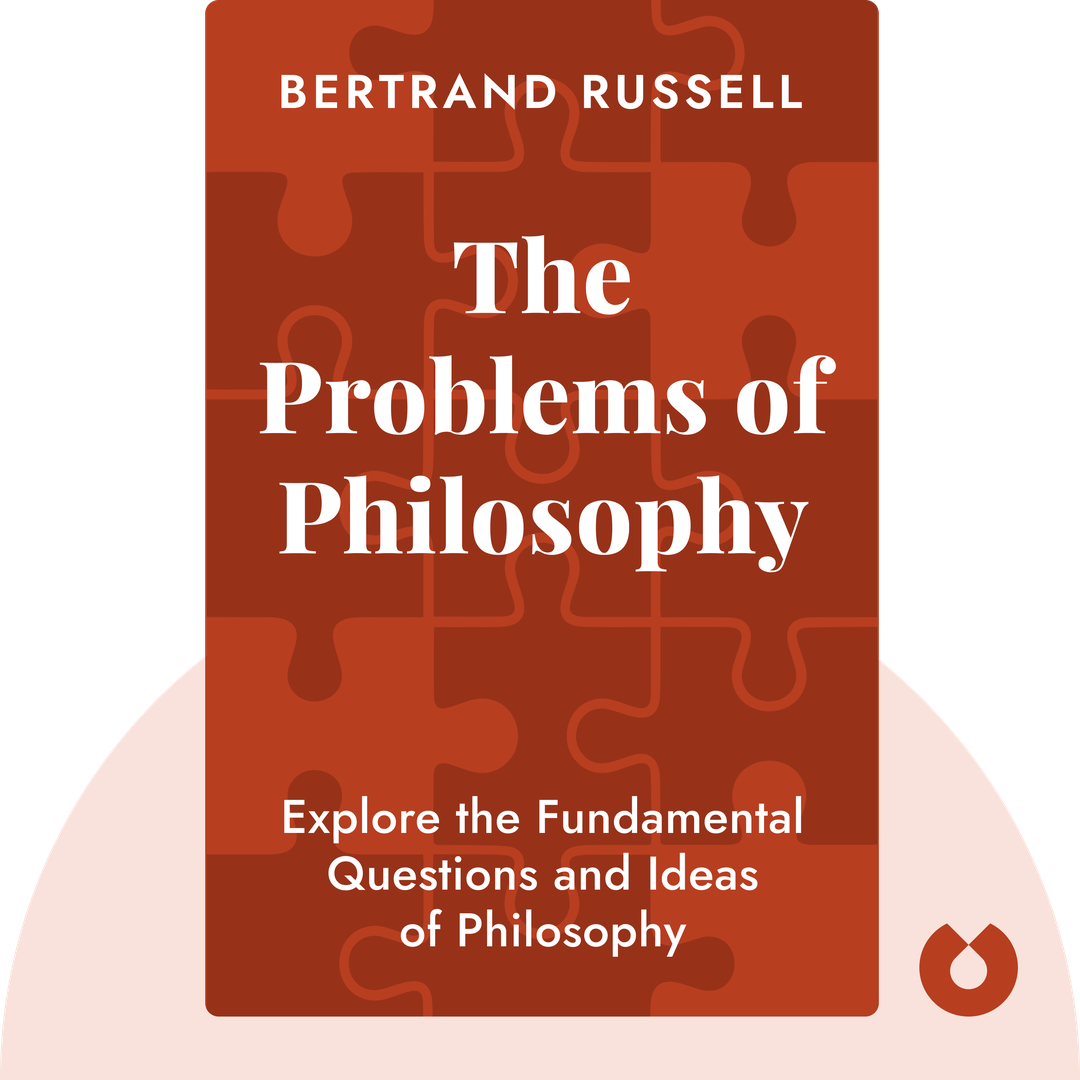
The Problems of Philosophy
Start ListeningDownload Try free on iPhoneScan to start in 5 seconds
Categories:
If You're Curious About These Questions...
You should listen to this audiobook
- Have you ever wondered if the objects around you—like the chair you’re sitting in—actually exist in the way your senses perceive them?
- Did you know that many of the "facts" we take for granted are based on assumptions that logic can't fully prove, including the belief that the sun will rise tomorrow?
- Are you curious about how embracing deep uncertainty can actually liberate your mind and lead to a more meaningful life?
Listen to The Problems of Philosophy — Free Audiobook
Loading player...
Key Takeaways from The Problems of Philosophy
- Discover why the true value of philosophy lies in asking profound questions rather than seeking definite answers, helping you break free from unexamined prejudices.
- Understand the critical distinction between appearance and reality by exploring how our minds construct the physical world using subjective sense-data.
- Learn how to differentiate between absolute a priori truths and empirical knowledge, revealing that much of our daily understanding relies on probability.
- Grasp the problem of induction to see why drawing general conclusions from past observations, like the sun rising every day, cannot logically guarantee future outcomes.
- Explore the classic clash between idealism and realism to question whether the physical world and abstract qualities exist independently of human perception.
Learning Tools
Reinforce what you learned from The Problems of Philosophy
Mind Map
The Problems of Philosophy
Appearance vs. Reality+
The Nature of Knowledge+
Idealism vs. Realism+
Universals and Particulars+
The Value of Philosophy+
Quiz — Test Your Understanding
Question 1 of 7
According to Bertrand Russell, what is the primary reason for studying philosophy?
Question 2 of 7
In Russell's table thought experiment, what does he mean by the term 'sense-data'?
Question 3 of 7
How does Russell categorize the knowledge that '2 + 2 = 4' compared to the knowledge that 'water boils at 100° Celsius'?
Question 4 of 7
What is the 'problem of induction' as described in the text?
Question 5 of 7
Which statement best describes Russell's stance on the debate between idealism and realism?
Question 6 of 7
According to Russell, what are 'universals'?
Question 7 of 7
What does Russell identify as a key practical value of philosophical thinking?
The Problems of Philosophy — Full Chapter Overview
- 1Recommendation
- 2How do you know what you believe you know?
- 3Seeming versus reality
- 4The essence of knowledge
- 5Idealism against realism
- 6Universals and individuals
- 7The worth of philosophy
The Problems of Philosophy Summary & Overview
The Problems of Philosophy (1912), is an accessible introduction to fundamental philosophical questions that explore the nature of reality, the limits of human knowledge, and the value of philosophical inquiry. It challenges readers to question their assumptions about the world and how we understand it.
Who Should Listen to The Problems of Philosophy?
- Philosophical minds interested in big questions, or curious about the great minds of the 20th century
- Science fans and researchers interested in the philosophical foundations of their work
- Anyone grappling with questions about the nature of truth and certainty in the modern world
Books Similar to The Problems of Philosophy
Readers who enjoyed this also liked these titles.