If You're Curious About These Questions...
You should listen to this audiobook
- What if you could harness a 'sixth sense' to read any room and instantly understand the unspoken thoughts and feelings of everyone around you?
- Have you ever wondered why some people seem to navigate social situations and career hurdles with effortless grace while others constantly feel out of sync?
- Are you curious about the ancient Korean secret to building deep trust and harmony that can give you a competitive edge in both your personal and professional life?
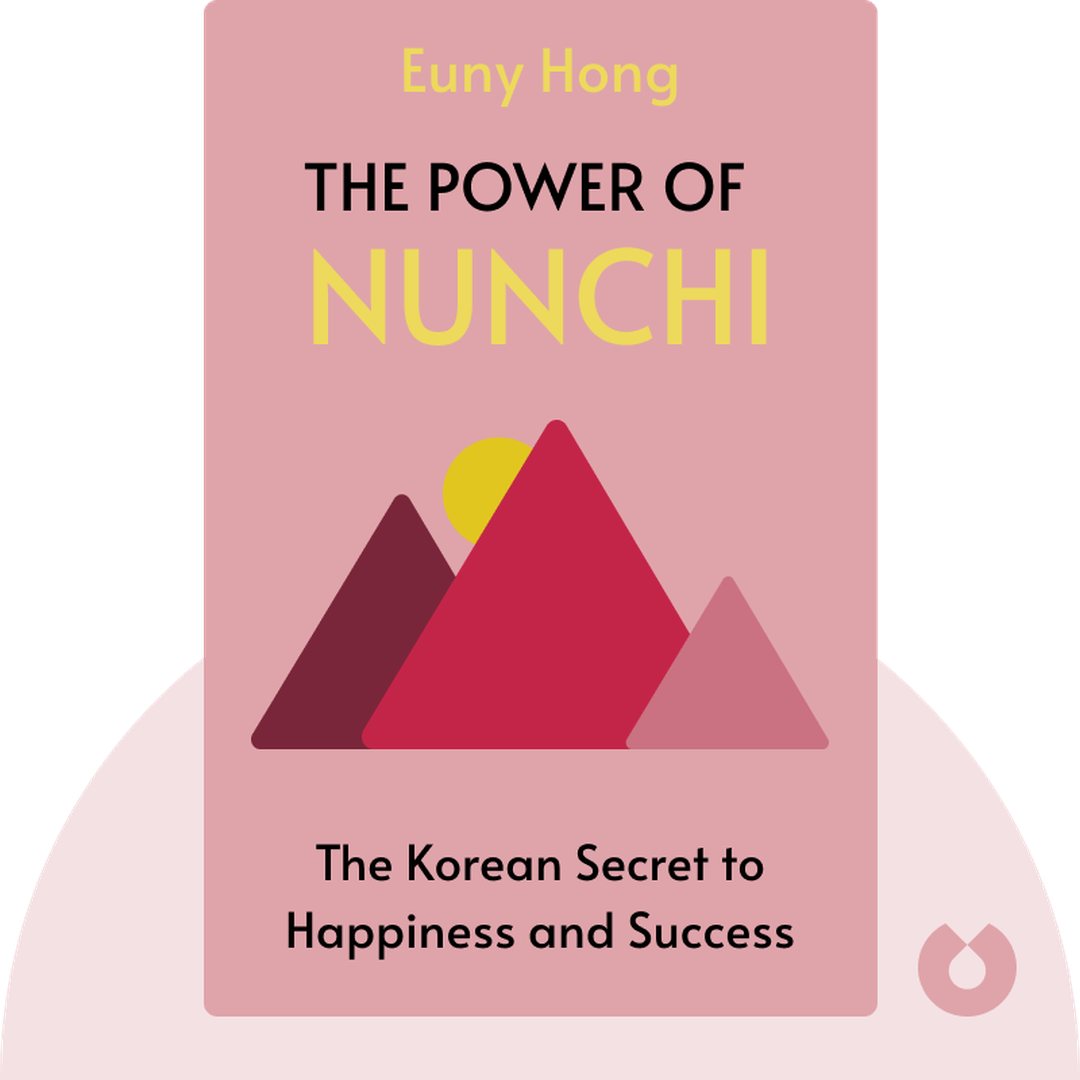
Listen to The Power of Nunchi — Cinematic Audio Edition
Loading player...
Key Takeaways from The Power of Nunchi
- Master the subtle Korean art of nunchi to continuously read people's thoughts and moods, allowing you to build deep trust and navigate complex social situations.
- Learn how to read 'the room' as a single social ecosystem rather than focusing on individuals, enabling you to accurately sense and elevate the shared atmosphere.
- Understand the value of cultivating a 'round' and adaptable personality over having 'sharp edges,' ensuring your social interactions remain smooth and conflict-free.
- Discover why mastering nunchi requires objective understanding rather than emotional empathy, teaching you to mentally shift your perspective to see situations more clearly.
- Find out how embracing collectivist thinking can help you avoid awkward missteps, create a powerful sense of belonging, and boost your overall life satisfaction.
Learning Tools
Reinforce what you learned from The Power of Nunchi
Mind Map
The Power of Nunchi
Origins and Definition+
Fundamental Values+
The Room (Social Space)+
The Practice of Stilling+
Social Navigation+
Workplace Success+
Quiz — Test Your Understanding
Question 1 of 9
How did the concept of nunchi historically develop in Korea?
Question 2 of 9
According to the book, what is the fundamental unit of nunchi?
Question 3 of 9
Why does nunchi advocate for cultivating 'roundness' rather than 'sharp edges'?
Question 4 of 9
How does nunchi differentiate between 'understanding' and 'empathy'?
Question 5 of 9
What is the primary purpose of the nunchi practice of 'stilling'?
Question 6 of 9
Why is a nunchi-based first impression considered an antidote to bias?
Question 7 of 9
How can nunchi help you understand the true power dynamics in an office?
Question 8 of 9
How does the book suggest using the Socratic method to influence a stubborn colleague?
Question 9 of 9
What practical action does the author suggest to ignite a feeling of community and flow at the start of a work meeting?
The Power of Nunchi — Full Chapter Overview
- 1Recommendation
- 2Nunchi is the nuanced Korean art of sensing others’ thoughts and moods to build genuine, lasting trust, harmony, and connection.
- 3The core unit of nunchi is the room.
- 4Mastering nunchi means embracing the values of collectivism, “roundness,” and understanding.
- 5The practice of “stilling” — paying mindful attention to what others do and say — is essential to nunchi etiquette.
- 6Nunchi sharpens your first impressions of others and helps you make a strong first impression.
- 7By stressing the value of indirect communication, nunchi helps you build smoother social relationships.
- 8Nunchi is vital for reading your workplace accurately so you can advance and move ahead in your career.
- 9Nunchi equips you with tools to influence people at work.
The Power of Nunchi Summary & Overview
The Power of Nunchi (2019) is an introduction to the subtle Korean art of gauging other people’s moods and thoughts in order to create trust, connection, and harmony. While nunchi has its roots in Korean culture, its lessons are applicable to contexts far beyond Korea. That’s because nunchi is a social skill that’ll empower you to read a room and understand others so that you can improve your relationships, get ahead at work, and influence people in any context and place.
Who Should Listen to The Power of Nunchi?
- Employees who want to get ahead at work
- Wellness seekers who want to better connect with others
- Korean culture enthusiasts
Books Similar to The Power of Nunchi
Readers who enjoyed this also liked these titles.