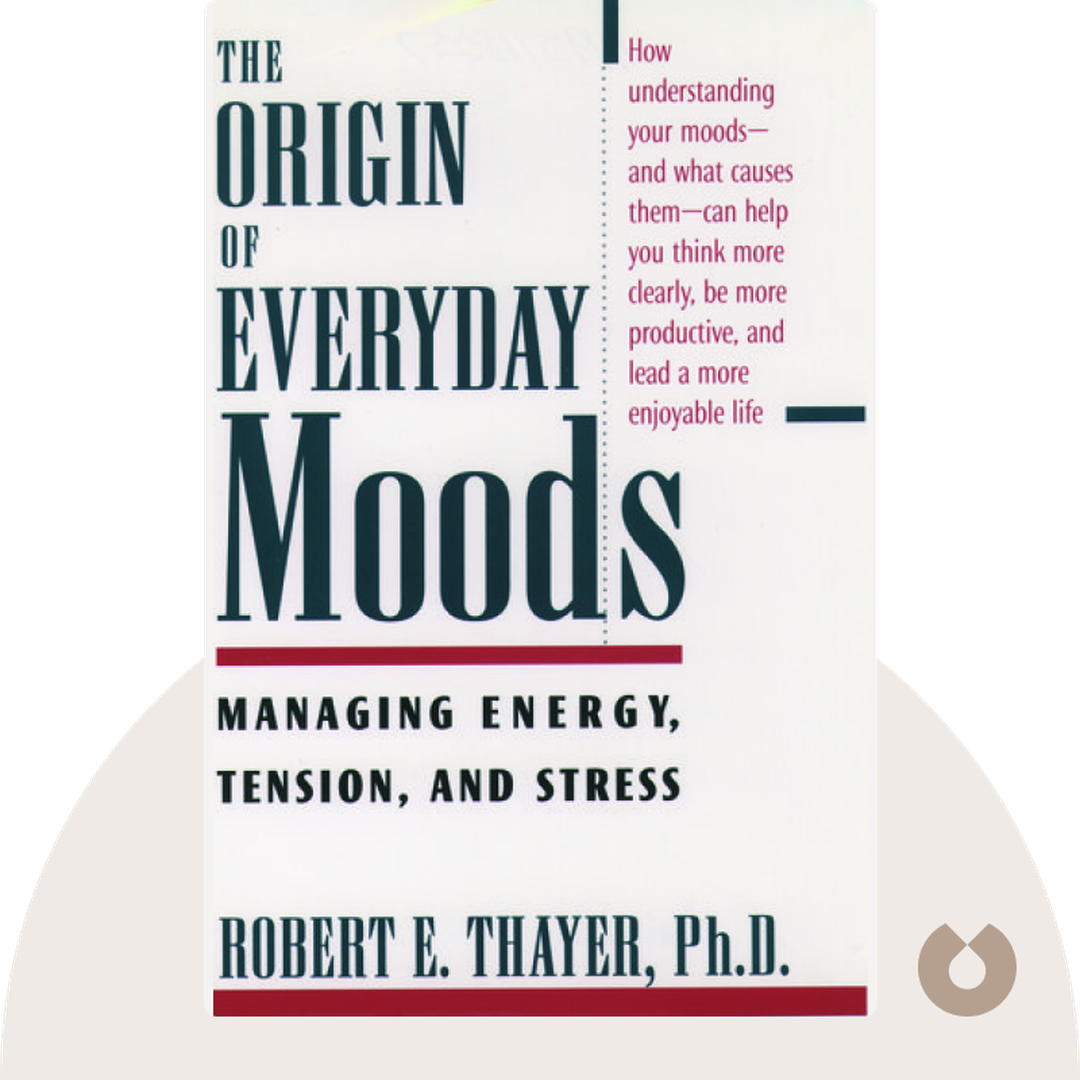
The Origin of Everyday Moods
Start ListeningDownload Try free on iPhoneScan to start in 5 seconds
Categories:
If You're Curious About These Questions...
You should listen to this audiobook
- Did you know that the common belief that our thoughts are the primary cause of our moods is actually a myth?
- Have you ever wondered why your mood seems to shift at specific times of the day, regardless of what is actually happening in your life?
- What if you could decode the hidden biological triggers behind your energy and tension to finally take control of how you feel every day?
Listen to The Origin of Everyday Moods — Free Audiobook
Loading player...
Key Takeaways from The Origin of Everyday Moods
- Understand why common self-regulating behaviors, like eating sugary snacks or watching TV, often fail to improve your mood and actually make you feel worse.
- Discover how all everyday moods are fundamentally formed by varying combinations of just two physiological dimensions: energy and tension.
- Learn why you are highly vulnerable to bad moods and depressive feelings at predictable times, such as the 4 p.m. slump when your natural energy reaches its lowest point.
- Recognize that external life events don't solely dictate your feelings; your reaction to daily problems is heavily influenced by biological factors like neurochemicals, hormones, and sleep patterns.
- Find out how modern work stress can trigger an ancient evolutionary 'freeze response,' locking your body into a tense-energy state to survive nonexistent physical threats.
Learning Tools
Reinforce what you learned from The Origin of Everyday Moods
Mind Map
The Origin of Everyday Moods
The Four Core Moods+
Biological & Evolutionary Origins+
Daily Rhythms & Vulnerabilities+
Ineffective Mood Management+
Active Mood Management+
Self-Observation & Planning+
Quiz — Test Your Understanding
Question 1 of 9
According to the author's framework, what two central factors combine to form our everyday moods?
Question 2 of 9
Which mood state is characterized by high resources, efficient physical functioning, and a focused, at-ease mental state?
Question 3 of 9
At what time of day is the average person most vulnerable to bad moods and feelings of depression?
Question 4 of 9
From an evolutionary perspective, how does the 'tense-energy' mood serve humans?
Question 5 of 9
What happens to a person's energy levels as stress increases from a moderate level to a high level?
Question 6 of 9
According to psychotherapists and study participants, what is the LEAST successful strategy for managing a bad mood?
Question 7 of 9
Based on the studies mentioned in the book, how do men and women typically differ in their less-successful mood regulation habits?
Question 8 of 9
How do different durations of exercise affect a person's energy and tension levels?
Question 9 of 9
Why does the author advise being cautious when making future plans?
The Origin of Everyday Moods — Full Chapter Overview
- 1Recommendation
- 2Moods are formed by different levels of energy and tension.
- 3Life events are only one of many things that affect mood.
- 4Moods help us respond effectively to threats.
- 5Tension and energy move in opposite directions.
- 6Active strategies work best for managing moods.
- 7Identify unhealthy mood-regulation habits and replace them.
- 8Use exercise and meditation to overcome tense-tired moods.
- 9Improve your moods with self-observation and analysis.
- 10Final summary
The Origin of Everyday Moods Summary & Overview
The Origin of Everyday Moods (1996) explores the complex relationships between the biological and psychological factors that create and influence human moods. It also challenges common misconceptions, like the myth that moods are caused by thoughts. With a greater understanding of mood science, we can better manage and control our everyday moods.
Who Should Listen to The Origin of Everyday Moods?
- Fans of psychology and personality studies
- Those who just can’t seem to break out of a bad mood
- Anyone curious about the different factors that influence our moods
Books Similar to The Origin of Everyday Moods
Readers who enjoyed this also liked these titles.