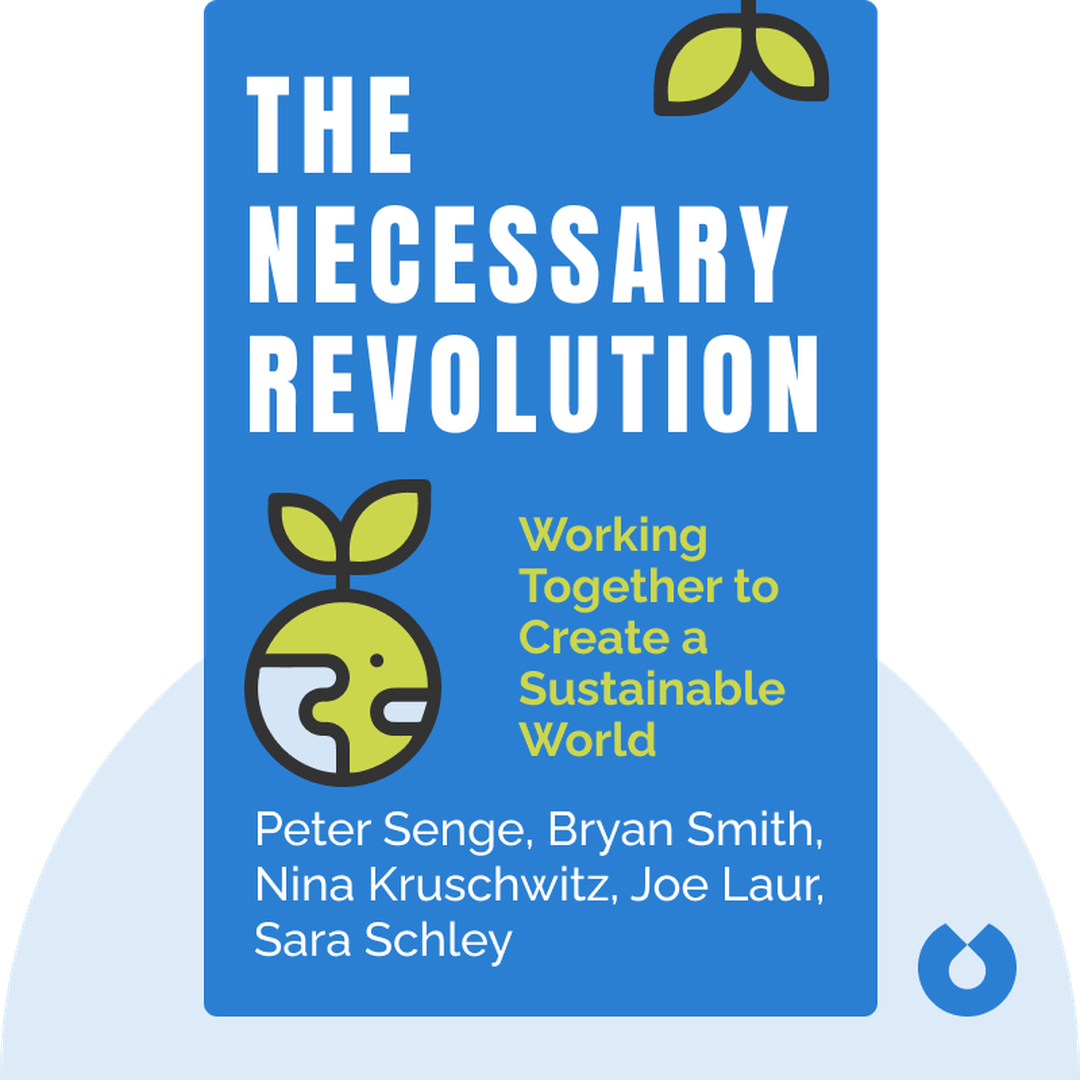
The Necessary Revolution
Start ListeningDownload Try free on iPhoneScan to start in 5 seconds
Categories:
If You're Curious About These Questions...
You should listen to this audiobook
- Did you know that the most successful organizations of the future are those that stop treating sustainability as a cost and start seeing it as a source of radical innovation?
- Have you ever wondered why our traditional ways of solving problems often make them worse, and what specific shift in mentality is required to fix it?
- Are you curious about how unlikely collaborations between competitors and communities are actually paving the way for a global sustainability revolution?
Listen to The Necessary Revolution — Free Audiobook
Loading player...
Key Takeaways from The Necessary Revolution
- Understand why the pursuit of unlimited economic growth is fundamentally flawed and how individuals, corporations, and governments must unite to achieve true environmental sustainability.
- Discover how an empowered mentality allows individuals to shake up the system, just as one Swedish car dealer did by successfully championing the nationwide adoption of ethanol-fueled cars.
- Learn to foster a positive focus for sustainable change by proactively creating the solutions you want to see, rather than wasting time complaining about the problems you oppose.
- Find out how major organizations can implement impactful, long-term environmental strategies, illustrated by the successful collaboration between Coca-Cola and the WWF to reduce global water waste.
- Recognize the critical flaws in traditional business metrics like Return on Investment (ROI) and discover why current Corporate Social Responsibility (CSR) efforts often fail to create lasting environmental change.
Learning Tools
Reinforce what you learned from The Necessary Revolution
Mind Map
The Necessary Revolution
The Sustainability Paradigm Shift+
The Empowered Mentality+
Fostering a Positive Focus+
Reforming Corporate Influence+
The Power of the Consumer+
Actionable Advice+
Quiz — Test Your Understanding
Question 1 of 7
What event does the text cite as the final piece of evidence that the neoliberal ideal of unlimited economic growth is misguided?
Question 2 of 7
How did Per Carstedt demonstrate an empowered mentality to contribute to sustainability?
Question 3 of 7
According to the text, why is it crucial to adopt a 'positive focus' rather than a negative one when pushing for change?
Question 4 of 7
Why does the text argue that Return on Investment (ROI) is an outdated metric for measuring a corporation's success?
Question 5 of 7
According to CSR expert Steve Lydenberg, what is the primary reason Corporate Social Responsibility (CSR) often fails to create real change?
Question 6 of 7
Why does the text argue against becoming an 'autarkic marginal' (living entirely outside the corporate system) as a solution to societal problems?
Question 7 of 7
How does adopting a 90 percent vegetarian diet illustrate one of the greatest strengths of the necessary revolution?
The Necessary Revolution — Full Chapter Overview
- 1Recommendation
- 2The needed revolution is a move to environmental sustainability.
- 3Jumpstart the needed revolution by keeping an empowered mindset.
- 4Create the change you wish to see by cultivating positive focus.
- 5Corporations exert a powerful grip over our society.
- 6We're all part of the needed revolution.
The Necessary Revolution Summary & Overview
The Necessary Revolution (2008) sheds light on the environmental and social challenges faced by people living in today’s world. Drawing on stories from real people and real communities, these blinks introduce the mentality we must adopt to fight for sustainability.
Who Should Listen to The Necessary Revolution?
- Eco-conscious entrepreneurs
- Anyone interested in sustainability
Books Similar to The Necessary Revolution
Readers who enjoyed this also liked these titles.