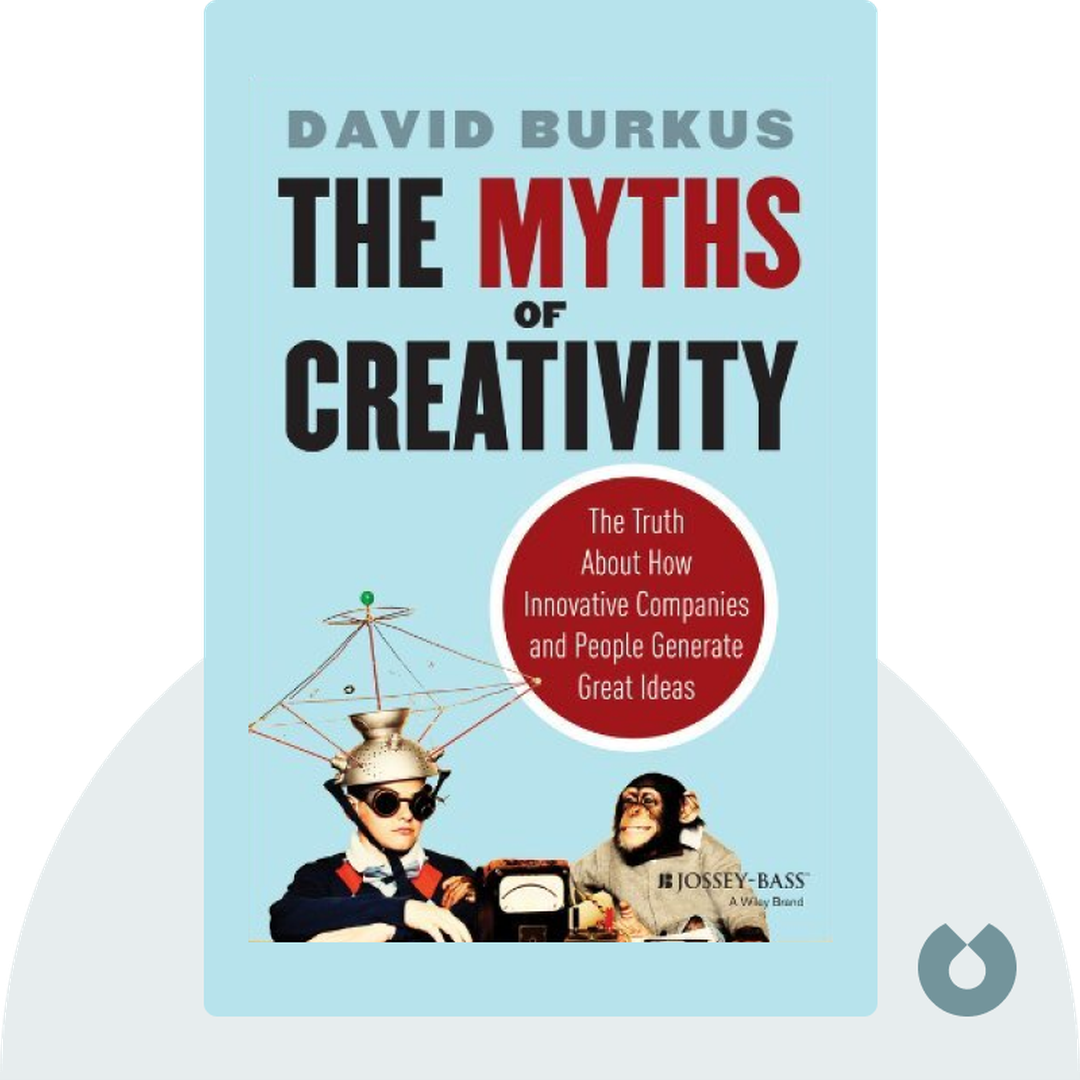
The Myths of Creativity
Start ListeningDownload Try free on iPhoneScan to start in 5 seconds
Categories:
If You're Curious About These Questions...
You should listen to this audiobook
- Did you know that the legendary 'Eureka' moment is actually a myth, and there's a much more reliable way to spark your next big idea?
- Have you ever wondered why the world’s most successful innovations rarely come from a 'lone genius' working in isolation?
- What if you could stop waiting for the perfect muse and learn the secret to generating high-quality ideas on demand?
Listen to The Myths of Creativity — Free Audiobook
Loading player...
Key Takeaways from The Myths of Creativity
- Understand why the sudden 'lightning bolt' of inspiration is a myth, and learn how true creativity actually requires time, effort, and the incubation of multiple ideas.
- Discover why the belief that creativity is an exclusive genetic trait is completely false, proving that anyone has the potential to be an innovator.
- Learn how breaking down corporate silos and abandoning rigid top-down management empowers every employee to actively contribute to a company's creative success.
- Realize the surprising benefits of mind-wandering, and see how briefly stepping away to perform unrelated tasks can drastically improve your creative output.
- Find out why the 'lone genius' is a fallacy, and how stepping outside your immediate workspace to engage with a diverse social network serves as the ultimate catalyst for innovation.
Learning Tools
Reinforce what you learned from The Myths of Creativity
Mind Map
The Myths of Creativity
Debunking the 'Spark' & 'Lone Genius' Myths+
Debunking the 'Breed' & 'Suit' Myths+
The Neuroscience & Mechanics of Ideation+
The Power of Constraints & Process+
Quiz — Test Your Understanding
Question 1 of 6
What does the true story of Isaac Newton and the falling apple illustrate about the creative process?
Question 2 of 6
How did psychologist Marvin Reznikoff’s study of twins challenge the 'breed myth' of creativity?
Question 3 of 6
According to the text, what is a highly effective way for organizations to foster a high degree of innovation?
Question 4 of 6
Why is Thomas Edison often remembered as a 'lone genius' despite working with a large, diverse team?
Question 5 of 6
What have neuroscientists discovered about the brains of exceptionally creative people?
Question 6 of 6
How does the book suggest we should view constraints and restrictions when trying to innovate?
The Myths of Creativity — Full Chapter Overview
- 1Recommendation
- 2To reach our full creative potential, we must change how we perceive creativity in general.
- 3Creativity isn’t a special resource reserved solely for only a select few.
- 4Taking time and focusing on favored tasks can truly spark the creative process.
- 5Creativity flourishes within a strong supportive social environment.
- 6Creativity relies on effectively linking diverse kinds of knowledge together within the human brain.
- 7Creativity often sparks when an innovator works under constraints.
The Myths of Creativity Summary & Overview
The Myths of Creativity debunks our common misconceptions of how creativity works. It provides practical insight and valuable advice on how to generate new ideas and let them flourish, and it gives real-world examples from history and recent well-known creatives.
Who Should Listen to The Myths of Creativity?
- Anyone who would like to increase his or her creativity
- Anyone running a business or organization
Books Similar to The Myths of Creativity
Readers who enjoyed this also liked these titles.