If You're Curious About These Questions...
You should listen to this audiobook
- Have you ever wondered why even the most talented leaders often fail to drive real results for their organizations?
- Are you curious about the two fundamental motives for leadership and which one might be secretly holding you back?
- What if the key to your professional success isn't your skill set, but a shift in your underlying reason for leading?
Listen to The Motive — Cinematic Audio Edition
Loading player...
Key Takeaways from The Motive
- Understand why leadership must be approached as a demanding servant role full of sacrifices, rather than a personal reward or an escape from accountability.
- Discover why you cannot overlook an employee's toxic personality just because they are highly skilled, and why actively correcting behavior protects organizational growth.
- Master the crucial skill of navigating uncomfortable conversations directly, as delegating the task of correcting employees is a sign of ineffective leadership.
- Learn how to transform boring, report-driven team meetings into highly interactive, trust-building sessions where employees feel their opinions truly matter.
- Find out why a successful CEO must prioritize actively managing and leading their executive team over simply reviewing financials or driving marketing programs.
Learning Tools
Reinforce what you learned from The Motive
Mind Map
The Motive
Core Premise+
The Wrong Motive (Rewards-Centered)+
5 Signs of the Wrong Motive+
The Right Motive (Responsibility-Centered)+
Advocating for True Leadership+
Quiz — Test Your Understanding
Question 1 of 7
According to the text, what is the fundamental root cause behind a leader’s failure to fulfill their central functions?
Question 2 of 7
How do 'reward-centered' leaders typically view their leadership role?
Question 3 of 7
Why do many reward-centered CEOs often outsource the task of building their executive team to HR?
Question 4 of 7
What is the primary reason reward-centered leaders often avoid having challenging dialogues about sensitive topics with their team members?
Question 5 of 7
According to the text, what are the two major consequences of leaders treating team meetings as 'boring chores'?
Question 6 of 7
Why does the author emphasize the need for constant and repetitive communication from a leader?
Question 7 of 7
According to the text's conclusion, why shouldn't we need to use the specific term 'servant leadership'?
The Motive — Full Chapter Overview
- 1Recommendation
- 2The wrong reason for leading
- 3Signs that your reason for leading is wrong
- 4The right reason for leading
- 5Encourage the adoption of responsibility-driven leadership
- 6Final summary
The Motive Summary & Overview
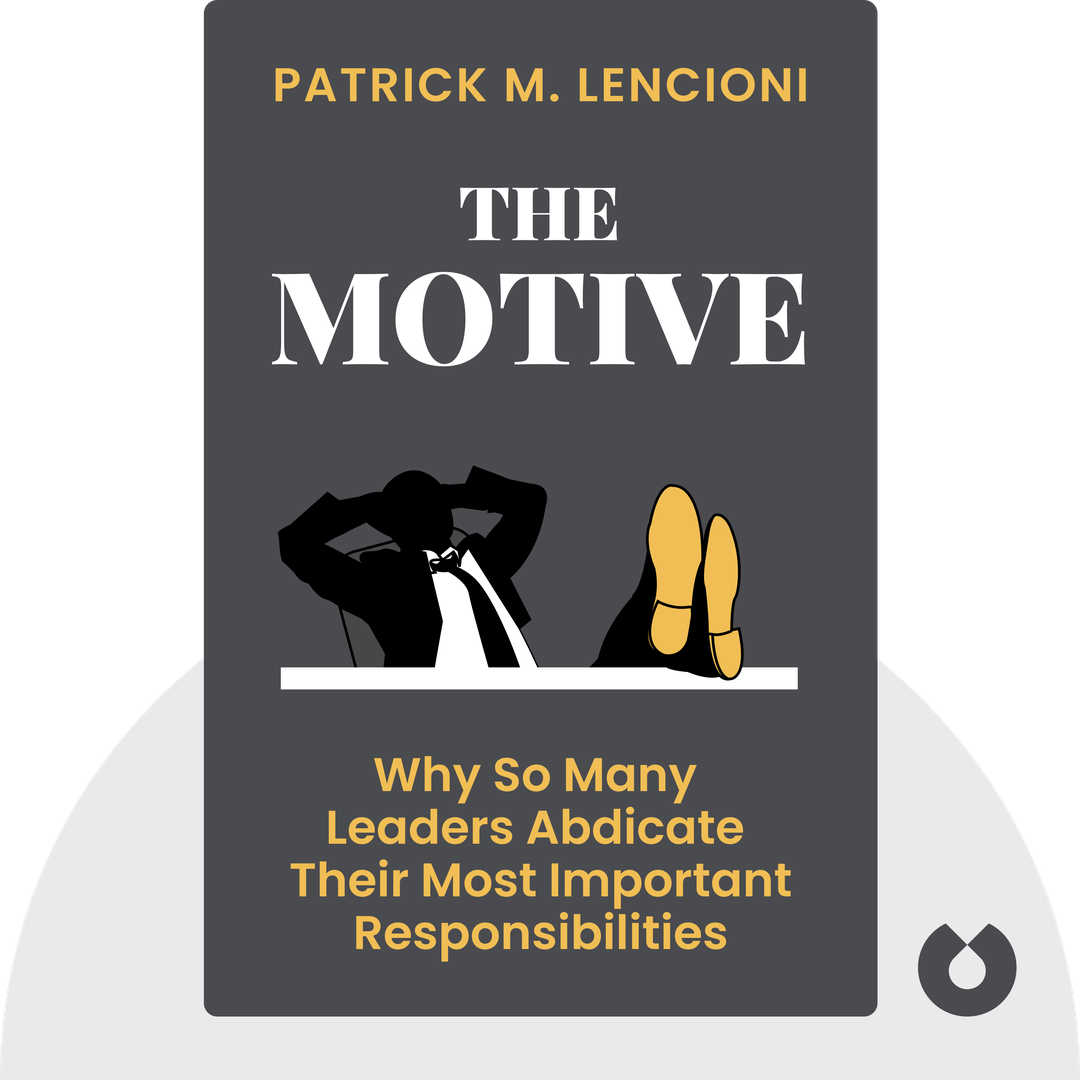
The Motive (2020) dives into the importance of leaders having a strong and clear drive for their work. Centered around two fundamental motives, it guides leaders to recognize their genuine intentions and adopt responsibility-driven leadership for the good of their organizations.
Who Should Listen to The Motive?
- Aspiring leaders wanting to know the essence of genuine leadership.
- Managers seeking self-improvement
- Advocates for selfless, service-oriented leadership.
Books Similar to The Motive
Readers who enjoyed this also liked these titles.