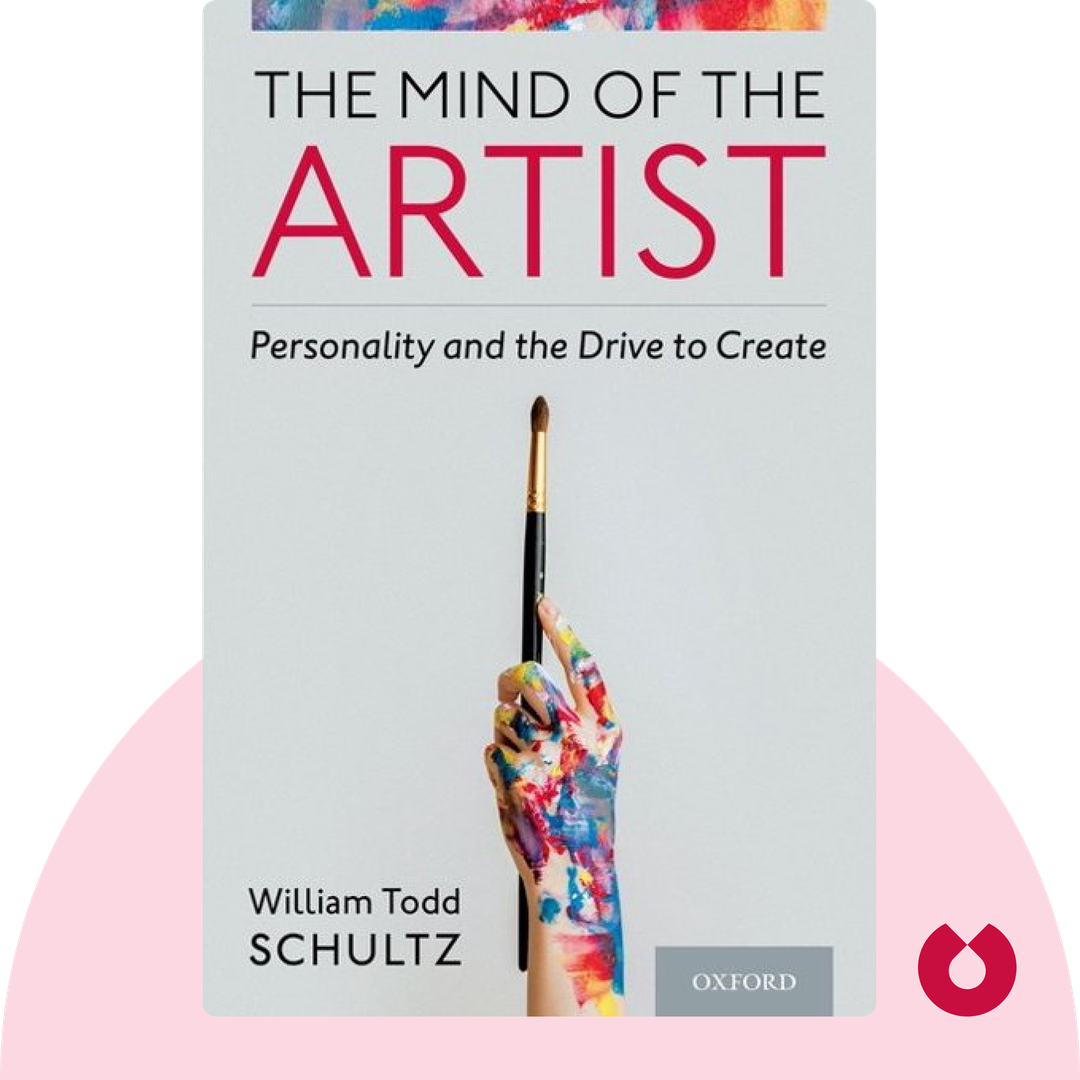
The Mind of the Artist
Start ListeningDownload Try free on iPhoneScan to start in 5 seconds
Categories:
If You're Curious About These Questions...
You should listen to this audiobook
- Have you ever wondered why we cling to the myth of the “tortured artist,” and what ten years of psychological research actually reveals about the link between suffering and creativity?
- Did you know that regardless of their medium, most world-class creators share a specific set of hidden personality traits that fuel their genius?
- Are you curious about the secret inner workings of the creative mind and how modern science is debunking long-held stereotypes about the “troubled genius”?
Listen to The Mind of the Artist — Free Audiobook
Loading player...
Key Takeaways from The Mind of the Artist
- Discover why the 'tortured artist' trope is largely a myth, and understand how true mental illness actually shuts down the creative process.
- Understand the five core personality traits that build the foundation of creativity, and learn why 'openness' is considered the ultimate holy grail for artists.
- Learn why creative minds typically score low in conscientiousness and agreeableness, often utilizing chaos, isolation, and a rejection of societal norms to fuel their work.
- Explore how neuroticism can be harnessed for creative problem-solving by prompting artists to ruminate and analyze, rather than simply suffering from negative emotions.
- Discover how highly open individuals use cognitive curiosity to resist quick conclusions, make non-obvious associations, and achieve a state of deep creative flow.
Learning Tools
Reinforce what you learned from The Mind of the Artist
Mind Map
The Mind of the Artist
Core Premises+
The Big Five Traits+
Trauma and Unhappiness+
Mental Health Realities+
Quiz — Test Your Understanding
Question 1 of 8
How does the book describe the relationship between true mental illness, such as depression, and creativity?
Question 2 of 8
According to the text, which of the core personality traits is considered the 'holy grail' of creativity?
Question 3 of 8
How do artists typically score in conscientiousness and agreeableness, and how does this affect their work?
Question 4 of 8
What does research suggest about the role of neuroticism in artistic creativity?
Question 5 of 8
What is described as the 'flip side' or potential downside of having highly open personality traits?
Question 6 of 8
How does early loss or profound unhappiness typically influence an artist, particularly writers?
Question 7 of 8
Why does the author argue that studies connecting mental illness to historical artistic geniuses (like Beethoven) are questionable?
Question 8 of 8
What commonality did artists like Sylvia Plath, Kurt Cobain, and Diane Arbus share in the time leading up to their tragic deaths?
The Mind of the Artist — Full Chapter Overview
- 1Recommendation
- 2The artist's key personality traits
- 3Analyzing core creative traits
- 4The highs and lows of openness
- 5A shared unhappiness?
- 6The artist and mental health
The Mind of the Artist Summary & Overview
The Mind of the Artist (2021) is the culmination of ten years of research into the common traits and preconceived notions surrounding the artistic mind. It explores the typical personality traits that can be found in artists of all mediums, including writers, musicians, painters, and photographers. These findings challenge many stereotypes surrounding creators, including the so-called “tortured artist.”
Who Should Listen to The Mind of the Artist?
- Anyone interested in psychology
- Artists and creative people
- People curious about the myth of the “troubled genius”
Books Similar to The Mind of the Artist
Readers who enjoyed this also liked these titles.