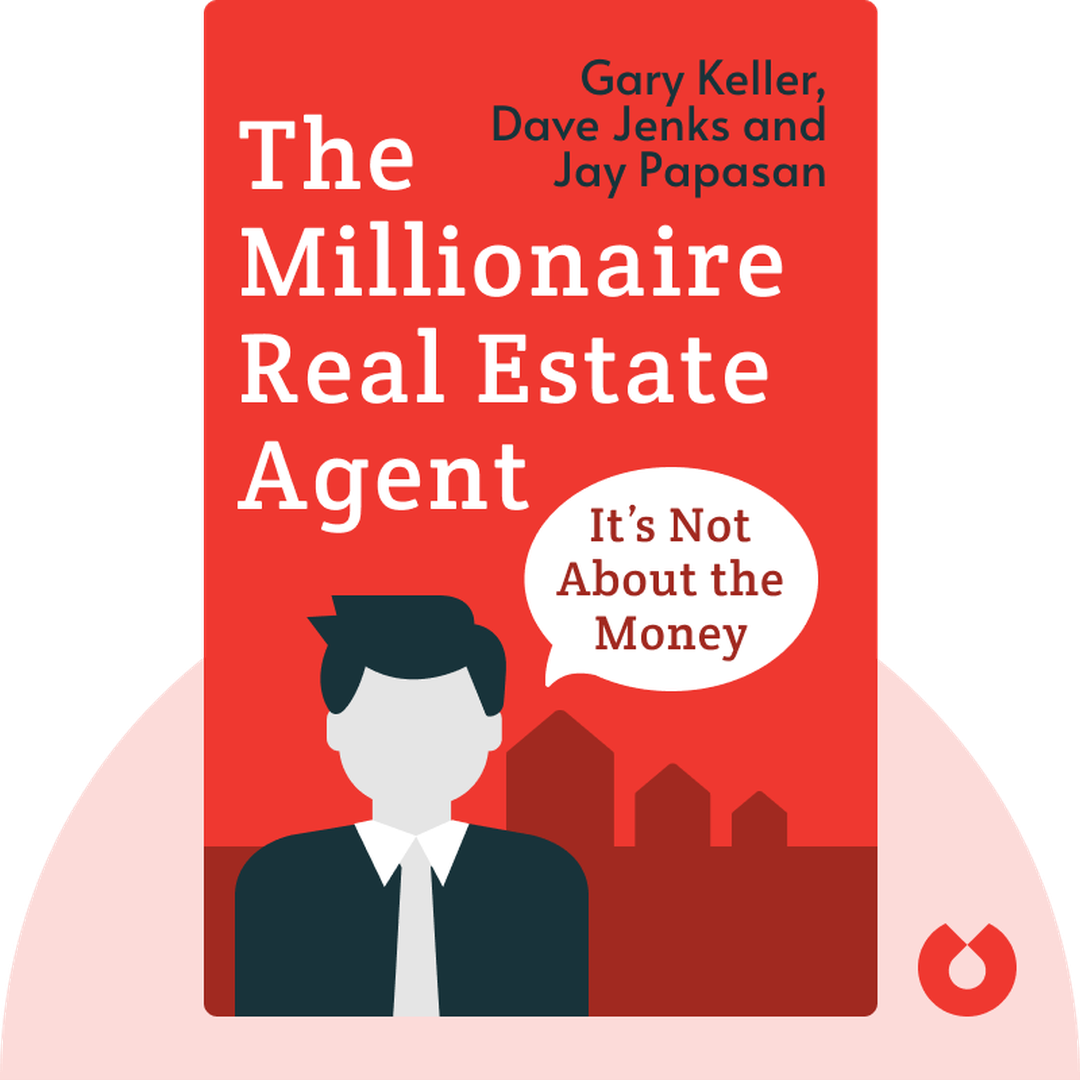
The Millionaire Real Estate Agent
Start ListeningDownload Try free on iPhoneScan to start in 5 seconds
Categories:
If You're Curious About These Questions...
You should listen to this audiobook
- Did you know that the most successful real estate agents spend the majority of their day on just one specific task, while others get bogged down in busywork?
- What’s the secret to transforming yourself from a solo agent into the owner of a self-sustaining real estate empire?
- Are you curious about the specific 'Economic Model' that allows top-tier agents to predict exactly how much they will earn before the year even begins?
Listen to The Millionaire Real Estate Agent — Free Audiobook
Loading player...
Key Takeaways from The Millionaire Real Estate Agent
- Discover why relying on intrinsic motivators and setting massive, ambitious goals straight away will sustain your real estate success far better than just chasing a paycheck.
- Learn how to maximize your business with leads, listings, and leverage by focusing your marketing on sellers to gain free exposure to future buyers.
- Understand how to use an economic model to reverse-engineer your target income into the exact number of leads and listings required to reach your financial goals.
- Master the lead generation model by using specific contact frequencies to nurture relationships, from touching base with cold prospects 12 times a year to engaging close contacts 33 times annually.
- Find out how to safely scale your operations by delegating tasks to assistants and utilizing a budget model that restricts spending strictly to the revenue your business generates.
Learning Tools
Reinforce what you learned from The Millionaire Real Estate Agent
Mind Map
The Millionaire Real Estate Agent
Motivation & Goal Setting+
The Core Strategy (The 3 L's)+
The Four Foundational Models+
Mindset & Overcoming Failure+
Scaling & Passive Income+
Focus & Efficiency+
Quiz — Test Your Understanding
Question 1 of 8
Why does the book recommend setting a massive goal straight away rather than progressively increasing smaller goals?
Question 2 of 8
According to the text, why is it more advantageous to focus your advertising on people looking to sell a home rather than those looking to buy?
Question 3 of 8
What is the primary function of the 'economic model' in a real estate business?
Question 4 of 8
According to the 'lead generation model', how often should you communicate with people you know well to maintain them as clients?
Question 5 of 8
How does the 'budget model' utilize the concept of a traffic light?
Question 6 of 8
What business lesson does the book draw from the story of Roger Bannister and the four-minute mile?
Question 7 of 8
What does the author mean by advising agents to work 'on the business instead of in the business'?
Question 8 of 8
How does the Pareto principle (the 80/20 rule) apply to a thriving real estate business according to the text?
The Millionaire Real Estate Agent — Full Chapter Overview
- 1Recommendation
- 2To be a better agent, grasp the how, what, and why of motivation.
- 3A robust real estate strategy builds from the ground up, and to succeed, you need leads, listings, and leverage.
- 4Using quantitative tools well can help you put your strategy into practice.
- 5Using the budget and organizational models will help you maximize your strategic potential.
- 6The four models will help you pursue leads, listings, and leverage.
- 7Embracing failure is a crucial milestone in the relentless pursuit of personal success.
- 8Work on the business rather than in the business, and you can earn significant income with minimal daily work.
- 9Long-term success, whatever your personal goals, depends on a high level of focus.
The Millionaire Real Estate Agent Summary & Overview
The Millionaire Real Estate Agent (2004) is your guide to success in the real estate business. These blinks detail practical strategies for building a real estate empire from the ground up and keeping it profitable.
Who Should Listen to The Millionaire Real Estate Agent?
- Real estate agents who want to step up their game
- Anyone looking to buy or sell real estate
- Salespeople from any industry
Books Similar to The Millionaire Real Estate Agent
Readers who enjoyed this also liked these titles.