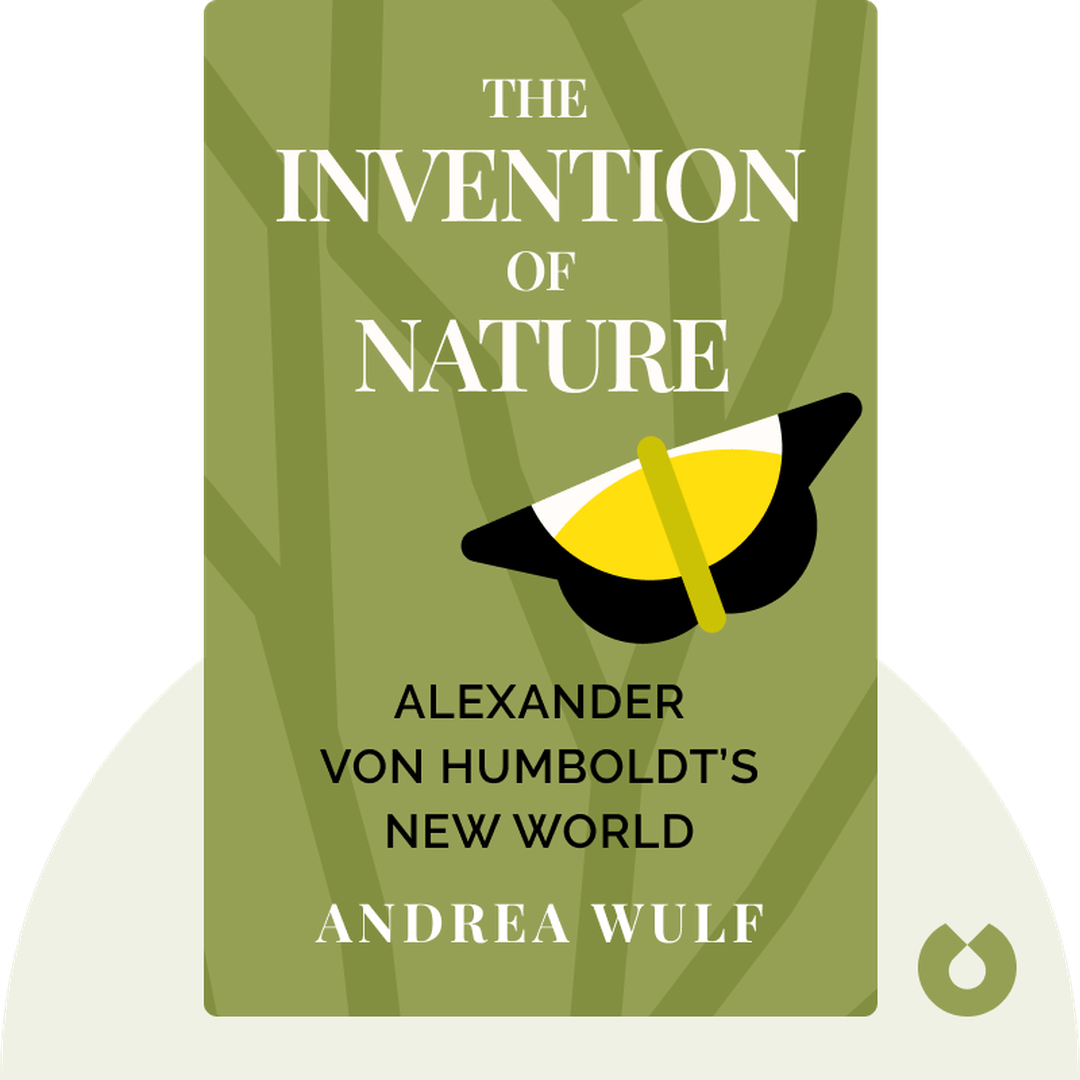
The Invention of Nature
Start ListeningDownload Try free on iPhoneScan to start in 5 seconds
Categories:
If You're Curious About These Questions...
You should listen to this audiobook
- Did you know that our modern understanding of nature as a single, interconnected living organism was pioneered by one man over two centuries ago?
- Have you ever wondered who first predicted human-induced climate change as early as 1800, long before the industrial age truly took hold?
- What if you could discover the lost legacy of the explorer who inspired Charles Darwin and shaped the very foundation of the modern environmental movement?
Listen to The Invention of Nature — Cinematic Audio Edition
Loading player...
Key Takeaways from The Invention of Nature
- Discover how Alexander von Humboldt revolutionized our modern understanding of nature by viewing the world as a globally interconnected web rather than isolated specimens.
- Learn why combining scientific observation with emotional, poetic expression allows you to communicate complex ideas far more effectively to others.
- Understand the vital importance of experiential learning by seeing why Humboldt believed that truly grasping nature requires stepping out of the laboratory and experiencing it firsthand.
- Find out how a massive earthquake in South America challenged the scientific consensus of the nineteenth century, revealing that seismic forces, rather than oceans, shaped the earth's landscape.
- Realize how Humboldt was centuries ahead of his time in recognizing the devastating environmental impacts of human activity, warning against the dangers of deforestation and colonial exploitation.
Learning Tools
Reinforce what you learned from The Invention of Nature
Mind Map
The Invention of Nature
Early Life & Influences+
South American Expedition+
Major Publications & Ideas+
Political Impact & Obstacles+
The Russian Expedition+
Legacy & Followers+
Quiz — Test Your Understanding
Question 1 of 8
How did Johann Wolfgang von Goethe influence Alexander von Humboldt's approach to science?
Question 2 of 8
What major geological revelation did Humboldt have after experiencing an earthquake upon his arrival in South America?
Question 3 of 8
What did Humboldt observe at Lake Valencia that contributed to his early understanding of human-caused environmental harm?
Question 4 of 8
Why was Humboldt's ascent of Mount Chimborazo so crucial to his scientific worldview?
Question 5 of 8
How did Humboldt's work influence the revolutionary Simón Bolívar?
Question 6 of 8
Why was Humboldt repeatedly denied permission to launch an expedition to the Himalayas in the 1810s and 1820s?
Question 7 of 8
What was the primary goal of Humboldt's five-volume masterwork, 'Cosmos'?
Question 8 of 8
Which of the following accurately describes Humboldt's legacy and influence on later historical figures?
The Invention of Nature — Full Chapter Overview
- 1Recommendation
- 2From childhood, Alexander von Humboldt yearned to travel and explore the world beyond home.
- 3Before departing Germany, Humboldt was already learning to unite art and science together.
- 4Humboldt’s arrival in South America was an eye-opening revelation.
- 5South America brimmed with both marvels and ominous warning signs.
- 6When Humboldt at last reached Mount Chimborazo’s summit, a profound revelation deeply struck him there.
- 7Humboldt’s ideas swiftly spread throughout Europe and the United States.
- 8Humboldt’s ideas shaped politics as well.
- 9Despite his fame, Humboldt struggled to launch another expedition.
- 10Humboldt’s trek across Russia would supply the final ingredients for his work.
- 11Cosmos became the influential culmination of Humboldt’s message to the world.
- 12Many influential figures carried Humboldt’s teachings into the twentieth century.
The Invention of Nature Summary & Overview
The Invention of Nature (2015) shines a light on the extraordinary life of explorer and scientist Alexander von Humboldt. Discover Humboldt’s amazing perspective on our relationship to the world and find out how his ecological discoveries and observations are just as relevant and profound today as they were in the nineteenth century.
Who Should Listen to The Invention of Nature?
- Environmentalists
- Students of environmental history, art and science
- Scientists, especially biologists and botanists
Books Similar to The Invention of Nature
Readers who enjoyed this also liked these titles.