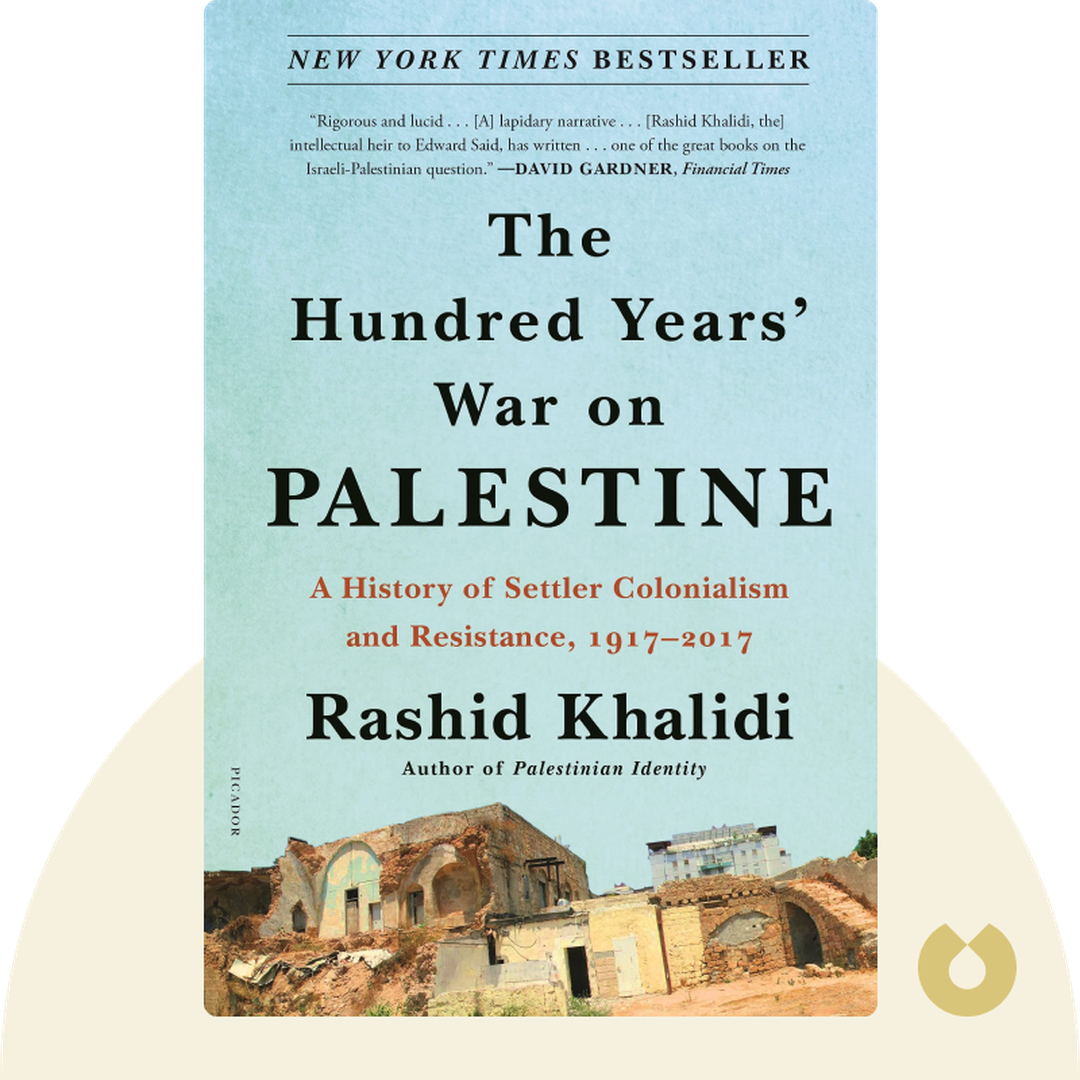
The Hundred Years' War on Palestine
Start ListeningDownload Try free on iPhoneScan to start in 5 seconds
Categories:
If You're Curious About These Questions...
You should listen to this audiobook
- Have you ever wondered why the struggle for Palestine is often framed as an ancient religious feud, when its true origins might be found in a much more modern and calculated type of warfare?
- Did you know that a handful of specific historical declarations by global superpowers over a century ago are still the driving forces behind today’s headlines in the Middle East?
- Are you curious to discover how the history of this region transforms when viewed through the lens of those who have lived it for generations, rather than through the perspective of Western diplomacy?
Listen to The Hundred Years' War on Palestine — Free Audiobook
Loading player...
Key Takeaways from The Hundred Years' War on Palestine
- Explore a century of the Israeli-Palestinian conflict through a thoroughly researched Palestinian perspective, utilizing archival records to reveal an often overlooked historical narrative.
- Discover how British colonial rule accelerated the colonization of Palestine through the 1917 Balfour Declaration, which backed the Zionist movement while completely ignoring Arab political rights.
- Learn the devastating history of the 1948 Nakba, a violent military campaign that uprooted over 700,000 Palestinians and allowed Israel to seize 80 percent of the former mandate.
- Understand how post-WWII geopolitical shifts and the powerful backing of the United States and the Soviet Union tipped the scales against Palestinian independence.
- Find out how the brief but devastating 1967 Six-Day War rapidly expanded Israeli territorial control, forged a lasting US-Israel alliance, and ultimately reawakened Palestinian resistance.
Learning Tools
Reinforce what you learned from The Hundred Years' War on Palestine
Mind Map
The Hundred Years' War on Palestine
British Colonialism & Early Zionism+
The Nakba & Partition+
The Six-Day War (1967)+
The Lebanon War (1982)+
First Intifada & Oslo Accords+
Second Intifada & Rise of Hamas+
Present Day & Future Paths+
Quiz — Test Your Understanding
Question 1 of 8
According to the text, what was a significant omission in the 1917 Balfour Declaration regarding the non-Jewish population of Palestine?
Question 2 of 8
How did the political realignment after World War II impact the prospect of Palestinian independence?
Question 3 of 8
What was a major consequence of UN Security Council Resolution 242 following the Six-Day War in 1967?
Question 4 of 8
What was Israeli Defense Minister Ariel Sharon’s primary objective in launching the 1982 invasion of Lebanon?
Question 5 of 8
How did the first intifada differ from the militant approach previously taken by the PLO?
Question 6 of 8
According to the text, why were the Oslo Accords considered an ill-conceived treaty for Palestinians?
Question 7 of 8
Following Hamas's electoral victory in 2006 and subsequent rocket attacks, Israel employed the 'Dahiya doctrine.' What does this policy entail?
Question 8 of 8
How did the 2018 law passed by the Israeli Knesset impact the political landscape, according to the text?
The Hundred Years' War on Palestine — Full Chapter Overview
- 1Recommendation
- 2British rule served to accelerate the colonization of Palestine.
- 3The Nakba violently expelled a majority of Palestinians from their homes.
- 4The Six-Day War cemented Israeli dominance and revived Palestinian resistance.
- 5The Lebanon War disrupted the PLO yet galvanized the Palestinian movement.
- 6The intifada forced Israel to negotiate but yielded an ill-conceived treaty.
- 7Ongoing Israeli oppression fueled the rise of militant groups like Hamas.
- 8Palestine faces an uncertain future, but peace and justice still remain possible.
The Hundred Years' War on Palestine Summary & Overview
The Hundred Years’ War on Palestine (2020) is a detailed and rigorous look at one of the most misunderstood regions of the world. This timely text chronicles Palestinian history from the perspective of Palestinians.
Who Should Listen to The Hundred Years' War on Palestine?
- Outsiders keen to learn Palestine’s complex history
- Zionists open to alternative perspectives on the Israel-Palestine conflict
- Anyone seeking to understand current events in the Middle East
Books Similar to The Hundred Years' War on Palestine
Readers who enjoyed this also liked these titles.