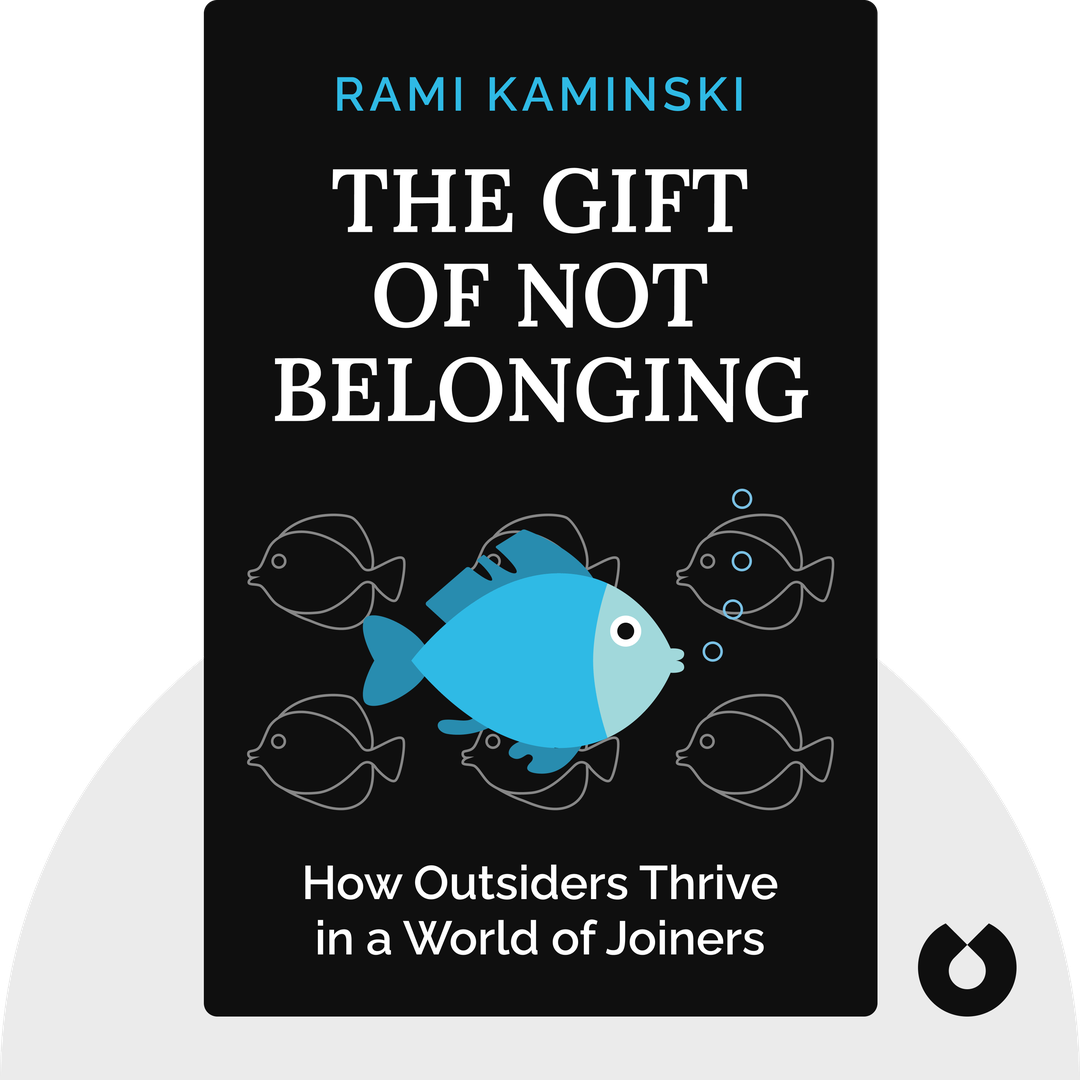
The Gift of Not Belonging
Start ListeningDownload Try free on iPhoneScan to start in 5 seconds
Categories:
If You're Curious About These Questions...
You should listen to this audiobook
- Have you ever wondered why you can be perfectly charming in social settings yet still feel like a complete outsider looking in?
- What if your inability to "fit in" isn't a social flaw, but actually the secret key to original thinking and true personal freedom?
- Did you know there’s a third personality type beyond introverts and extroverts that explains why some of the most socially skilled people still reject group identities?
Listen to The Gift of Not Belonging — Free Audiobook
Loading player...
Key Takeaways from The Gift of Not Belonging
- Discover the concept of the 'otrovert,' a unique personality type that neither retreats inward like an introvert nor seeks group validation like an extrovert.
- Learn why a persistent sense of non-belonging isn't a pathology, rebellion, or social anxiety, but rather an unchangeable and powerful core trait.
- Understand how otroverts use 'pseudo-extroversion'—such as taking on the role of host or DJ—to confidently navigate social gatherings while maintaining psychological distance.
- Realize that the desire to belong to larger groups is actually a taught behavior, freeing you from the pressure of forcing yourself to fit into a world designed for joiners.
- Find out how honoring your inner compass and focusing on deep, one-on-one connections can transform feelings of alienation into profound freedom and self-acceptance.
Learning Tools
Reinforce what you learned from The Gift of Not Belonging
Mind Map
The Gift of Not Belonging
Defining the Otrovert+
Common Misconceptions+
Navigating a Joiner's World+
The Otrovert Life Stages+
Otrovert Superpowers+
Quiz — Test Your Understanding
Question 1 of 7
How does the author define an 'otrovert' in contrast to introverts and extroverts?
Question 2 of 7
According to the book, how should the trait of otroversion be understood?
Question 3 of 7
Why are otroverts frequently misunderstood as being introverts?
Question 4 of 7
What does the author argue about the human drive to belong to larger groups?
Question 5 of 7
Why is adolescence typically described as the most challenging period for an otrovert?
Question 6 of 7
What is identified as one of the greatest strengths, or 'superpowers,' of an otrovert?
Question 7 of 7
How do otroverts typically handle their inner emotional lives compared to communal people?
The Gift of Not Belonging — Full Chapter Overview
- 1Recommendation
- 2Meet the otrovert
- 3What otroverts are not
- 4A world built for joiners
- 5The otrovert way of life
- 6Otrovert strengths
The Gift of Not Belonging Summary & Overview
The Gift of Not Belonging (2025) introduces and defines the concept of the “otrovert” – someone who is socially skilled yet persistently detached from group identities. It differentiates otroverts from introverts and extroverts and shows how “not fitting in” isn’t a flaw but a form of freedom that enables original thinking, deeper individual connections, and a self-defined life.
Who Should Listen to The Gift of Not Belonging?
- People who have felt socially “offbeat” or out of place in groups
- Creatives who feel at odds with conventional workplaces or groupthink
- Anyone who doesn’t fully identify with standard personality categories
Books Similar to The Gift of Not Belonging
Readers who enjoyed this also liked these titles.