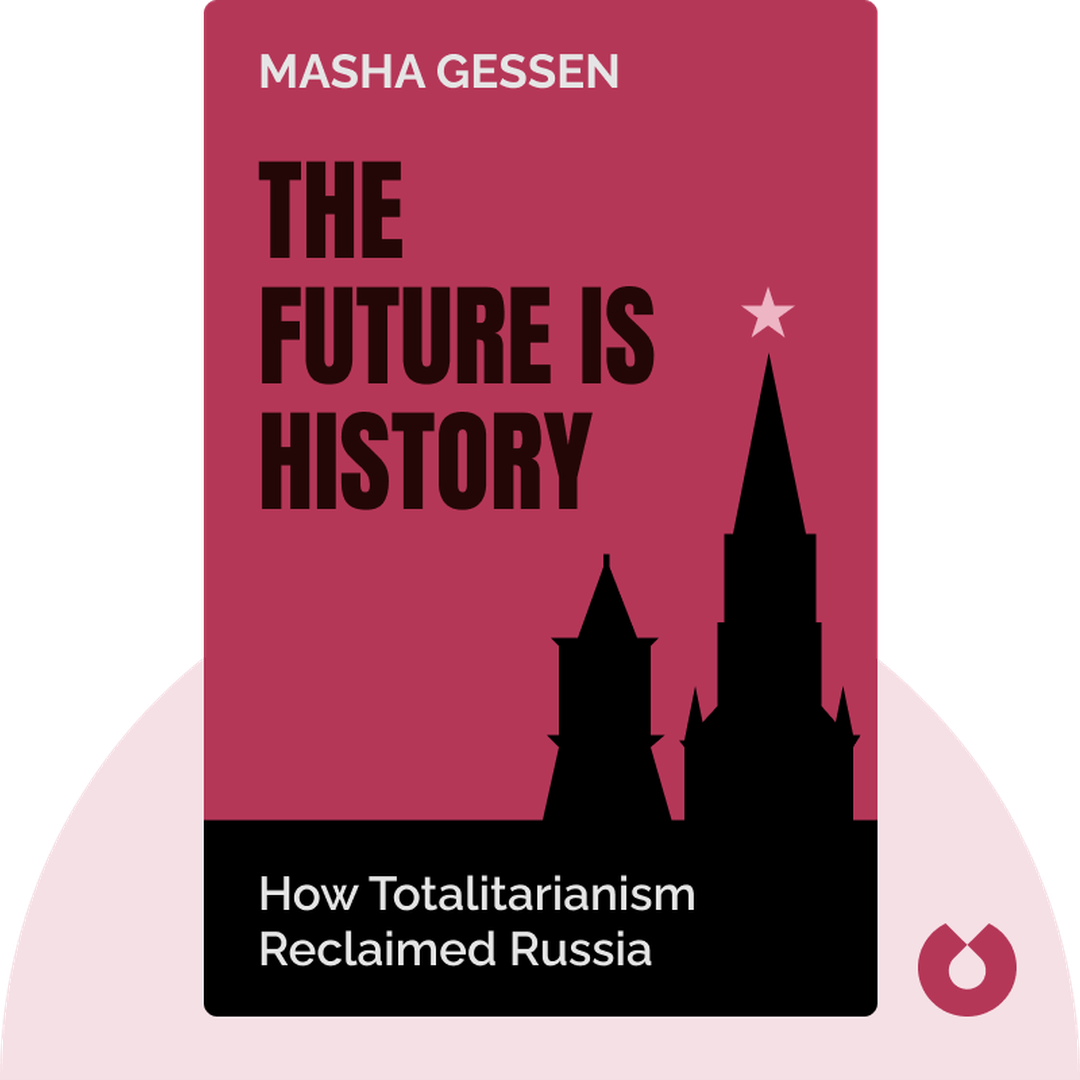
If You're Curious About These Questions...
You should listen to this audiobook
- Have you ever wondered how a nation that appeared to embrace democracy after the fall of the Soviet Union could slide so quickly back into a new, even more complex form of totalitarianism?
- Did you know that the ghost of the 'Soviet person' continues to haunt modern Russia, and what specific sociological forces are being used to turn the clock back on history?
- Are you curious about the hidden turning points in the lives of ordinary citizens that explain why Russia’s future looks so much like its dark past?
Listen to The Future Is History — Free Audiobook
Loading player...
Key Takeaways from The Future Is History
- Discover why the Soviet Union banned psychology and sociology in the 1920s, actively suppressing self-reflection to mold citizens into unquestioning cogs of the Marxist machine.
- Understand how decades of censored social sciences left Russian leaders dangerously out of touch with the public, ultimately sabotaging Gorbachev's progressive reforms in the 1980s.
- Learn how the sudden collapse of the Communist Party was accelerated by self-serving officials who exploited the restructuring period solely to gain political power.
- Explore the deep psychological toll of the 1990s Soviet collapse, a time when rapid privatization and economic freefall left everyday citizens grappling with terrifying uncertainty.
- Find out how sudden freedom and overwhelming chaos create the perfect psychological conditions for an anxious society to willingly embrace a new authoritarian ruler.
Learning Tools
Reinforce what you learned from The Future Is History
Mind Map
The Future Is History
Soviet Intellectual Void+
Chaos of the 1990s+
Yearning for the Past+
Putin's Ascent+
The Authoritarian State+
Weaponized Bigotry+
Quiz — Test Your Understanding
Question 1 of 9
Why did the Soviet Union ban the study of psychology and sociology in the 1920s?
Question 2 of 9
According to psychologist Erich Fromm, what condition in 1990s Russia primed the country for an authoritarian takeover?
Question 3 of 9
What was a major psychological impact of the legalization of private commerce and open borders in the early 1990s?
Question 4 of 9
Why was the 1995 movie 'Old Songs About the Most Important Things' such a massive hit in Russia?
Question 5 of 9
What specific event in 1999 allowed Vladimir Putin to contrast himself with Boris Yeltsin and project a much-desired image of strength and stability?
Question 6 of 9
How did the Kremlin under Putin attempt to discredit political critics like Andreas Umland?
Question 7 of 9
What troubling sociological trend did Russian pollsters notice between 1989 and 2003 regarding historical figures?
Question 8 of 9
What specific political maneuver sparked massive civil rights protests in Russia between 2011 and 2013?
Question 9 of 9
What psychological theory did Marina Arutyunyan use to explain the shift from feelings of 'stability' to panic attacks among her patients as new oppressive laws were passed?
The Future Is History — Full Chapter Overview
- 1Recommendation
- 2Russia’s lack of introspection left the nation at a disadvantage as society began changing rapidly in the late 1980s.
- 3When the Communist Party crumbled, efforts sought to better define the typical Russian.
- 4Throughout the 1990s, after the Soviet Union’s collapse, conditions were primed for an authoritarian takeover to emerge there.
- 5In post-Soviet Russia, citizens faced rising poverty and deepening levels of stratification.
- 6Nostalgia for the Soviet era swelled as the Chechen war badly battered Yeltsin’s presidency.
- 7Confronting economic collapse and bombings, Vladimir Putin seized the spotlight with firm resolve.
- 8In the name of stability, Putin swiftly advanced measures edging further toward authoritarianism.
- 9After stepping down, Putin reclaimed the presidency amid controversy in 2012.
- 10As the Kremlin cracked down on protests, lawmakers advanced new anti-homosexual measures.
- 11As new laws passed and people were killed, stability dissolved and fear took hold across Russia.
The Future Is History Summary & Overview
The Future Is History (2017) tackles the complex issue of Russia’s love/hate relationship with democracy. By looking at the lives of a select few, Masha Gessen takes us from the collapse of the Communist Party to deep within the activism of the Putin era – all in an attempt to show us how and why Russia’s modern brand of totalitarianism came about.
Who Should Listen to The Future Is History?
- Readers curious about Russian politics
- Students of sociology and world politics
- History buffs
Books Similar to The Future Is History
Readers who enjoyed this also liked these titles.