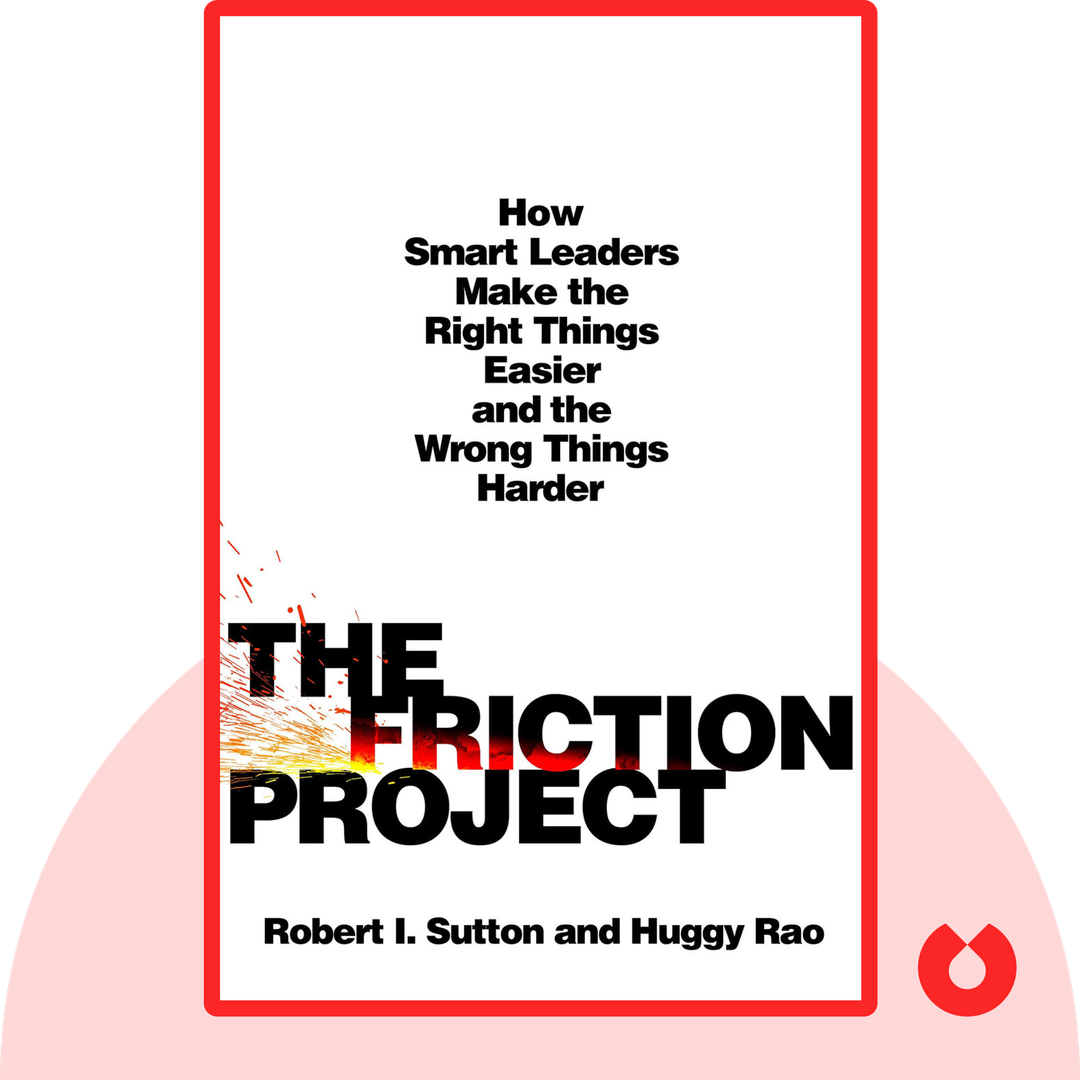
If You're Curious About These Questions...
You should listen to this audiobook
- Have you ever wondered why the most efficient organizations actually choose to add obstacles to certain projects instead of removing them?
- What if you could reclaim hours of your workweek by identifying the “invisible” friction that turns simple tasks into soul-crushing hurdles?
- What’s the secret to becoming a “friction fixer” who knows exactly when to grease the wheels and when to intentionally hit the brakes?
Listen to The Friction Project — Cinematic Audio Edition
Loading player...
Key Takeaways from The Friction Project
- Understand the critical difference between detrimental and beneficial friction, and learn why eliminating all friction can actually stifle creativity and cause costly missteps.
- Discover why common efficiency measures, like communication apps or frictionless self-service, can sometimes backfire by causing burnout and stripping away valuable human connections.
- Learn how to become a 'trustee of others' time' by ruthlessly cutting wasteful meetings while strategically introducing beneficial hurdles that demand careful reflection.
- Master the five essential principles for fixing workplace friction, which include challenging established workflows, focusing on solutions over blame, and rewarding doers instead of posers.
- Find out how to identify and combat 'power poisoning' in management to stop leaders from creating unnecessary, time-consuming administrative barriers for their teams.
Learning Tools
Reinforce what you learned from The Friction Project
Mind Map
The Friction Project
Good vs. Bad Friction+
Guardian of Others' Time+
Curing Power Poisoning+
The Subtraction Mindset+
Quiz — Test Your Understanding
Question 1 of 7
According to the text, what is a primary benefit of 'good' friction in an organization?
Question 2 of 7
What unintended consequence can arise from implementing 'frictionless' processes like self-service checkouts?
Question 3 of 7
Why did BlueCross BlueShield of Massachusetts intentionally introduce bureaucratic hurdles into their workflows?
Question 4 of 7
What does the term 'power poisoning' refer to in the context of leadership?
Question 5 of 7
Which of the following is recommended as a strategy for leaders to overcome 'power poisoning'?
Question 6 of 7
What is 'addition bias' as described by behavioral scientists?
Question 7 of 7
According to the text's seven key areas for subtraction, how should organizations handle the concept of perfectionism?
The Friction Project — Full Chapter Overview
- 1Recommendation
- 2There is good friction and bad friction.
- 3Be a steward of others’ time.
- 4Discover the cure for power poisoning.
- 5Embrace a subtraction mindset.
The Friction Project Summary & Overview
The Friction Project (2024) unveils strategies for how to make organizations run smoothly, beginning with identifying sources of both beneficial and detrimental friction. It introduces tools to address common friction troubles, empowering leaders to navigate and optimize organizational dynamics.
Who Should Listen to The Friction Project?
- Employees so swamped with meaningless tasks that they have no time for work
- Workers who wish they could put the brakes on projects that move too fast
- Managers who suspect they’re out of touch with the concerns of their staff and clients
Books Similar to The Friction Project
Readers who enjoyed this also liked these titles.